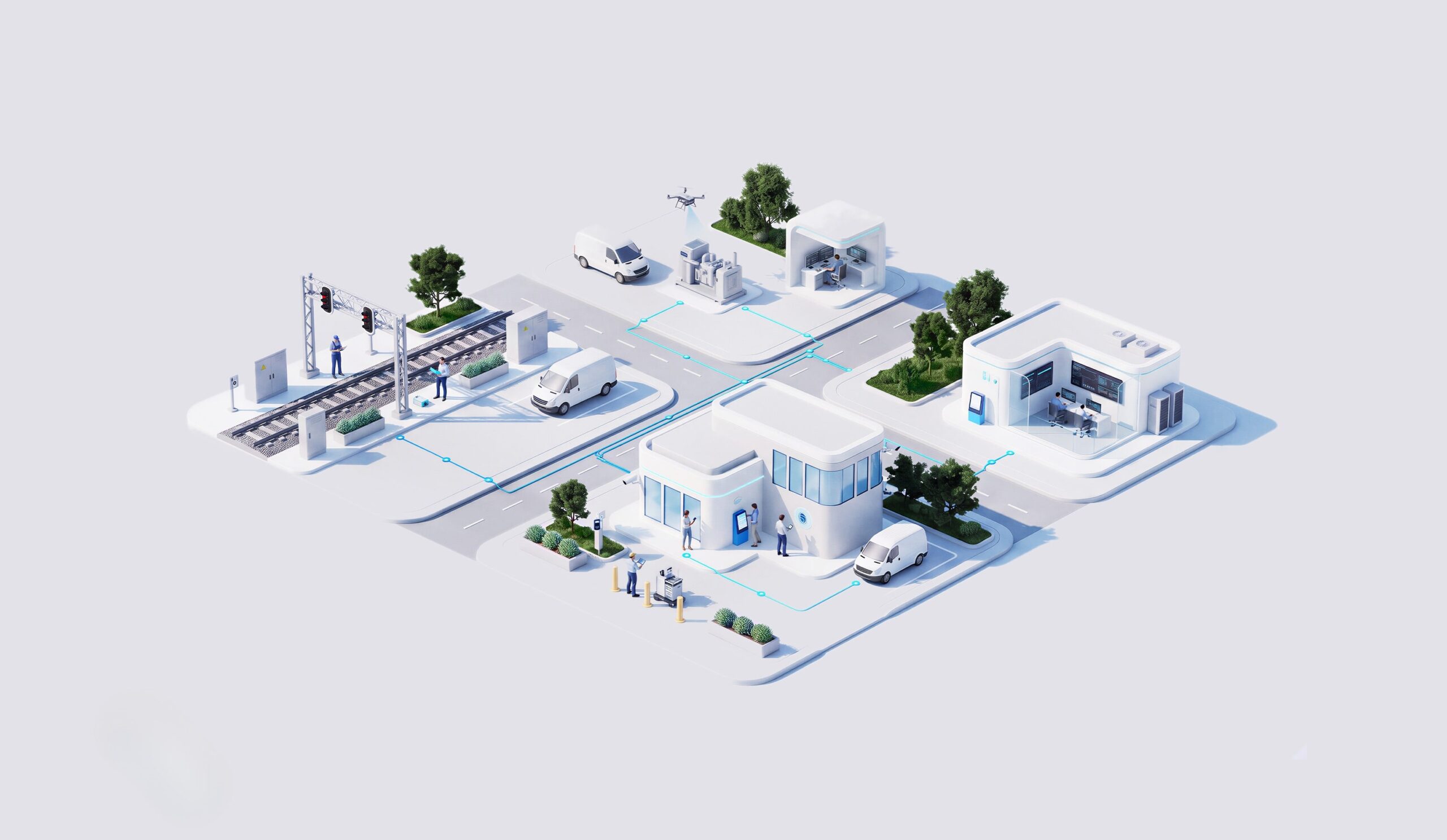
Smart Grid for a More Efficient and Resilient Railway Network

A railway infrastructure operator implemented a smart-grid pilot on a major high-speed rail corridor to improve the monitoring and management of traction-power infrastructure, including electrical substations. The solution integrates telecontrol systems, energy meters, network analysers and an enterprise IoT platform, centralising consumption, power-quality and operational information in real time. This digital foundation supports a more proactive approach to energy management, asset maintenance and infrastructure reliability.
High-speed rail traction power infrastructure
Safety
Stronger Traction Power Reliability
Efficiency
Real time operational visibility
Sustainability
Energy consumption optimization
Innovation
IoT enabled smart infrastructure
Intelligent traction power for high-speed rail
From distributed electrical monitoring to an integrated railway smart-grid environment
Railway traction power is a critical infrastructure domain requiring high levels of safety, quality and reliability. Distributed management and limited unified visibility made it more difficult to understand consumption patterns, supervise power quality and identify operational deviations across the electrical network.
Objectives
Design and implement a two level railway smart grid architecture combining field nodes with a vertical IoT platform capable of collecting, processing, storing and enriching data. Deploy measuring points, integrate existing telecontrol systems and provide real time information for energy and asset-management decisions
Opportunity
Bidirectional data collection across the corridor creates a common view of energy flows, consumption points and electrical-asset behaviour. The platform can be extended with advanced analytics, predictive maintenance and digital-twin capabilities to optimise lifecycle decisions and support future smart-energy use cases
Transforming a critical traction-power network into a data-driven infrastructure

Together, a technology services company and the railway infrastructure operator designed and implemented the pilot architecture, installed the required measurement capabilities and integrated field information into a railway smart-grid vertical. The engagement connected electrical-engineering needs with IoT, data and operational-maintenance requirements.

Key Challenges
Fragmented rail traction power monitoring
Obtaining consistent, near real time information from heterogeneous substations, meters, analyzers and telecontrol environments.
Disconnected traction power monitoring
Creating a unified view of consumption, power quality and asset behaviour without disrupting railway operations.
Trackside rail communications node
Designing interfaces and communications between field nodes and the higher-level IoT platform.
Build scalable cloud-based infrastructure
Establishing a scalable architecture able to support future energy optimization and maintenance analytics.
Solution
Instrumented traction power infrastructure for enhanced network supervision

Deployed measuring points and integrated telecontrol systems, energy meters and network analyzers, validating reliable data collection to support effective electrical and operational supervision

check icon
Implemented a two level railway smart grid architecture.

Connected field systems to a central IoT platform for unified collection, processing and enrichment of electrical network data.

check icon
Centralised real-time energy and asset information.

Unified monitoring of energy, power quality and asset data improves deviation detection and operational performance visibility.

check icon
Established a foundation for advanced energy intelligence.

A scalable data architecture supports predictive maintenance, renewable-energy modelling, digital twins and future smart grid capabilities.

Impact
Energy and asset data become operational levers for a safer, more efficient railway

The smart grid pilot provides a common digital layer for supervising traction power infrastructure, improving visibility of energy consumption, power quality and electrical asset behavior. It enables earlier detection of anomalies, more efficient maintenance planning and stronger system reliability, while creating a scalable foundation for predictive maintenance, energy optimization and future smart grid services

Featured
success stories
Empowering field operations through digitalized service management and improving safety conditions trough connected worker technologies
View all success stories
Drag