After Sales Service Platform

After-sales service is where a retail promise is tested. For one retailer, fragmented systems and hand-offs across stores and repair partners made it harder to manage that promise as one connected operation. The initiative brought the service lifecycle onto a responsive multi-user platform, designed to make everyday work clearer for employees and the service journey more consistent for customers.
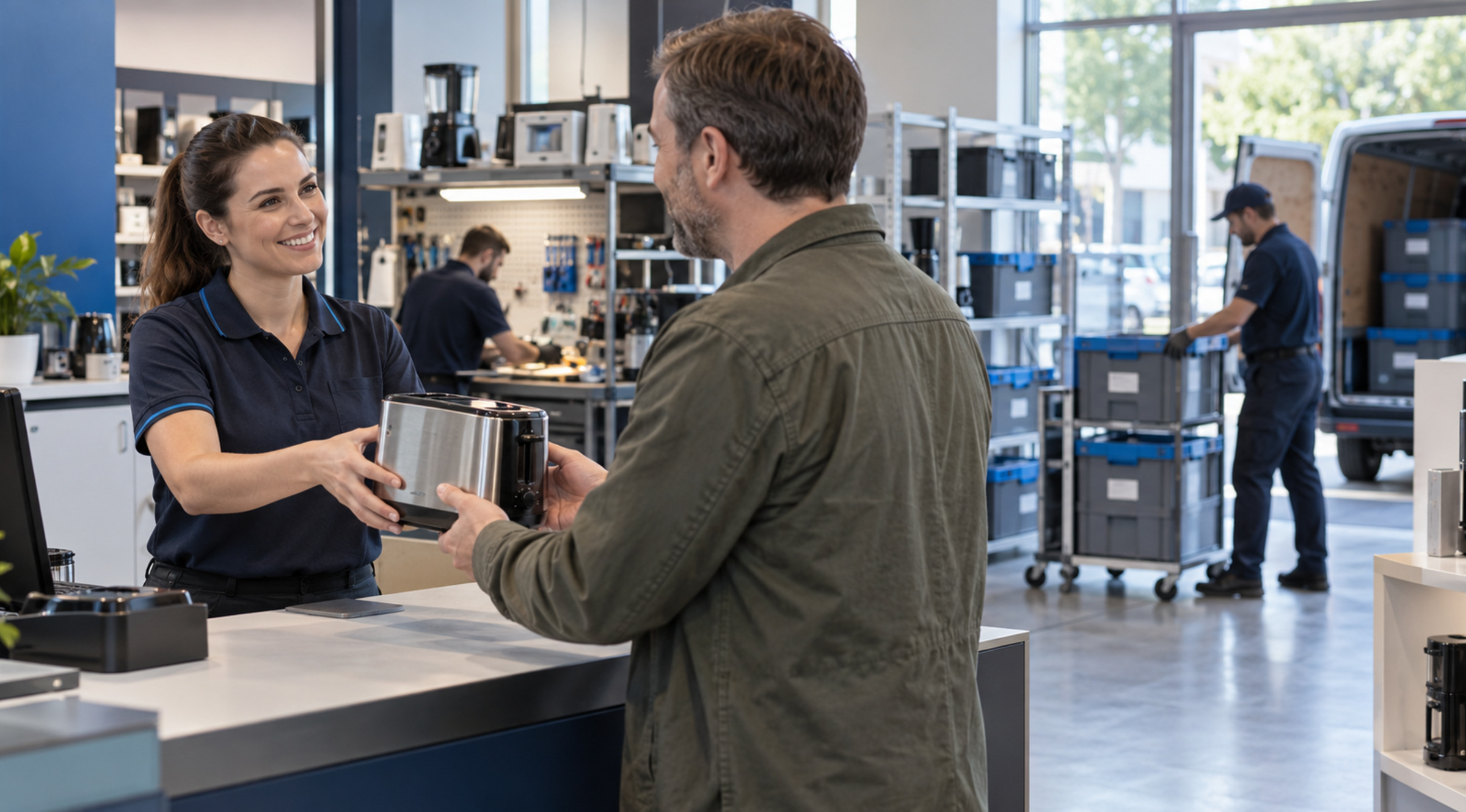
Retail service associate returning a repaired small appliance to a customer, with repair crates and a courier visible in the connected after-sales operation.
Interface usability
Intuitive, responsive user experience
Flow continuity
Streamlined end-to-end service journey
User coordination
Shared platform across service partners
Platform readiness
Scalable, configurable service foundation
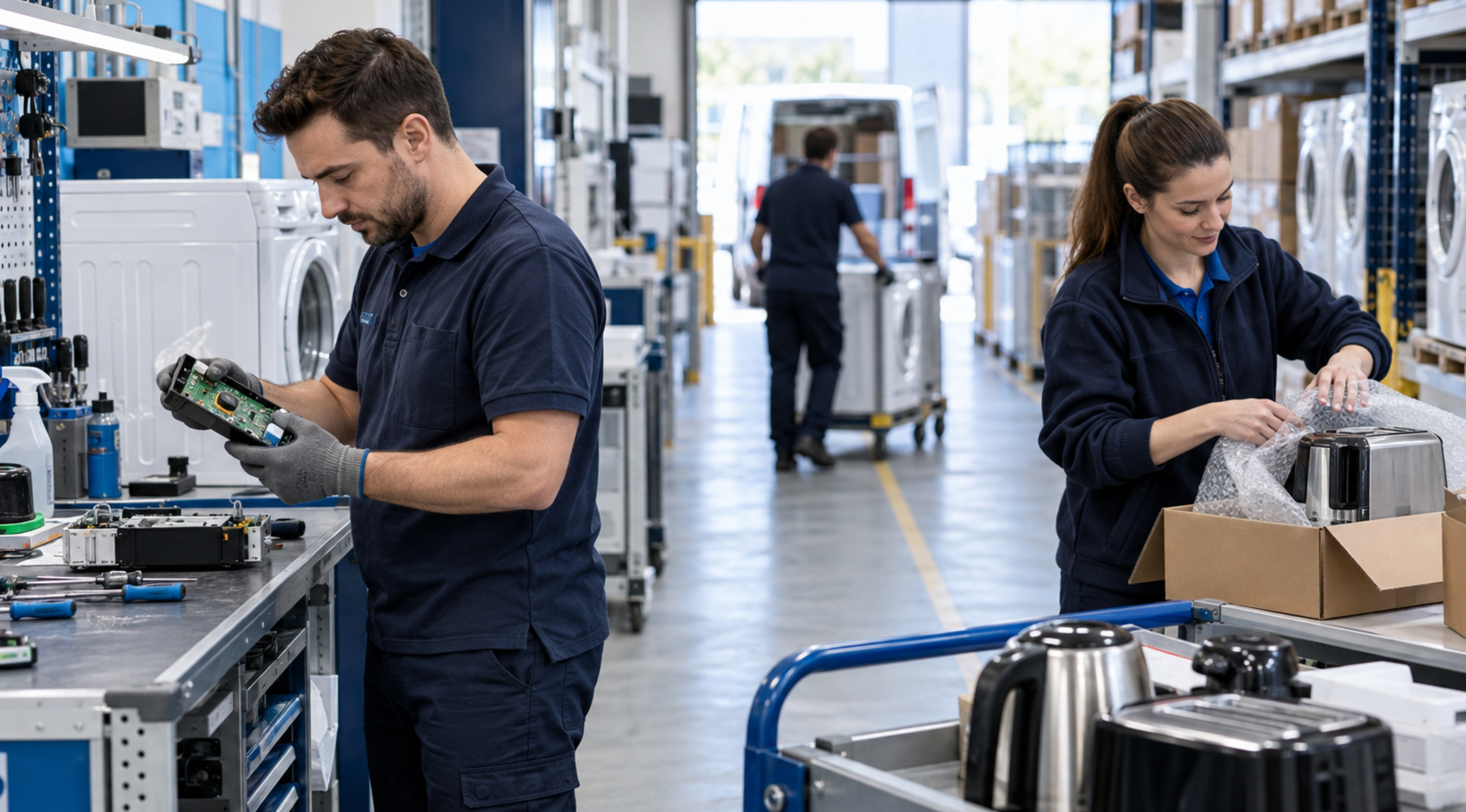
Technicians inspecting and preparing repaired household appliances in a coordinated workshop and dispatch flow.
From fragmented after-sales to one responsive service platform

A responsive platform connected stores and repair partners across the after-sales lifecycle, replacing separate tools with coordinated workflows and a scalable operating foundation.

After-sales service should feel like one journey, even when many teams deliver it.
Objectives
The retailer set out to raise the performance of its end-to-end after-sales operation by improving efficiency, increasing automation and modernizing service across channels. The ambition was to give stores and repair partners a shared environment for managing the full service lifecycle, while making interactions more intuitive for the people who use the platform every day.
Opportunity
A single platform across stores and repair partners creates a path to reduce hand-offs and rework, and to manage after-sales as one coordinated service rather than a chain of disconnected tasks. Its configurable foundation also gives the retailer room to adapt workflows and extend capabilities as service needs evolve. The source does not confirm which future capabilities, rollout phases or automation use cases are planned.
When the service journey is split, the customer feels the gaps

The initiative had to connect a service lifecycle distributed across systems, users and partner organizations, while moving away from legacy technology and creating a platform that could support future change.
Key Challenges
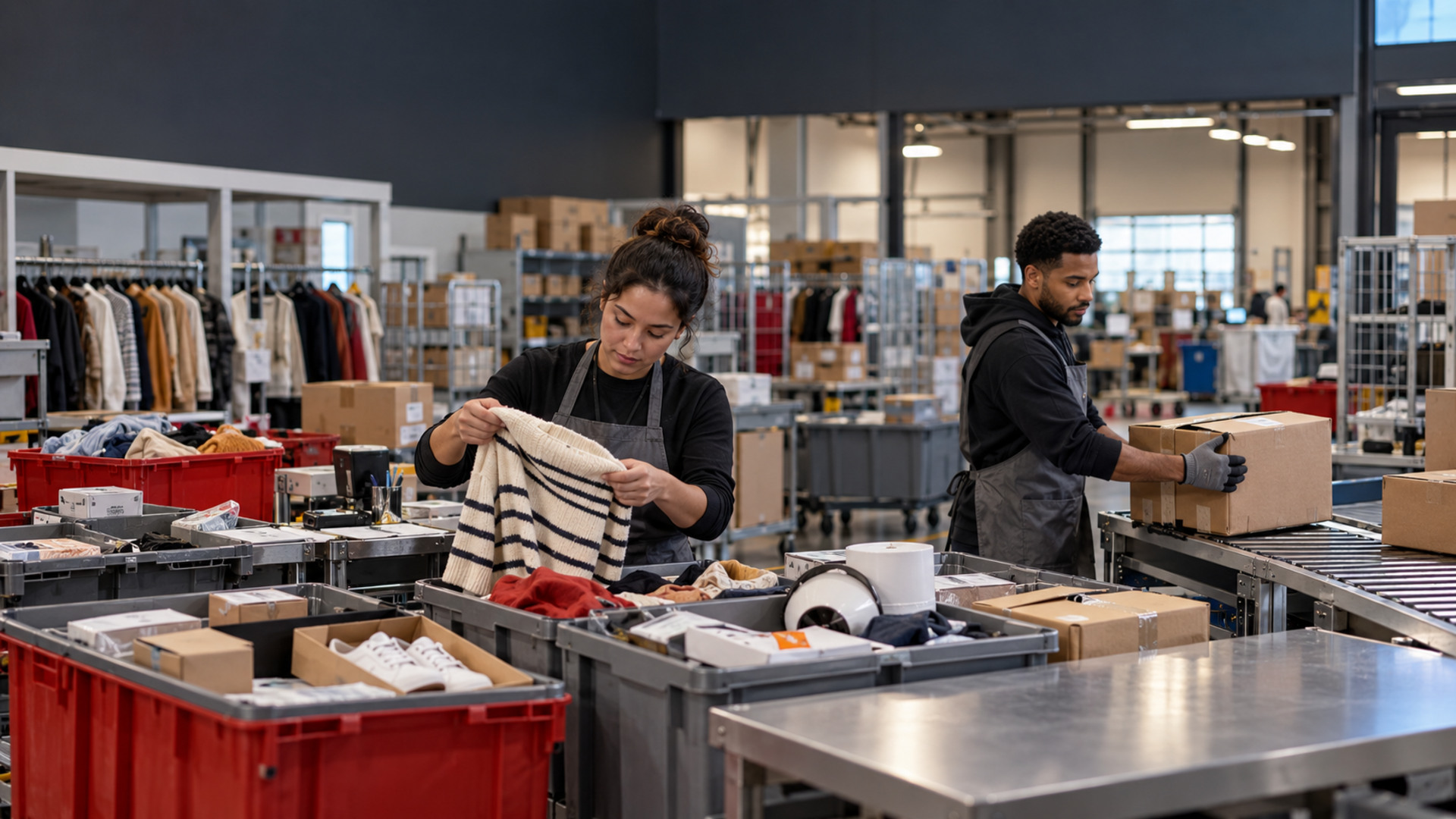
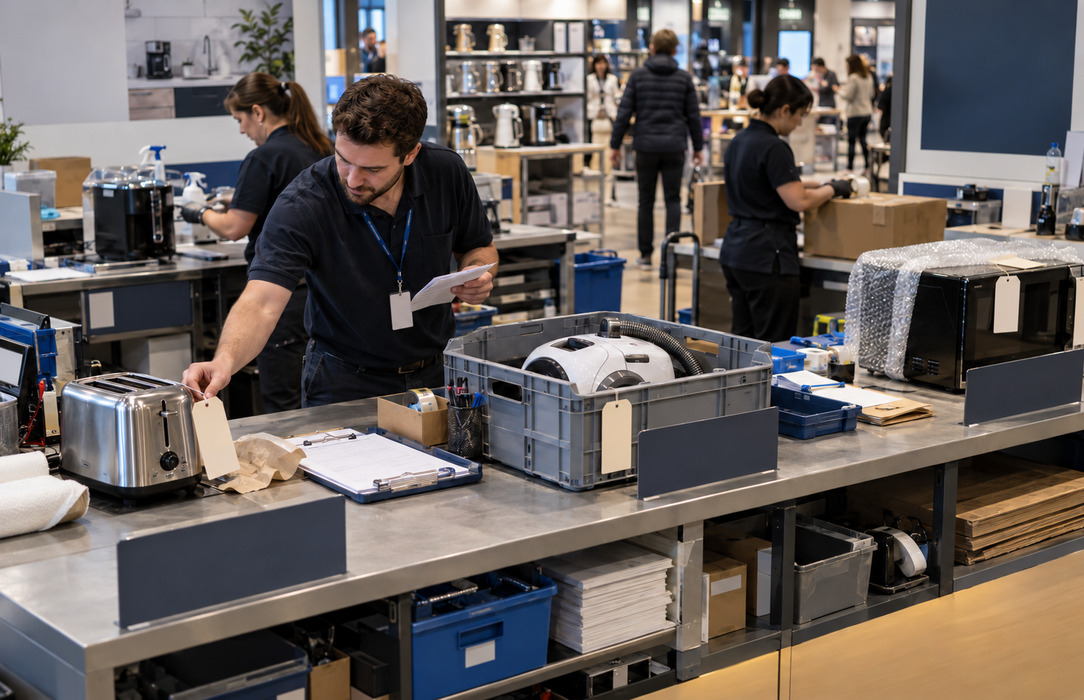
Retail service employee managing returned appliances across separate intake, inspection and dispatch stations.
1: Gaps across the after-sales lifecycle
The initiative needed to connect service stages that were split across the existing process and its supporting systems.
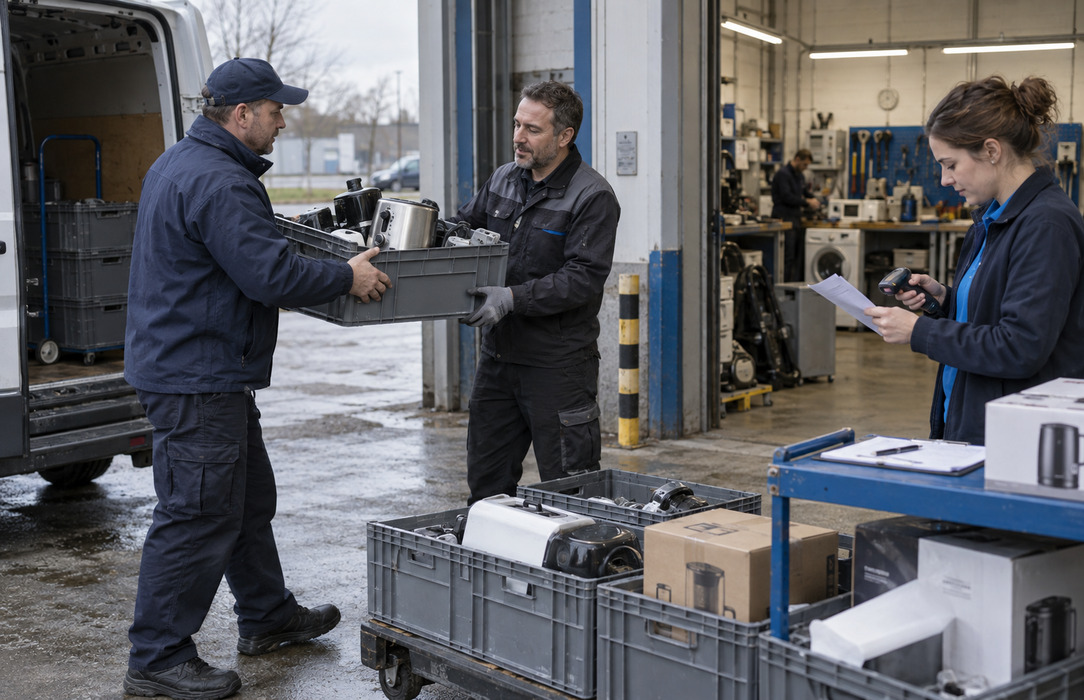
Courier and repair workshop team transferring retail appliance repair crates between store and service partner.
2: Different users, different tools
Stores and repair partners were working through separate tools, creating a need for one multi-user service environment.
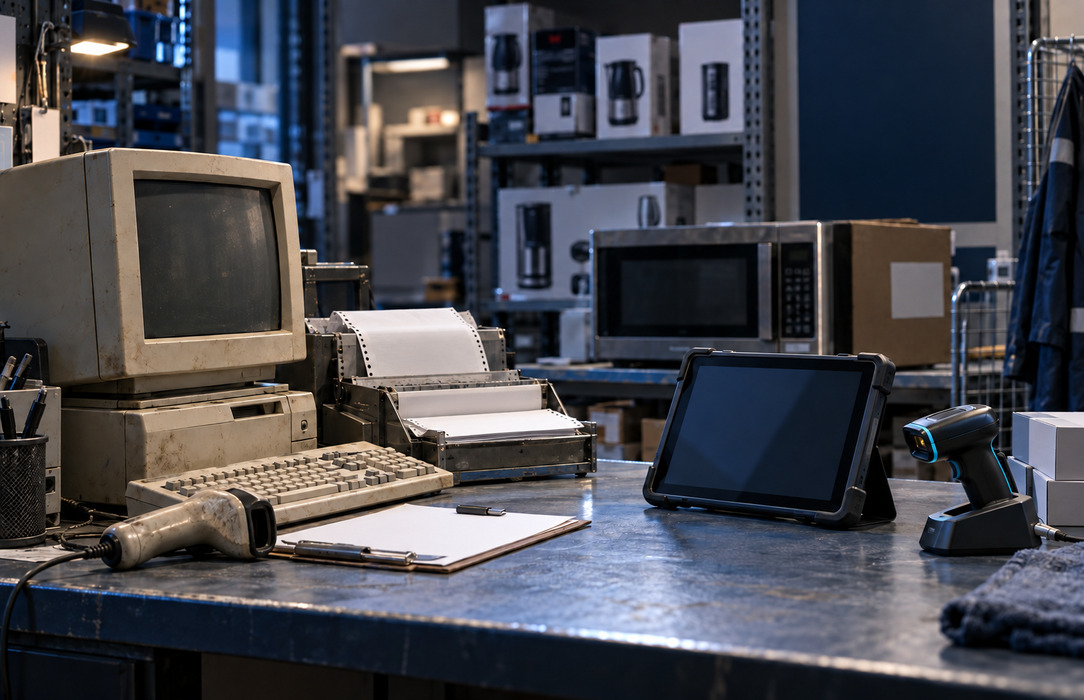
Legacy retail service terminal and wired equipment positioned beside a modern tablet and scanner in an appliance stockroom.
3: Legacy technology to migrate
The existing system had to move to a new platform while preserving the operational requirements of after-sales service.
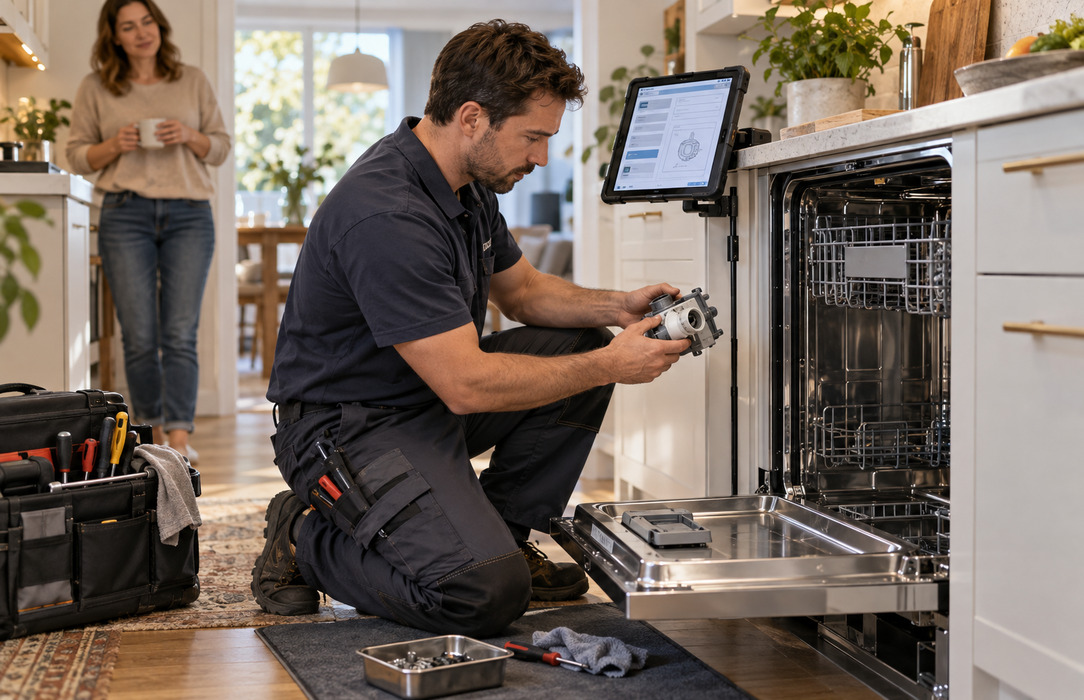
Field technician repairing a dishwasher in a customer home with a rugged tablet supporting the service workflow.
4: A platform that can keep evolving
The new environment needed intuitive responsive interfaces, configurable features and a foundation for future capabilities.
Solution
A shared after-sales system built around the complete service flow

NTT DATA designed and deployed a responsive multi-user platform for stores and repair partners, combining service-flow analysis, technology migration, interface design and configurable capabilities in one solution.

check icon
Flow and pain-point assessment

Existing service flows and operational pain points were assessed to define what the end-to-end journey needed to support.

check icon
Shared responsive workspace

A multi-user platform was deployed for stores and repair partners, bringing both groups into the same service environment.

check icon
Technology and architecture transition

The legacy technology was migrated, supported by a defined platform architecture and interfaces.

check icon
Configurable user experience

The user experience and configurable features were shaped to support intuitive interaction and future-ready capabilities.

Impact
A more coordinated after-sales operation

The platform supports a more coordinated after-sales operation, with intuitive responsive interfaces and streamlined end-to-end flows across stores and repair partners. It provides a configurable foundation for reducing operational complexity and improving the customer and employee experience at service touchpoints. The source presents these outcomes qualitatively and does not provide measured results.

Drag