- All Foundries

- Commodity Management & Trading

- Customer & Marketing Strategy

- Digital Engineering

- Station Studio

- Supply Chain & Industry 5.0
- Sustainability

- Physical AI

- Next-Gen Infrastructure












How to Decide Where to Invest in the Grid? AI and Optimization Make the Difference
In our previous article, we explained why water, gas, and electricity networks have become a strategic asset of the first order, facing growing pressure from climate change, geopolitical instability, and energy transition targets. We also argued that, before launching any AI initiative, it’s worth placing the challenge within the network’s value chain and distinguishing between two complementary levels of intervention: a global approach, focused on the strategic design of infrastructure, and a local approach, focused on operational improvement and maintenance.
In this second article, we take a closer look at the first of these: how AI is transforming the way we design and plan network infrastructure.
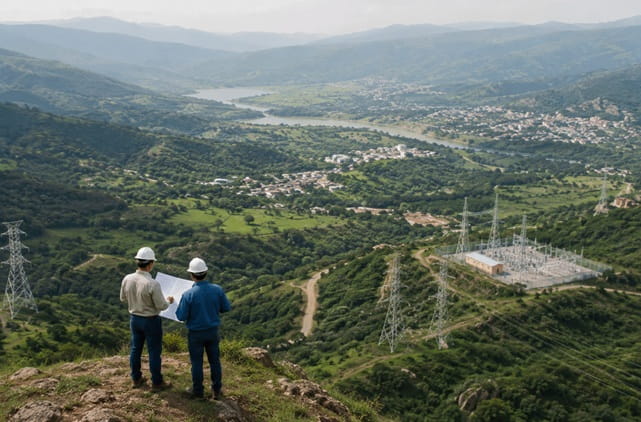
When the goal is to solve a problem affecting a wide area of network coverage — such as finding the optimal location for a new asset or assessing network availability against external factors, one of the main challenges is building a coherent data model. This means integrating information from heterogeneous sources (topography, climate, energy demand, land use, among others) and harmonizing it under a common scale of analysis.
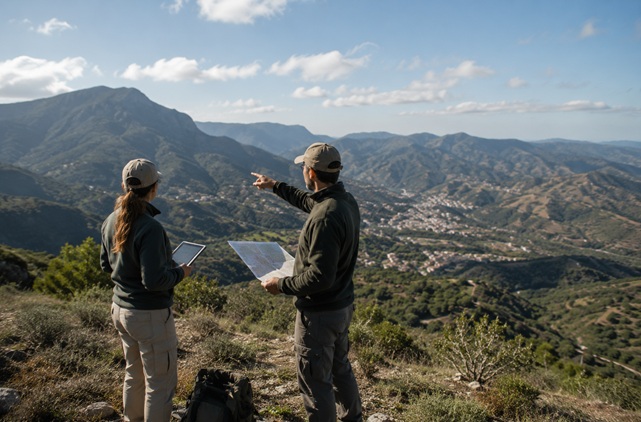
In this type of global approach, a significant share of the project’s initial time is typically spent determining the best minimum geographic unit of analysis. This subdivision needs to be granular enough to capture the nuances of the phenomenon under study, yet stable enough to hold the key variables from every data source. In our experience, reaching the right segmentation is an iterative process: once the analytical technique is applied, the results must be validated as coherent and relevant for decision-making. If they aren’t, the minimum unit is redefined until the patterns extracted make sense in the context of the problem.
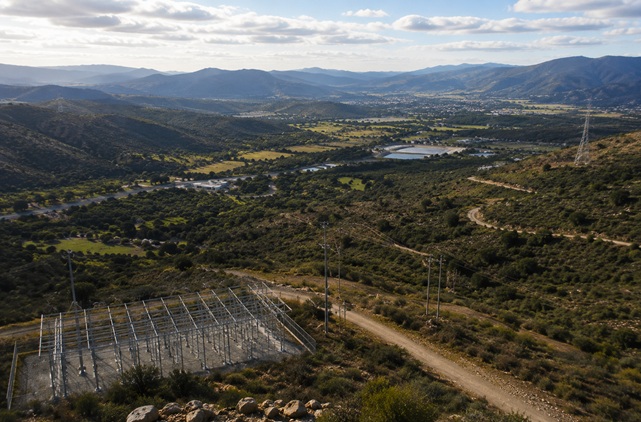
This kind of analysis is especially valuable in the early stages of infrastructure or utility projects, when there’s more room to experiment with different alternatives and strategies. It’s during the pre-investment stages conceptual engineering or pre-feasibility studies that this approach delivers the most value, by making it possible to compare scenarios and optimize strategic decisions before major resources are committed.
The adoption of artificial intelligence tools is significantly speeding up this process. Their ability to interpret data of different kinds and evaluate multiple scenarios against predefined metrics makes it possible to explore complex solutions faster, more efficiently, and with a better fit to context.
Machine learning models are especially useful for identifying patterns and predicting the risk associated with each geographic unit, but it’s mathematical optimization that turns that information into a concrete decision: where to place a new asset, how to prioritize investments, or which combination of measures strikes the best balance between cost, risk, and resilience. Depending on the nature of the problem, at NTT DATA Business Analytics we draw on different families of techniques:

when the decision involves discrete variables whether to build an asset, where, and at what size subject to technical and budget constraints, and a provably optimal solution is required.
to explore the set of efficient solutions (the so-called Pareto frontier) when objectives are in tension, such as minimizing investment cost while maximizing network resilience
when the solution space is too large to be solved exactly within a reasonable time
so that today’s investment decisions remain robust against future climate or demand uncertainty, rather than overfitting to a single forecast scenario
The choice of technique or combination of techniques depends on the size of the problem, the type of constraints involved, and how quickly an answer is needed; there is no one-size-fits-all recipe.
A recent example is the work led by NTT DATA Business Analytics, headed by Marta Enesco and Lucía Saiz Lapique, in collaboration with Big Data Science students from the University of Navarra (UNAV) Manuela Baluga Martínez and Javier Alzate Moreno. The project tackled the challenge of improving the design of the electricity transmission grid, which is increasingly exposed to adverse weather conditions that disrupt its operation, cause supply outages, and drive-up maintenance costs. The first step was defining minimum geographic units to pinpoint vulnerable sections and enrich them with predictive variables. Our analytical models worked with climate data and with variables that quantified the potential impact of an incident on the population and essential services, providing a stronger basis for future investment decisions (Figure 1).
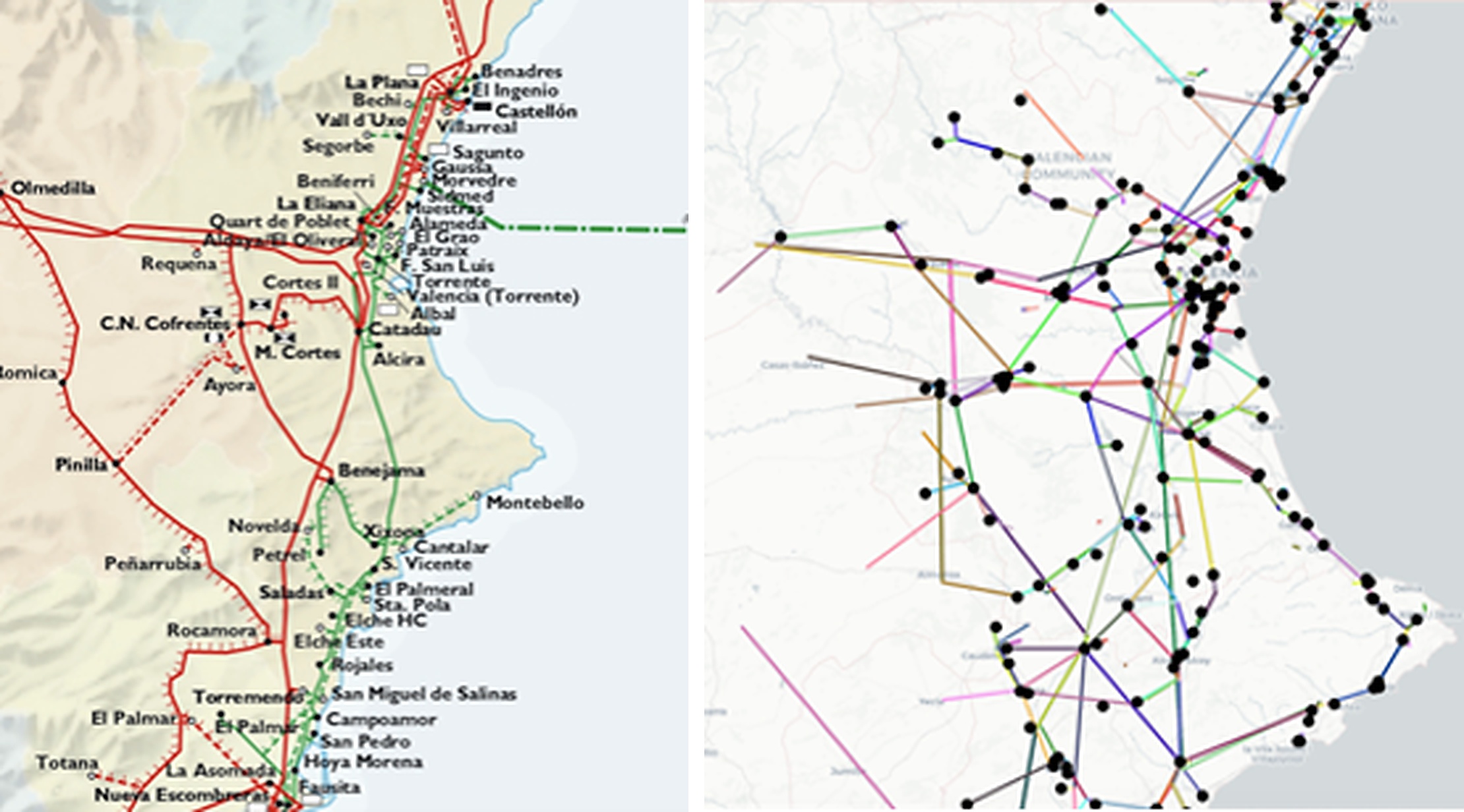
The global approach shows that, with a coherent data model and a well-calibrated unit of analysis, AI can anticipate risks and optimize investment decisions well before projects break ground cutting costs and increasing the resilience of infrastructure. The case of the transmission grid’s exposure to adverse weather, developed together with UNAV, illustrates how this kind of territorial analysis makes it possible to prioritize investment where the potential impact on the population and essential services is greatest.
But designing infrastructure well is only part of the challenge: once the network is built, its day-to-day operation also needs to run efficiently. In our next article, we’ll explore the local approach, focused on how AI can improve the operation and maintenance of existing networks

Maria del Socorro Gomez Perez
Associate Manager at NTT DATA | Utilities Sector

Diego Francisco Garate Ariass
Business Consulting Manager at NTT DATA | Natural Resources
NTT DATA Insights