



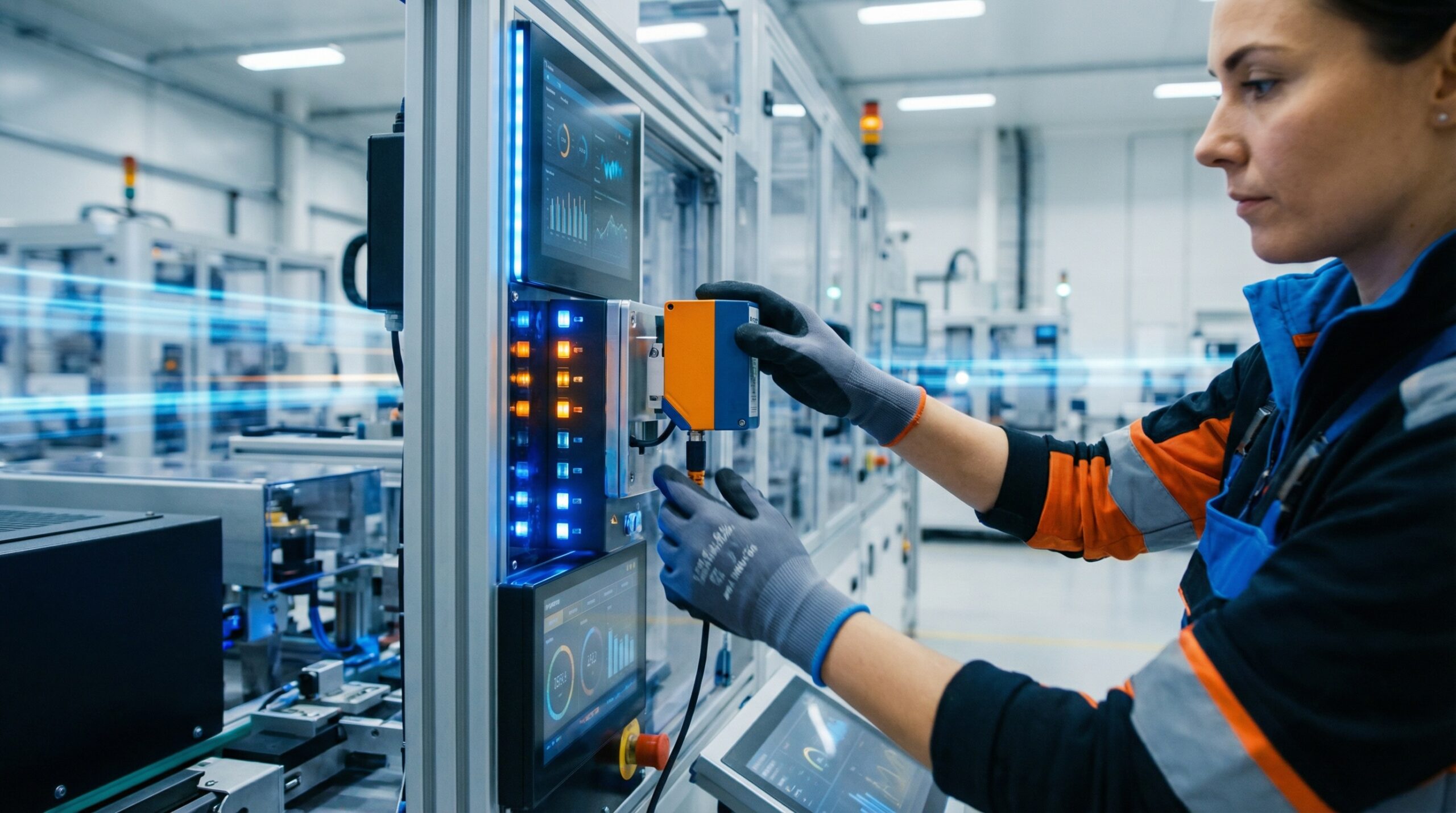
We design semantic models based on Unified Namespace and ISA-95 principles, establishing a shared operational language across plants, production lines, assets, components and events so AI can understand industrial operations in context.

Manufacturers have invested in connected systems and advanced analytics, improving visibility across industrial operations. Yet when a production issue occurs, information remains distributed across applications, technical documents and historical records. The challenge is connecting data, knowledge and actions quickly enough to support confident operational decisions.
Digitalization connected industrial and enterprise systems, but people still have to reconstruct operational meaning across applications. Shopfloor Assistant adds a shared contextual layer that understands shopfloor language, relates live conditions to enterprise knowledge and supports traceable decisions and governed actions through natural conversation.
How Shopfloor Assistant works
Continuously interprets industrial events, equipment status, process conditions and user interactions, connecting OT signals, enterprise systems and industrial context into a unified view of the operational situation.
Resolves natural shopfloor language against the Unified Namespace to identify the relevant site, line, asset, component or sensor, then enriches the request with maintenance history, technical knowledge and operational relationships.
Combines operational signals, enterprise knowledge and business rules to evaluate alternatives, explain recommendations and support consistent decisions based on the current situation rather than on predefined workflows alone.
Coordinates approved enterprise systems to create or update work orders, orchestrate workflows, notify stakeholders and maintain traceability, while keeping governed controls and human validation in place.
By combining operational context, enterprise knowledge and Agentic AI, Shopfloor Assistant reduces operational friction and helps organizations improve productivity, decision-making and knowledge reuse without changing the way people work.
Bring operational data, technical knowledge and enterprise workflows into a single conversational experience, enabling operators to focus on solving problems instead of navigating disconnected applications.
Understand the language of the shopfloor by automatically resolving assets, equipment, sensors and events into a shared operational context, ensuring consistent interpretation across teams, shifts and plants.
Transform natural conversations into governed operational actions by creating, enriching and managing maintenance activities directly within enterprise workflows, with complete traceability.
Capture every interaction as structured operational knowledge, preserving expert experience, improving future recommendations and creating a continuously evolving organizational knowledge base.
We design semantic models based on Unified Namespace and ISA-95 principles, establishing a shared operational language across plants, production lines, assets, components and events so AI can understand industrial operations in context.
We connect operational technologies with enterprise applications so industrial events, equipment conditions and business processes work within a common operational context, reducing fragmentation between plant systems and enterprise workflows.
We transform technical documentation, maintenance procedures, OEM manuals and organizational know-how into structured knowledge, then design AI agents that reason across those sources and coordinate governed actions through enterprise systems.
We apply enterprise identity, permissions, human validation and traceability to operational AI, while creating consistent experiences for operators, technicians and supervisors on a reusable foundation designed to support multiple industrial domains.
The next transformation is not adding more applications.
It is enabling every operator to interact with industrial knowledge, operational data and enterprise systems through a single intelligent operational layer.