- All Foundries

- Commodity Management & Trading

- Customer & Marketing Strategy

- Digital Engineering

- Station Studio

- Supply Chain & Industry 5.0
- Sustainability

- Physical AI

- Next-Gen Infrastructure












Sustainable Aviation Fuels: Technologies, regulations and digital traceability for a greener future
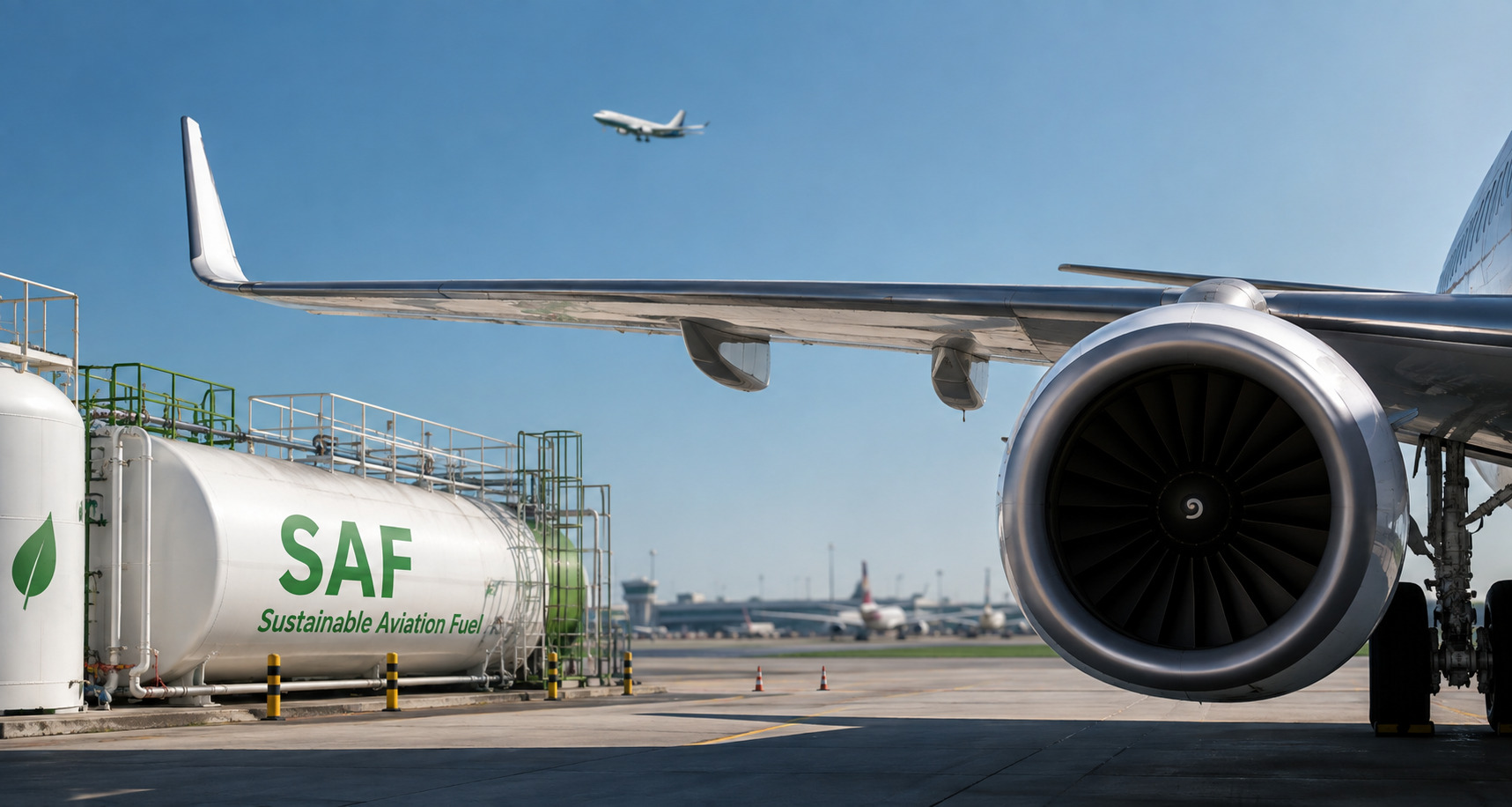
Aviation accounts for around 2.5% of global CO₂ emissions, while the EU is targeting climate neutrality by 2050 and a 90% reduction in transport emissions compared with 1990 levels. ReFuelEU Aviation is already turning that ambition into mandatory demand: SAF must represent 2% of the aviation fuel mix supplied at EU airports in 2025, rising to 6% in 2030, 20% in 2035, 34% in 2040, 42% in 2045 and 70% in 2050 — alongside a dedicated synthetic-fuel sub-mandate from 2030.
The scale-up challenge is substantial. Around 3.2 Mt of SAF will be required by 2030 to reach the 6% EU target, with projected requirements rising to 14.8 Mt by 2040 and around 28 Mt by 2050. Supply, infrastructure, data and accounting frameworks now have to scale at the same pace as regulation.
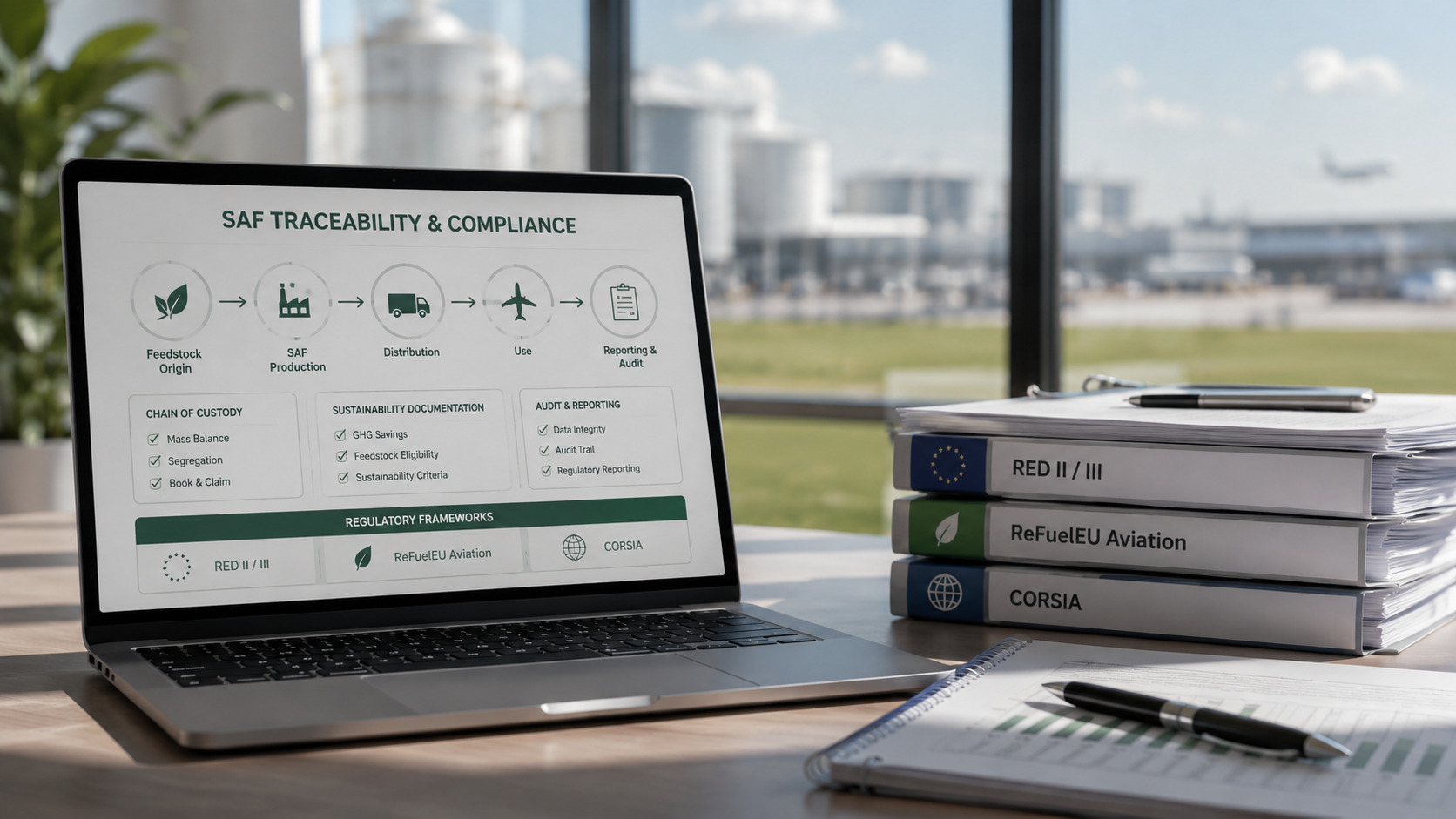
SAF only delivers trusted environmental value when sustainability can be demonstrated from feedstock to final use — digital traceability connects that physical journey with the evidence regulators, certifiers and market participants need.

Follow feedstocks and fuels through collection, processing, storage, trading, blending and final delivery, preserving the evidence required to demonstrate sustainability.
Structured digital records support Proof of Sustainability, Sustainability Declarations, Chain of Custody requirements, certification, reporting and third-party audits.
Exclusive ownership, registry-based traceability, retirement and verification help ensure the same environmental benefit is not claimed more than once across Scope 1 and Scope 3.
Emerging Book & Claim models can separate fuel delivery from verified environmental attributes — widening participation where physical SAF availability remains constrained.
How NTT DATA helps
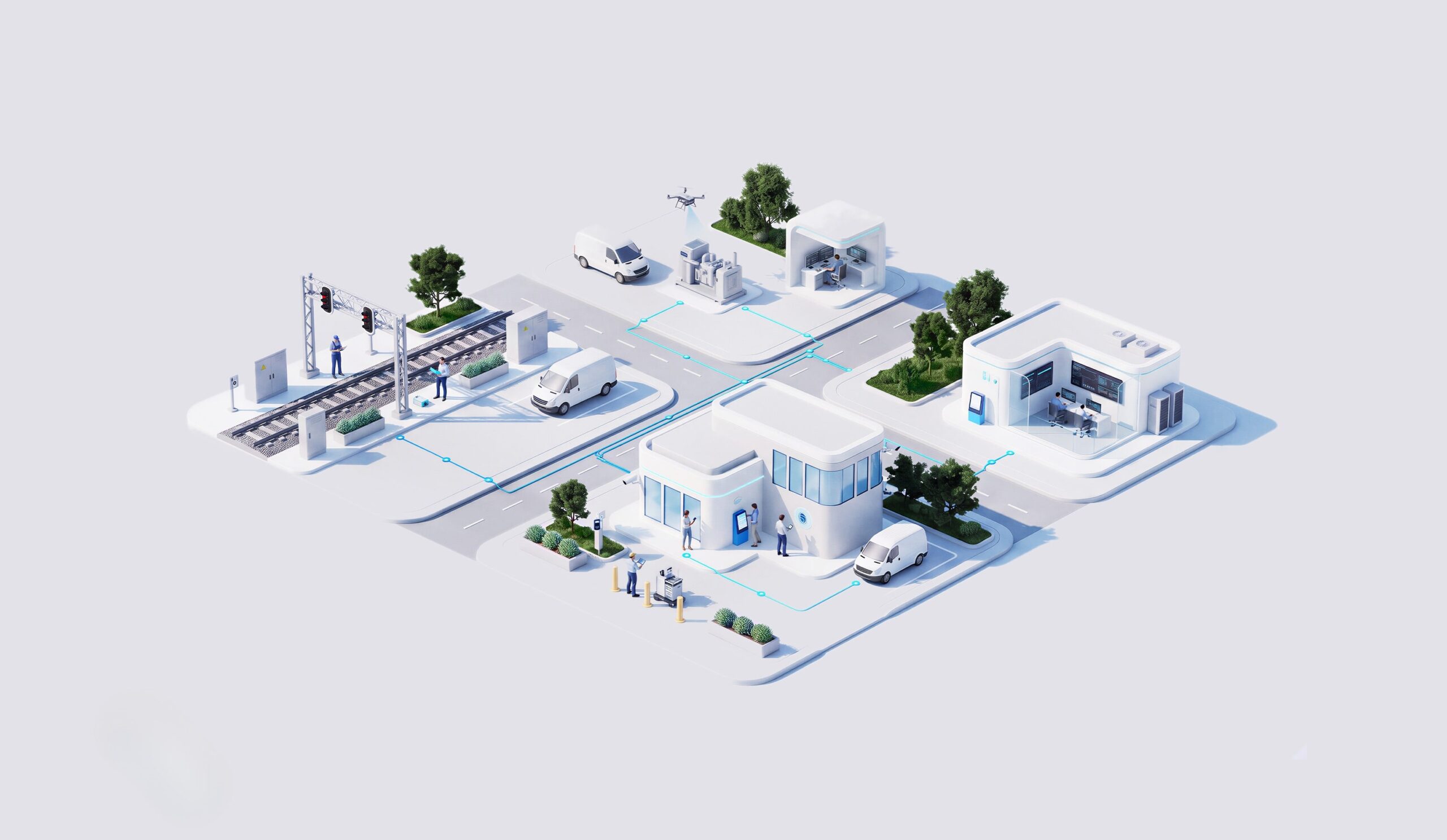
Integrate IoT-enabled monitoring, operational platforms, cloud infrastructure and enterprise systems to create structured information flows from feedstock origin through SAF production and use.
Design traceability and accounting workflows around Chain of Custody, sustainability documentation, audit and reporting requirements linked to RED II/III, ReFuelEU Aviation, CORSIA, ISCC and RSB.
Link lifecycle GHG information with SAF certificates, accounting records and registry processes so environmental attributes can be issued, transferred and retired with clear ownership.

Connect producers, suppliers, airlines, freight operators, corporate buyers, certification schemes and registries — reducing friction created by disconnected platforms and inconsistent data.

We don’t treat traceability as a standalone platform. We combine digital capabilities, regulatory context and stakeholder integration to support scalable SAF accounting, compliance and reporting.


Digital traceability connects sustainability data across the SAF value chain — strengthening data integrity, streamlining certification and audits, and helping economic operators demonstrate compliance while reducing risks such as double counting and fraud.
SAF can deliver lifecycle emissions reductions of around 80% compared with conventional jet fuel, depending on pathway and sustainability characteristics.
ReFuelEU Aviation progressively raises the SAF share required in fuel supplied at EU airports from 2% in 2025 to 70% in 2050.
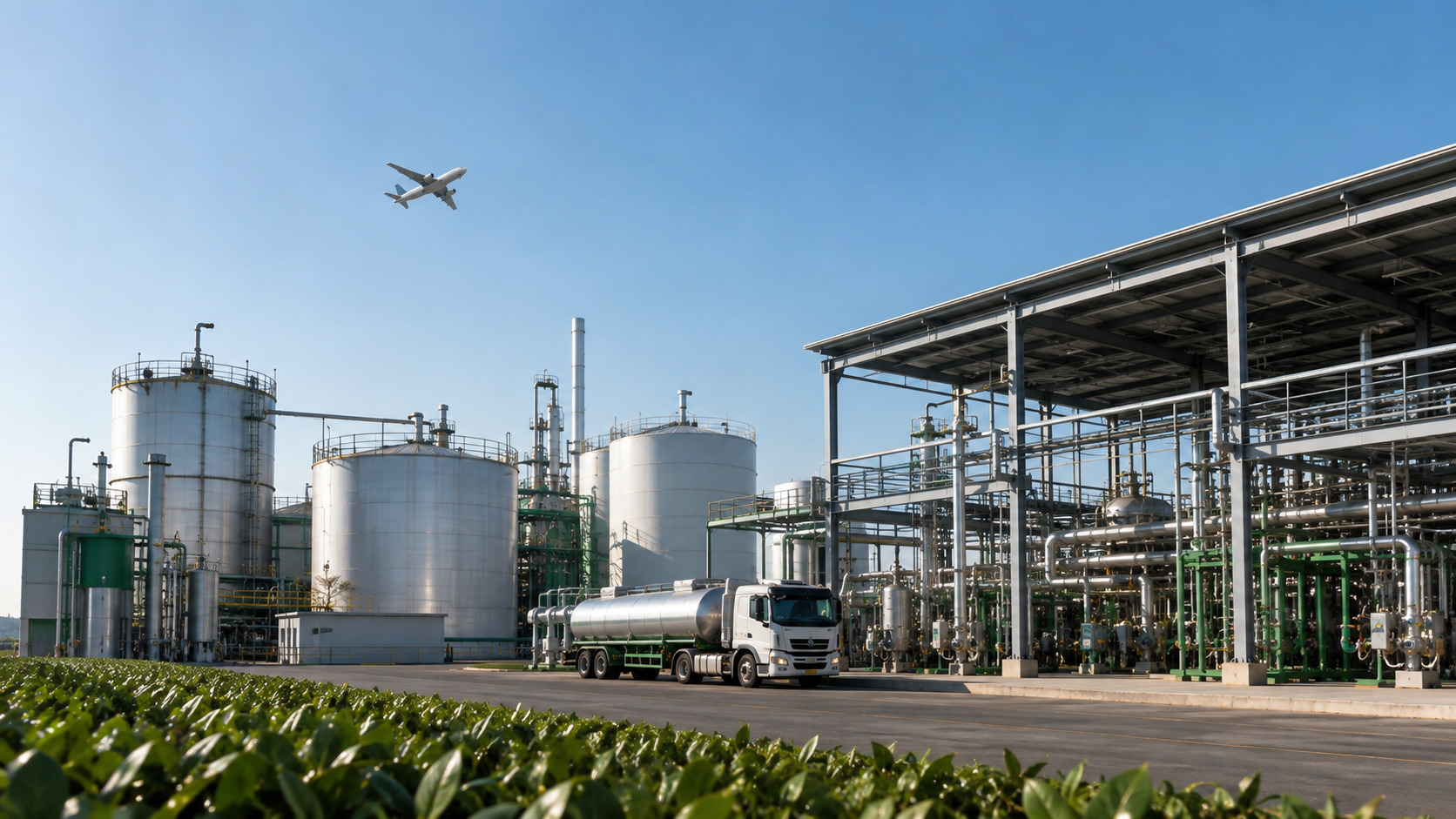
Meeting regulatory trajectories will require major expansion of production capacity, infrastructure, feedstock availability and emerging pathways such as Power-to-Liquid.
Exclusive ownership, verified registries, retirement and transparent reporting are becoming central safeguards for SAFc and Scope 3 participation.
Build the trusted foundations for aviation’s sustainable future.