- All Foundries

- Commodity Management & Trading

- Customer & Marketing Strategy

- Digital Engineering

- Station Studio

- Supply Chain & Industry 5.0
- Sustainability

- Physical AI

- Next-Gen Infrastructure













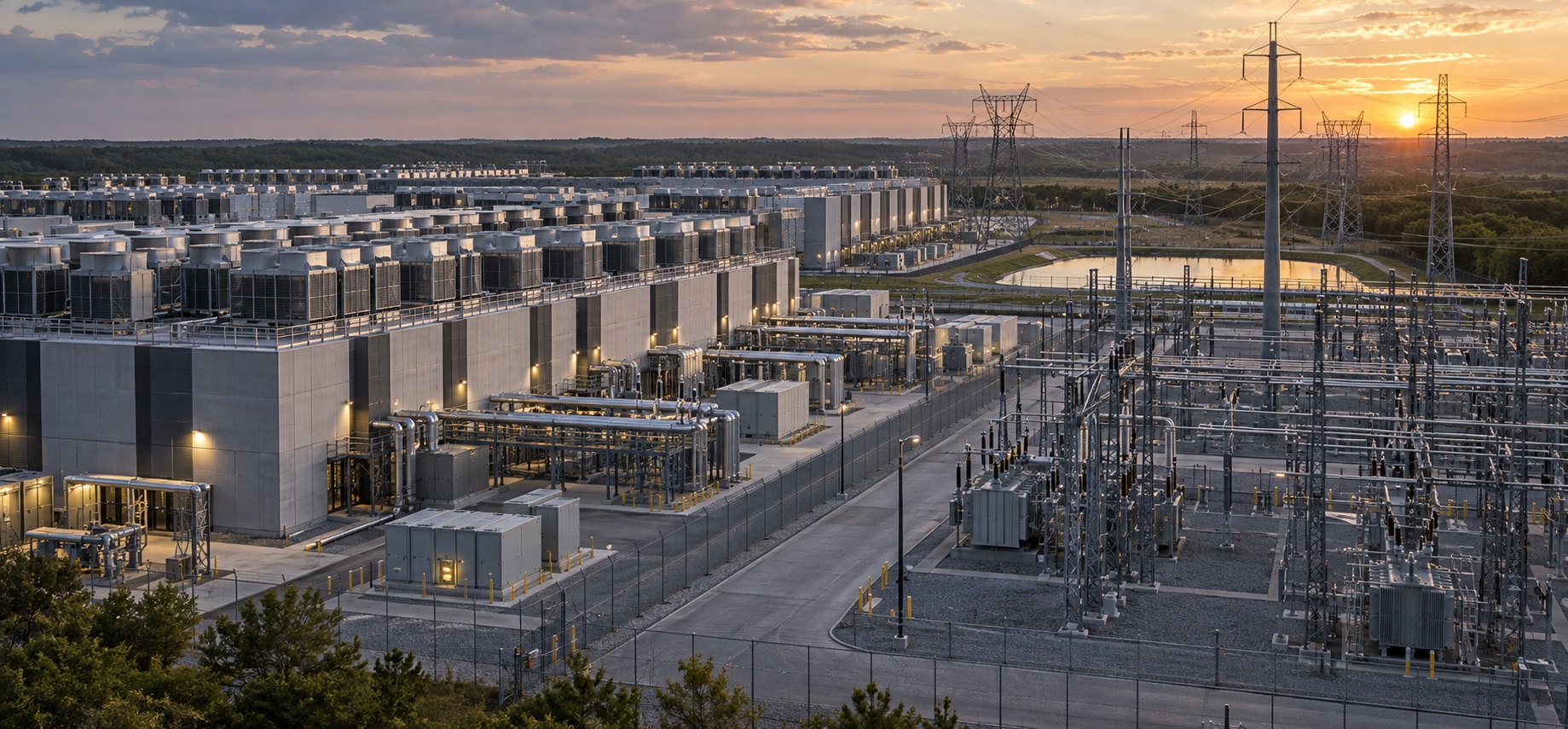
The Megawatt you don’t build for
But a promised curtailment is not capacity. Utilities can defer firm network investment only when flexible megawatts are contractible, observable, dispatchable and auditable.
The large-load problem is commonly framed as a race to build. That is only half the diagnosis. Electric utilities and grid planners face a compound uncertainty: the volume of proposed demand is unusually large, the probability and pace of project realization are uncertain, and the eventual electrical behavior of AI-intensive facilities may differ materially from a flat 24/7 block.
Four signals for the executive committee, covering the scale of future demand, regulatory movement, demonstrated compute-level flexibility and the uncertainty already shaping grid-planning decisions.

EPRI’s scenario range for data centers’ share of US electricity demand in 2030, up from 4–5% in 2024.
FERC ordered every regional grid operator under its jurisdiction to justify or reform large-load connection rules in June 2026.
A Phoenix field demonstration reduced power consumption in a 256-GPU AI cluster by 25% for three hours while maintaining the trial’s stated quality-of-service guarantees.
NERC reports that new Texas data-center demand projections are reduced by almost 50% from initially requested levels to reflect observed early-operation consumption.
Base decisions on common readiness, ramp and duplication criteria; define the constraint, notice, duration, frequency, rebound, priority and failure consequence before selecting technology; align telemetry, baseline, event records, audit access and settlement; pilot by constraint pocket; and award planning credit only through the applicable accreditation methodology and demonstrated performance.
NTT DATA Insights