- All Foundries

- Commodity Management & Trading

- Customer & Marketing Strategy

- Digital Engineering

- Station Studio

- Supply Chain & Industry 5.0
- Sustainability

- Physical AI

- Next-Gen Infrastructure






Physical AI for Hazardous Environment Operations
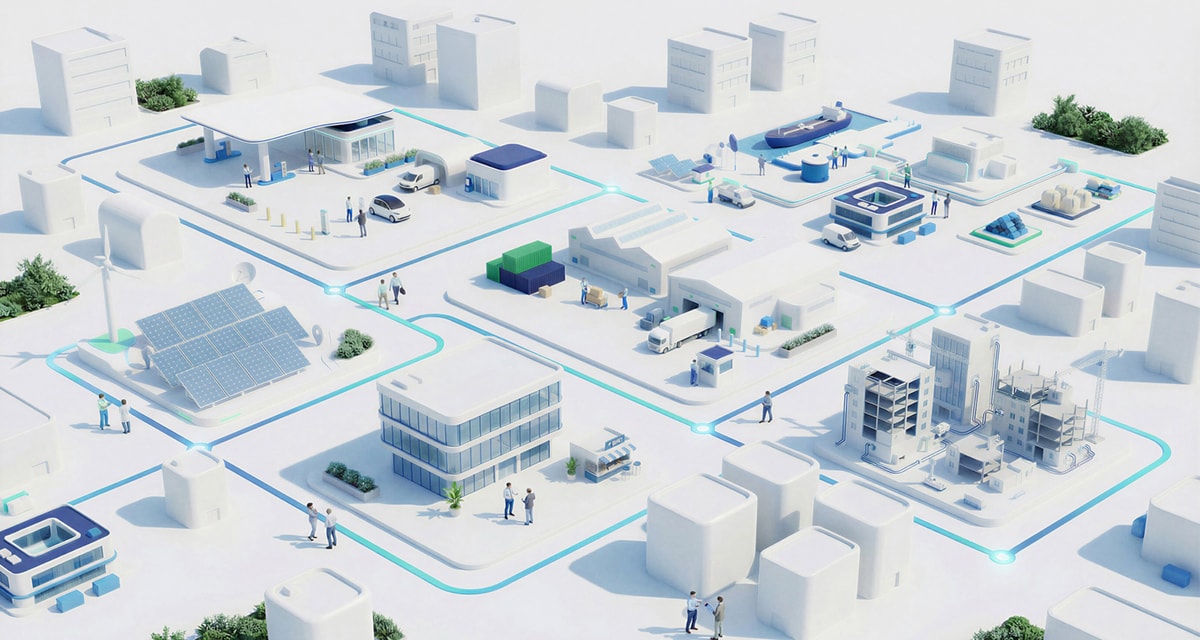
Utilities increasingly need physical assets, data, people and external ecosystems to work together in near real time across generation, transmission, distribution, gas and water operations. In hazardous environments, the priority is to place contextual intelligence and automation close to operational decisions while retaining human oversight wherever safety, regulatory or operational risk demands direct accountability.
Physical AI can help utilities act on changing conditions sooner while reducing routine manual effort and supporting more consistent control across complex infrastructure.

Contextual intelligence can surface anomalies and changing conditions sooner, giving teams additional time to assess potential issues and choose an appropriate response.
Automation can take on selected inspection or coordination activities, reducing repetitive manual effort in operating environments that are difficult to scale.
Timelier information and intervention can support availability and reliability across critical infrastructure when physical conditions or operating complexity increase.
Connected asset and process information helps teams apply decisions more uniformly while preserving human accountability for safety critical and regulated activities.
How NTT DATA helps
NTT DATA connects authorised asset, enterprise and operational data so Physical AI works from relevant utility context rather than isolated signals.

Analytics, AI and automation are applied at the architectural point that best supports the required operational or commercial decision.

Outputs are incorporated into enterprise and OT processes so operators can act through established workflows instead of managing a separate technology layer.

Permissions, cyber controls, validation, fallback mechanisms and human oversight are defined according to the safety, regulatory and operational risk of critical infrastructure.

Controlled use cases are assessed through operational KPIs before capabilities are reused across additional sites, asset classes and business units.


Indicative targets depend on baseline performance, infrastructure characteristics, process maturity and deployment scope, providing a practical basis for evaluating Physical AI in hazardous utility operations.
20% to 40% reduction in operational cycle time. Shorter cycles can help teams move from observed field conditions to completed operational action with less elapsed time.
20% to 40% reduction in manual workload. Shifting selected inspection and coordination tasks toward automation can preserve personnel capacity for exceptions and higher-risk activities.
15% to 30% reduction in decision and response time. Quicker contextualisation can help operators assess changing conditions and initiate appropriate action sooner.
Significant improvement in operational visibility. Connecting asset, operational and enterprise information can give teams a clearer view of conditions across distributed infrastructure.
Begin with controlled use cases, measure operational value and expand through interoperable architectures, cyber resilience and clearly defined human oversight.