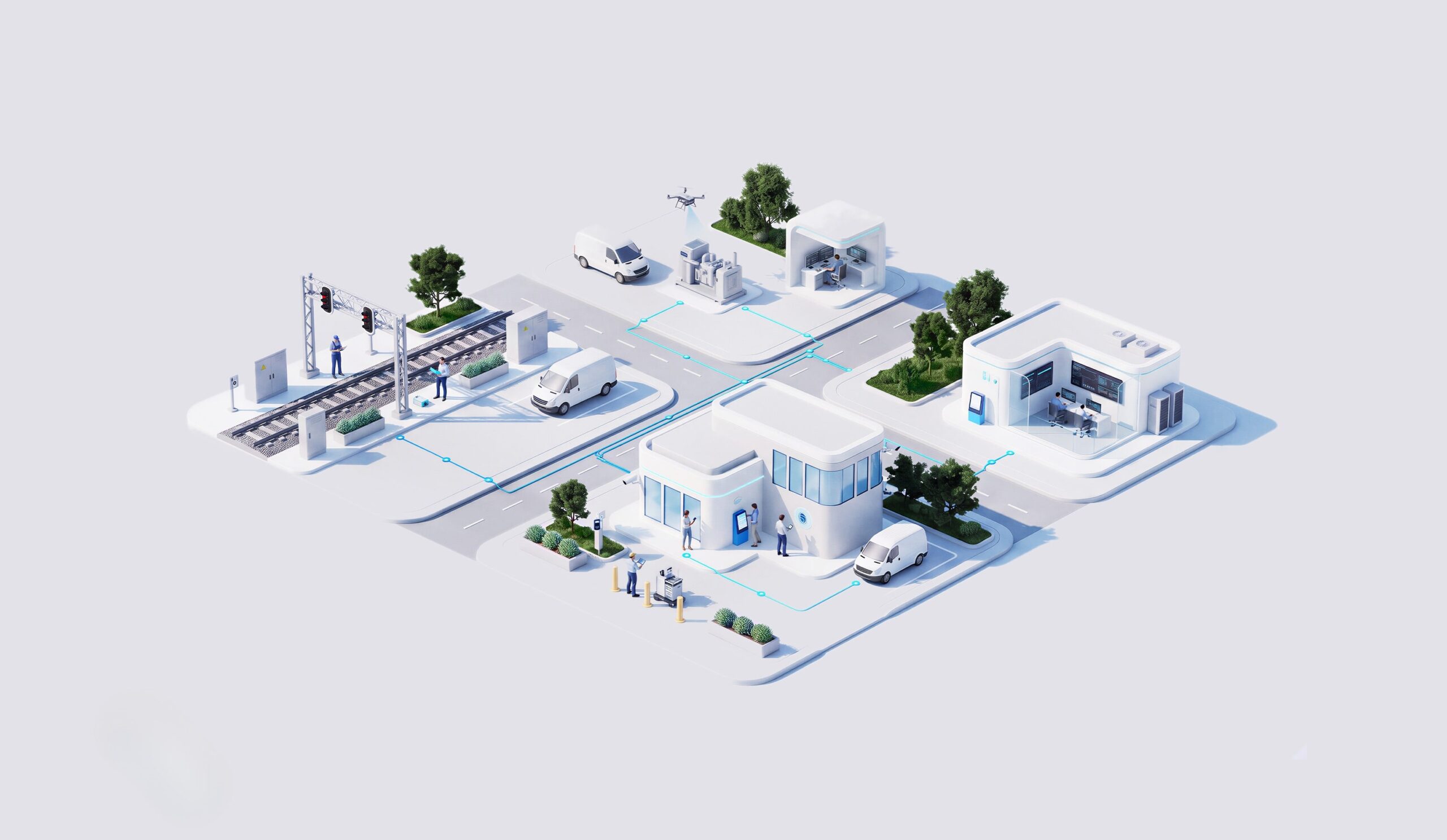
Computer vision analyzing ore fragments in real time as they move along a mining conveyor belt, while engineers review particle-size distribution and identify oversized material before it reaches downstream grinding equipment.
Talks that move

Ore Size Intelligence in Motion

Automating real-time granulometry on conveyor belts to reduce jams and stabilize material entering the grinding process.
Schedule a meeting
The conveyor does not pause while material quality changes.
WHY THIS "GRANULOMETRY" CHALLENGE?
Oversized rocks, excessive fines, and changing distributions move downstream at belt speed. Without continuous measurement, deviations may only become visible when they reach a screen, feeder, chute, or mill.
Key benefits
Make the conveyor a live process measurement

Computer vision turns moving material into continuous granulometry, giving operations earlier evidence of feed conditions before they become equipment problems.

check icon
Measure without stopping the belt

Maintain granulometry while material stays in motion.

check icon
Catch oversize upstream

Identify abnormal fragments before they disrupt downstream equipment.

check icon
See feed variability as it develops

Detect changing material conditions entering the mill.

check icon
Apply one logic across the operating period

Keep segmentation and classification consistent over time.

How NTT DATA helps

01
Design the measurement point

Define camera position, viewing area, image quality, and operating conditions.

Mining specialist positioning and configuring a computer-vision camera above a moving ore conveyor to establish the optimal viewing area for continuous particle-size measurement.
02
Separate ore from equipment

Segment mineral fragments and isolate visible material from surrounding structures.

Computer-vision camera observing mineral fragments moving along a conveyor belt, enabling the system to distinguish visible ore from the belt and surrounding industrial structures
03
Turn images into granulometry

Estimate size distribution and generate granulometry curves.

Computer-vision system analyzing mineral fragments moving on a conveyor belt and converting visual measurements into a real-time particle-size distribution for mining operations.
04
Detect threshold breaches early

Identify material above defined limits and notify the relevant team.

Mining operations specialists reviewing a computer-vision alert after oversized ore is detected on a moving conveyor, enabling the relevant operational team to respond before the material reaches downstream equipmen
05
Connect measurement to operating response

We don’t stop at visualization. We provide information that supports automatic or operator-approved feeder adjustment.

Machine-vision camera measuring mineral fragments on a moving conveyor as ore flows from a feeder, illustrating how continuous granulometry can support adjustments to the material feed process.
Proven impact
Every image becomes a measurement. Every deviation becomes visible sooner.
Results that matter
Continuous granulometry creates earlier visibility of feed conditions and downstream risk.
check icon
Reduced jam-related downtime

4% reduction reported in an anonymized use case.

check icon
Maintained live size visibility

Real-time granulometry across coarse and fine distribution.

check icon
Identified oversize earlier

Abnormal fragments detected before downstream disruption.

check icon
Stabilized the mill-feed picture

Better visibility supported more consistent material conditions.

Make every conveyor image part of the process-control loop.

Keep material variability visible before it disrupts production.

Drag