- All Foundries

- Commodity Management & Trading

- Customer & Marketing Strategy

- Digital Engineering

- Station Studio

- Supply Chain & Industry 5.0
- Sustainability

- Physical AI

- Next-Gen Infrastructure













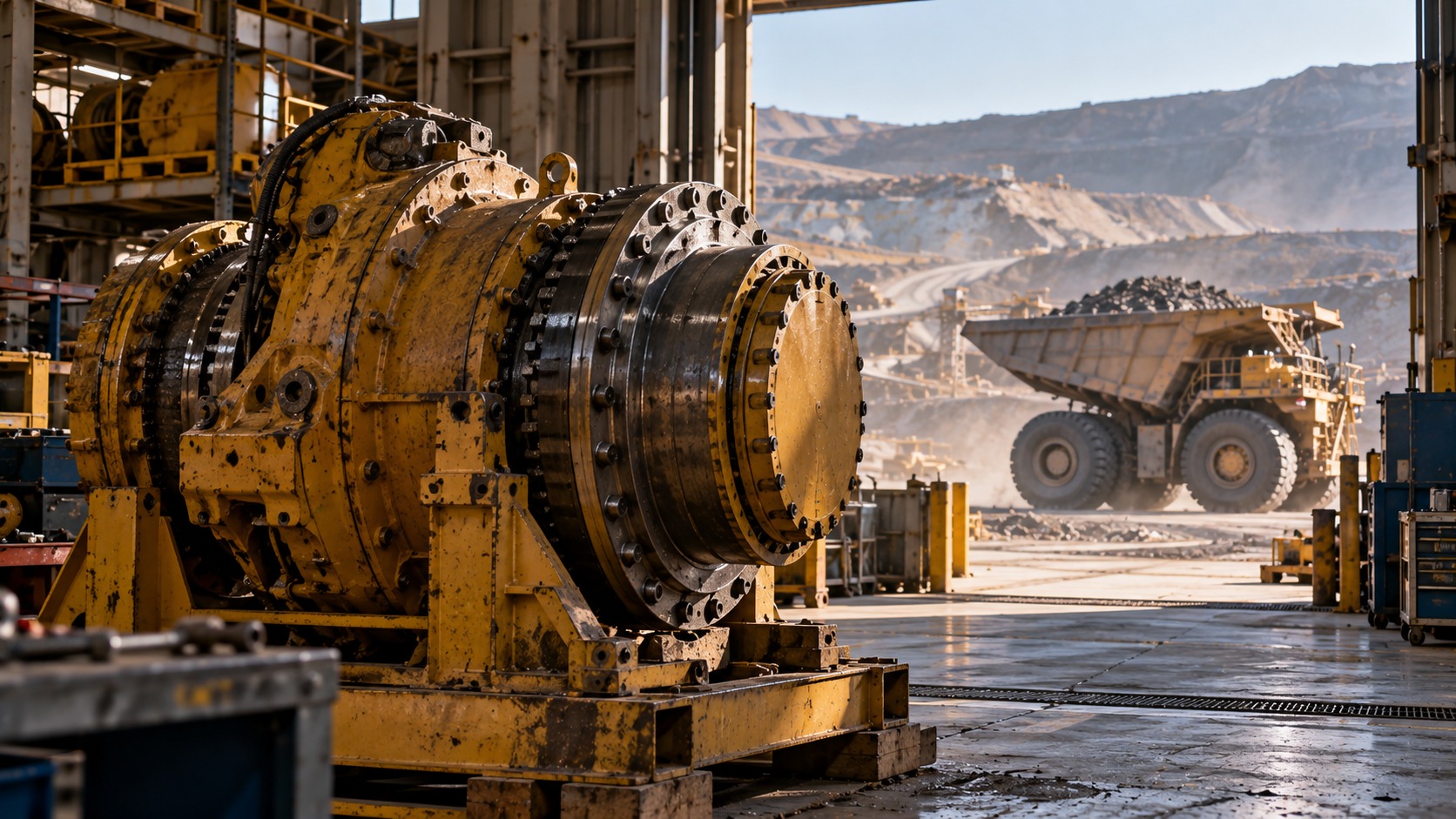
Critical mining spares as stored operational decisions
The question is no longer when should we repair, but what can we still do while we wait? Production may have to reroute, consume stockpile, reduce throughput or accept constrained capacity.
This reframes critical-spares management away from a narrow debate about stock levels.

The useful decision is to understand which spares preserve alternatives that matter to the production system, not just stock levels.
Holding every component is expensive; holding too little leaves production exposed to lead times that become constraints after failure.
A component that restores a single-point constraint can preserve the ability to recover throughput on the mine’s timetable.
The value of the spare is tied to the operating consequence of not having it when the decision window opens for the mine.
How NTT DATA helps
Connect critical components to the production paths, assets and capacities that depend on them rather than ranking inventory by item alone.

For each critical component, identify what the mine can still do after failure: switch equipment, reroute, use redundancy or reduce capacity

Bring together condition, failure history, maintenance strategy, inventory and replenishment so weak recovery positions become visible early.

Use alerts and workflows to trigger inspection, reservation, repair, transfer or procurement while alternatives still exist rather than after the component has already failed.

Link the intervention plan with part availability, logistics, labor and production timing so the spare is present when the option is exercised.

After failures and interventions, compare the spare held, the response used and the production consequence to refine criticality and stocking decisions.


Those choices disappear when replenishment becomes the longest constraint in the repair. The question is not whether inventory was consumed, but which production decision its availability made possible.
Critical spares should not be treated as shelves of insurance disconnected from the mine.
Spares are stored decisions: physical options held in advance so that when an asset fails, the operation can still choose how to recover.
Inspection, reservation, repair, transfer or procurement is triggered while alternatives still exist, not after the component fails.
When an asset fails, the operation can still choose how and when to recover, instead of waiting on replenishment lead times.
Comparing the spare held, the response used and the production consequence refines criticality and stocking decisions over time.
Explore how connecting asset risk, inventory and recovery alternatives can protect production when mining equipment fails.