Mobile Meter Reading for Distributed Utility Operations

A mobile meter-reading capability that digitizes field collection and validation of consumption data, connecting distributed meter-reading activity with centralized utility information processes.
Mining specialists reviewing drone imagery of a leach pad as Physical AI identifies water accumulation, runoff paths, affected terrain, and irrigation infrastructure across the site.
Field-reading digitization
Meter readings captured directly through the mobile workflow.
Route execution
Supported through digital route management and assignment.
Data synchronization
Supported through master-data synchronization between field and central environments.
Offline operational continuity
Enabled for areas with variable connectivity.
Lack of real-time visibility and workload balance
Field meter data captured, validated and synchronized through a structured mobile workflow.

Meter reading is a highly distributed field activity. Technicians or operators move across large service territories, capture readings from many devices and must ensure that the resulting information reaches utility systems accurately and in a processable form. The solution mobilized data collection, validation and field execution, reducing the separation between the physical point of capture and the systems that use the reading. Mobile reading remains relevant in mixed estates, exception processes, transitional environments and locations where remote communications are not universally available.

A consistent digital operating model for distributed and mixed-meter estates
Objectives
The main objective is to improve the quality and timeliness of meter data captured in the field by digitizing the reading process and enabling validation closer to the source. A further objective is to standardize how distributed reading activities are executed and synchronized, helping the organization manage field productivity while maintaining a consistent information flow between technicians, meters and central systems.
Opportunity
Utilities often operate heterogeneous metering estates in which automated and manual processes coexist. Exceptions, legacy devices and operational situations may still require physical reading, creating an opportunity to make those activities part of the digital data chain rather than a separate manual process. The same mobile platform can support exception handling, meter verification, service visits and asset updates through a shared connected-field architecture.
Ensuring accurate, timely meter data across distributed and heterogeneous environments

Meter-reading activity spans large service territories, field data needs validation before entering downstream processes, connectivity conditions and heterogeneous meter estates can complicate synchronization, and manual processes can create delays and transcription errors.
Key Challenges
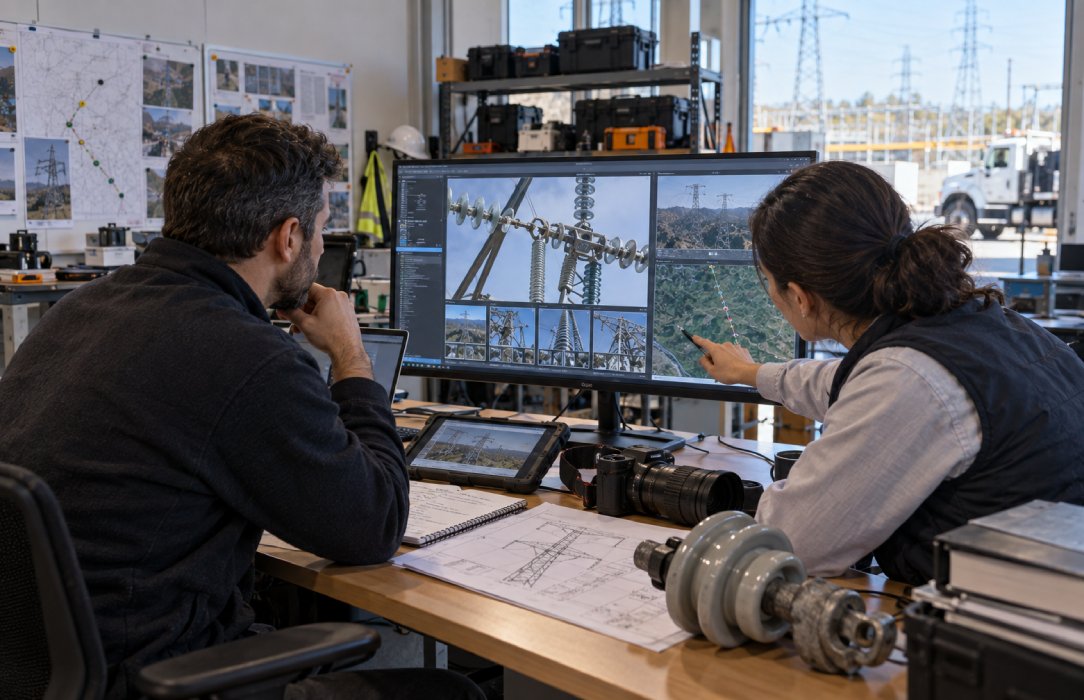
Transmission engineers reviewing multiple asset inspection images and corridor information at a shared technical workstation.
1. Distributed field activity
Meter-reading work is performed across large service territories.
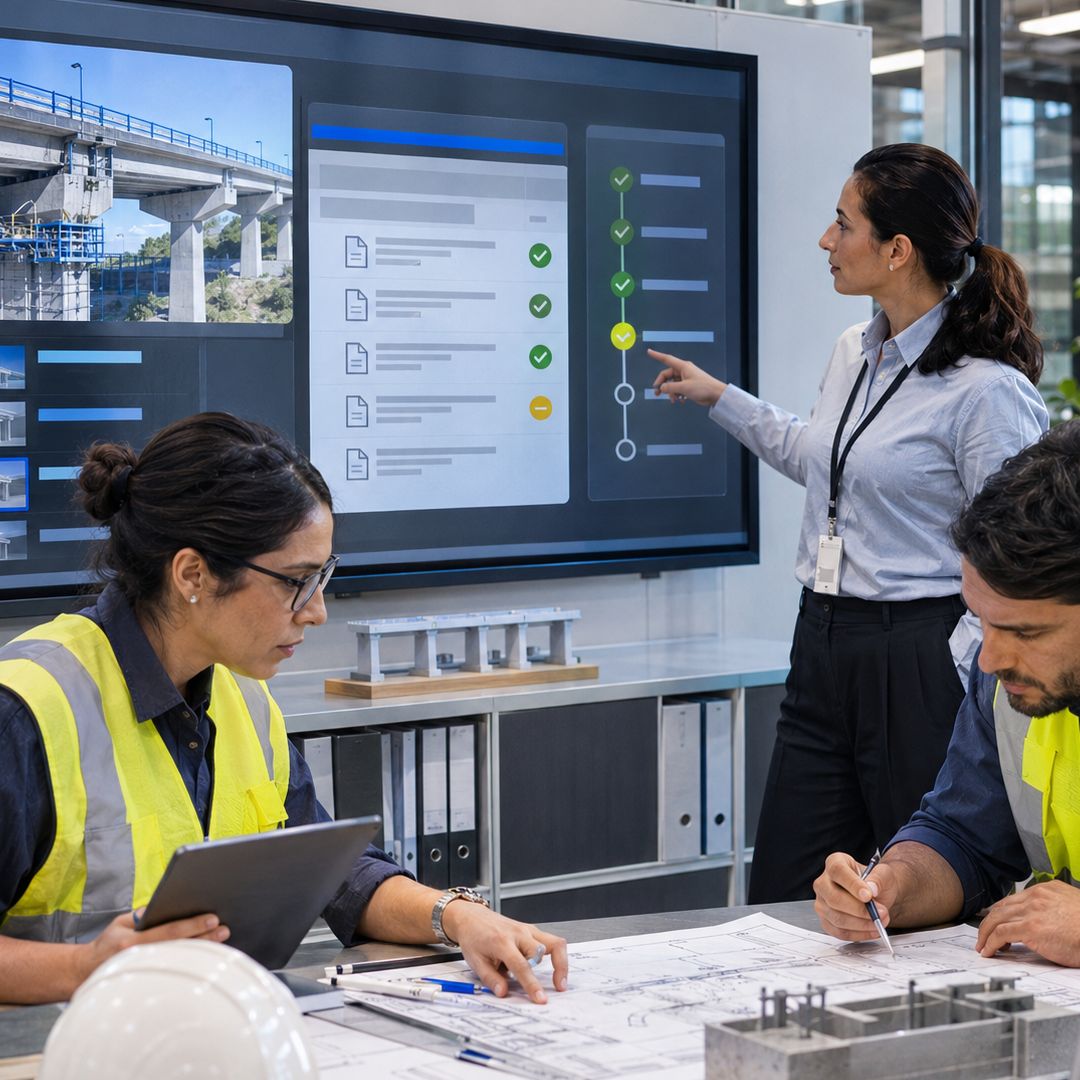
Project specialists verify BIM model versions, documents and approvals within a governed common data environment.
2. Early data validation
Field data needs to be validated before it propagates into downstream processes.
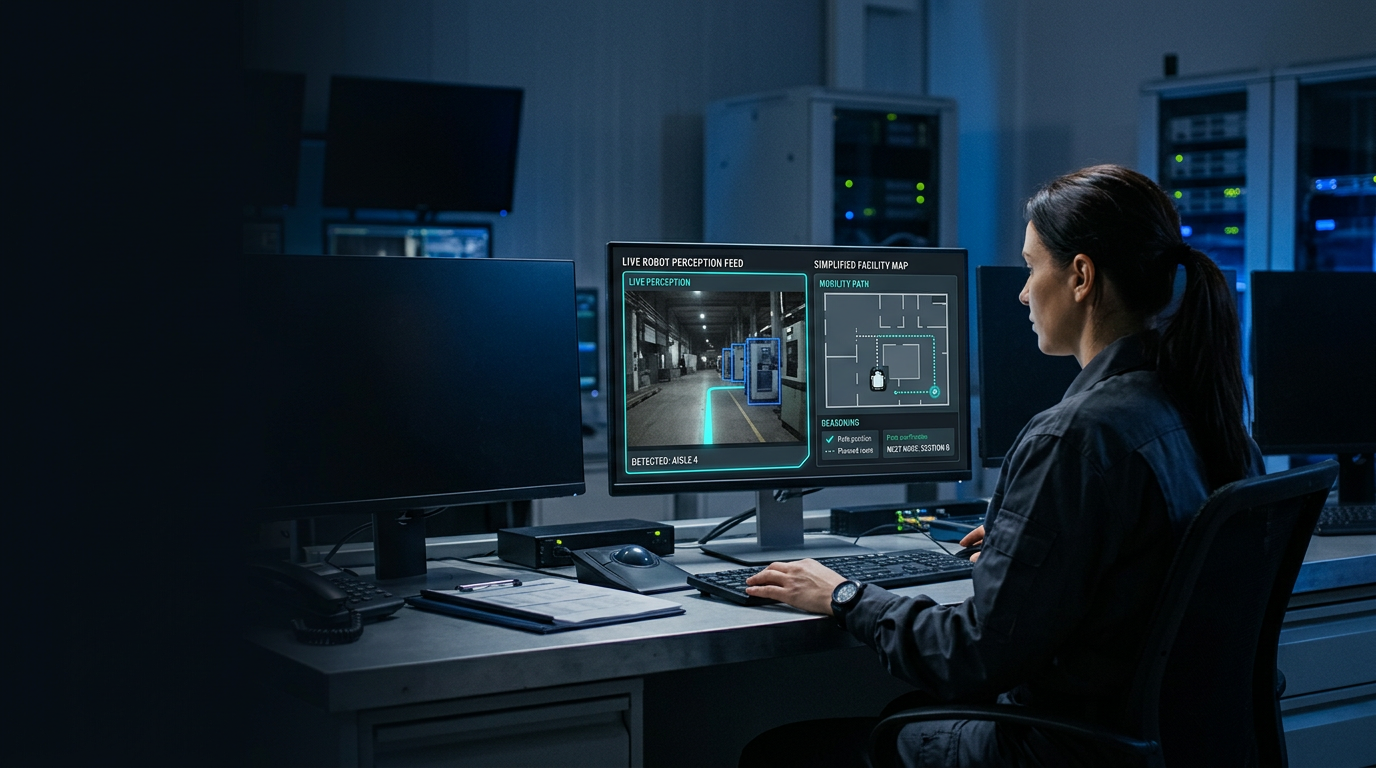
Operator in a dim control room monitors a screen showing a live robot perception feed and facility map, with servers and dark monitors around the desk.
3. Variable connectivity and meter types
Connectivity conditions and heterogeneous meter estates can complicate synchronization.
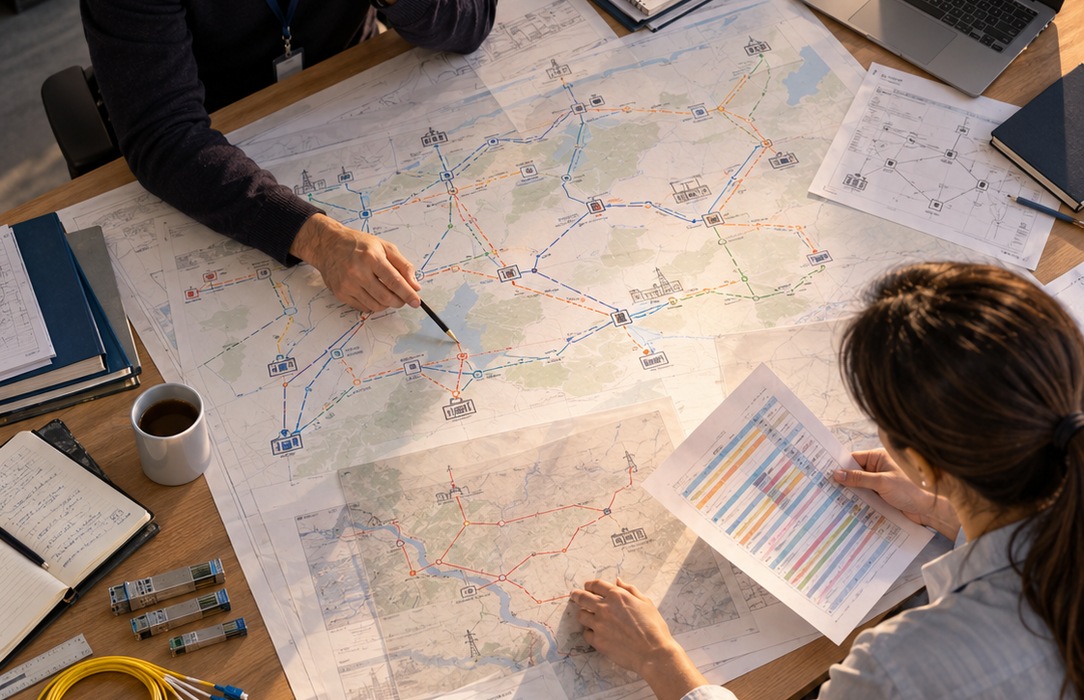
Two maintenance planners reviewing a large network map, schedules and technical documents, illustrating the complexity of coordinating gas inspection plans with workforce constraints.
4. Manual delays and errors
Manual reading processes can create delays and transcription errors.
Solution
A mobile reading workflow integrated with central utility information processes

The solution digitized field reading through mobile devices, allowing meter information to be captured and validated as part of a structured process. The mobile environment guided the activity and provided a direct path for readings to move into central utility systems, reducing later transcription and enabling validation closer to collection.

check icon
Structured mobile capture

Meter information is captured and validated through a guided digital workflow.

check icon
Digital route management

Route management and assignment support distributed field execution.

check icon
Central synchronization

Master data and readings are synchronized between field and central environments.

check icon
Mixed-model support

Offline operation, GPS, images and barcode reading support exceptions and locations requiring manual intervention.

Impact
More timely meter data and better continuity across automated and manual scenarios

The approach improves data timeliness and consistency by reducing manual handoffs between field collection and central processing. Readings can be validated earlier and the organization gains better visibility of distributed field activity. Mobile execution also creates a more coherent metering model across automated and non-automated scenarios and can be reused for exception management and related field tasks.

Drag