- All Foundries

- Commodity Management & Trading

- Customer & Marketing Strategy

- Digital Engineering

- Station Studio

- Supply Chain & Industry 5.0

- Sustainability

- Physical AI

- Next-Gen Infrastructure












Digital Permitting & Regulatory Control for Renewable Projects
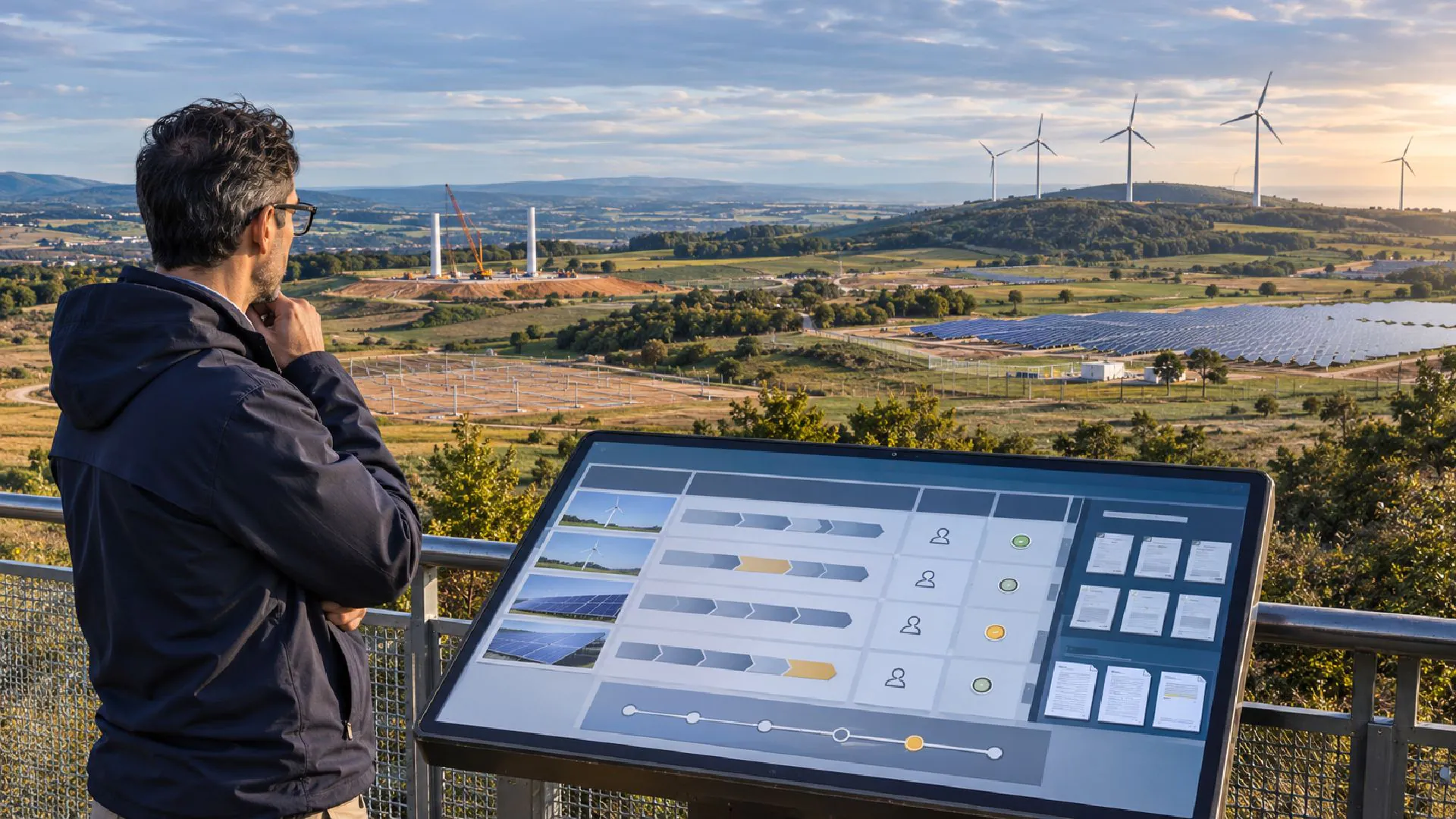

Renewable projects depend on regulatory steps before construction, energization and handover. Fragmented records obscure delays and responsibilities across portfolios. NTT DATA brings milestones, timing and supporting documents into a shared permitting platform.
Permitting steps differ by location, distributor and project profile. Dispersed status records, historical timings and evidence make critical-path control difficult at portfolio scale.

Local trackers scatter milestones across wind and solar developments, limiting a consistent portfolio view.

Schedules depend on location, distributor and project characteristics; static dates cannot capture every route.

Delayed activities can change project schedules if the next action and its accountable owner are unclear.

Task durations and regulatory documents must stay linked to milestones to support estimates and traceability.
NTT DATA connects regulatory workflows, time estimates, critical paths and documentation in a common view covering each project from early development to operational handover.

The platform tracks administrative stages from opportunity identification through development, construction, energization and handover.
Expected permitting timelines for new plants use project characteristics, including location and the relevant distribution company.
Task-stage detail and actual timing inform critical-path recalculation; delayed processes and responsible owners remain visible.
Historical average task durations and centralized permitting documents sit alongside the milestones they support.
The platform makes project stage, delayed activities and accountable owners visible across the renewable portfolio. Critical paths update as task timing changes, and historical averages inform new-project estimates.
success stories