Autonomous Underwater Infrastructure Inspection
Below the waterline, the inspection challenge changes completely. A transmission and distribution network operator assessed whether lightweight autonomous underwater vehicles could inspect submerged piles, buoys and hose or pipe connections as an alternative or complement to diver-based methods, while respecting port and maritime-authority requirements.
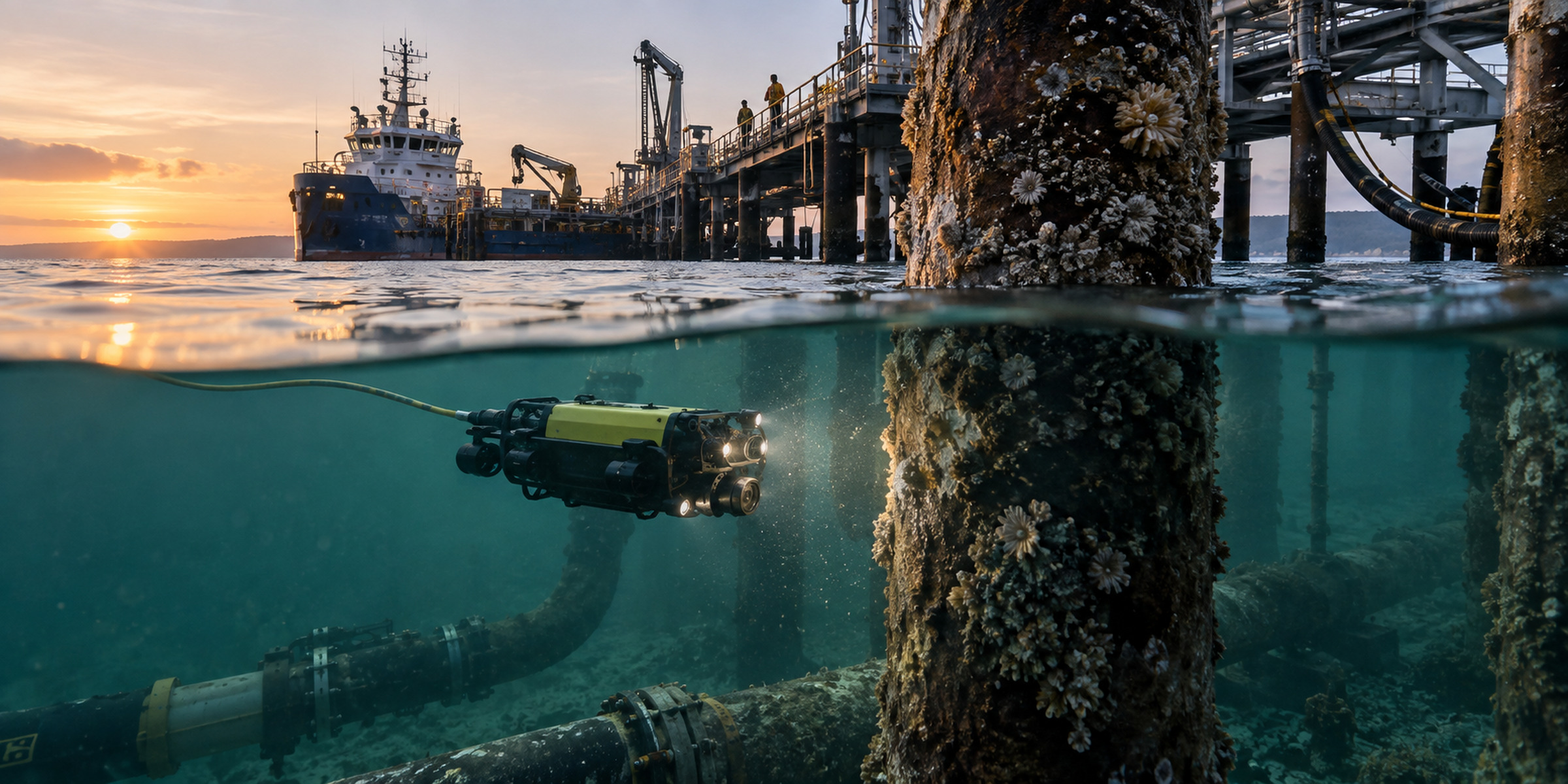
Split-level view of a compact autonomous underwater vehicle inspecting marine utility piles and subsea connections beneath a coastal energy terminal.
Inspection viability
Clearer fit for unmanned inspection
人の危険への関与
Potentially fewer hazardous underwater tasks
Digital evidence
Foundation for repeatable capture
Scale readiness
Operating constraints defined before expansion
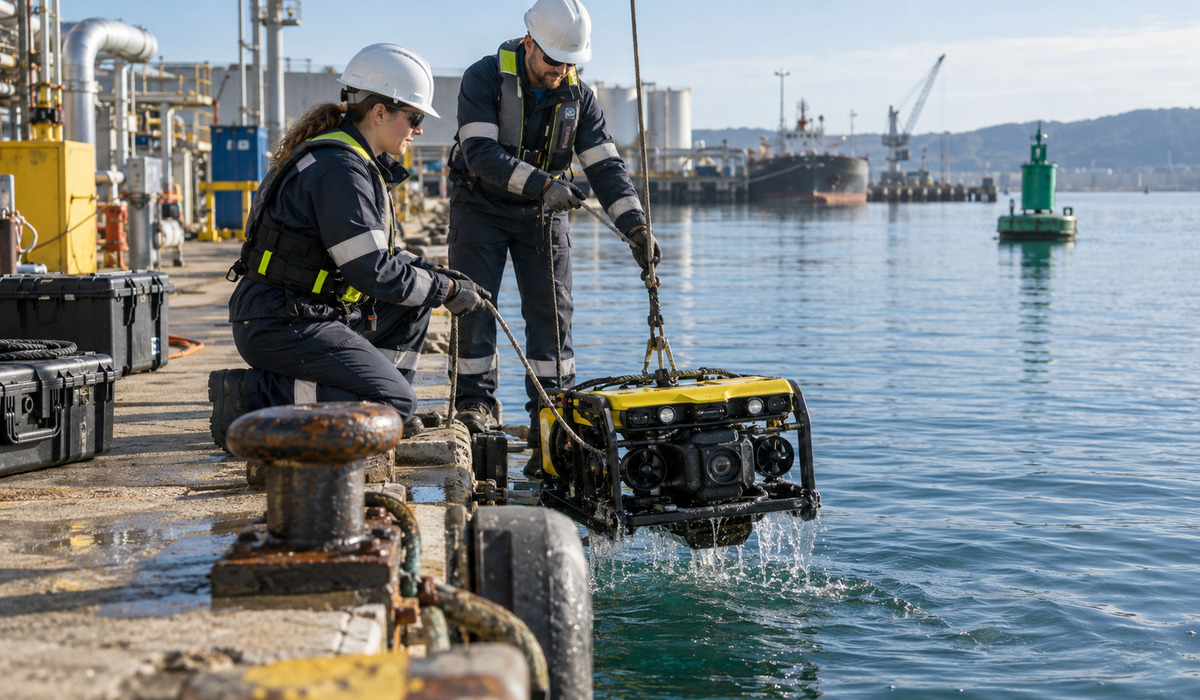
Maritime field technicians recover an autonomous underwater vehicle beside a port utility quay after an inspection mission.
Extending inspection intelligence below the waterline

The assessment connected autonomous vehicles, underwater imaging and a digital evidence workflow to determine where unmanned inspection could become operationally viable.

Submerged assets are essential, but their condition is difficult to see, costly to reach and risky to inspect.
目的
The initiative set out to determine where lightweight autonomous underwater vehicles could offer a viable alternative or complement to conventional diver-based inspection. It focused on target inspection scenarios across submerged marine infrastructure and on the operating conditions needed to capture evidence that engineering, operations and maintenance teams could review and reuse.
機会
The documented approach can be extended across subsea pipelines and connections, creating a path toward more repeatable missions and broader digital inspection workflows. Scaling depends on resolving the operating constraints identified in the assessment, aligning procedures with port and maritime authorities, and validating performance against the current inspection model.
Making autonomy work in a constrained marine environment

Technical feasibility was only one part of the challenge. The capability also needed to fit the operator’s context, capture evidence that teams could trust and operate within port and maritime requirements.
主な課題
1: Difficult underwater access
Piles, buoys and hose or pipe connections sit in environments where inspection can be slow, hard to standardize and constrained by safety and access.
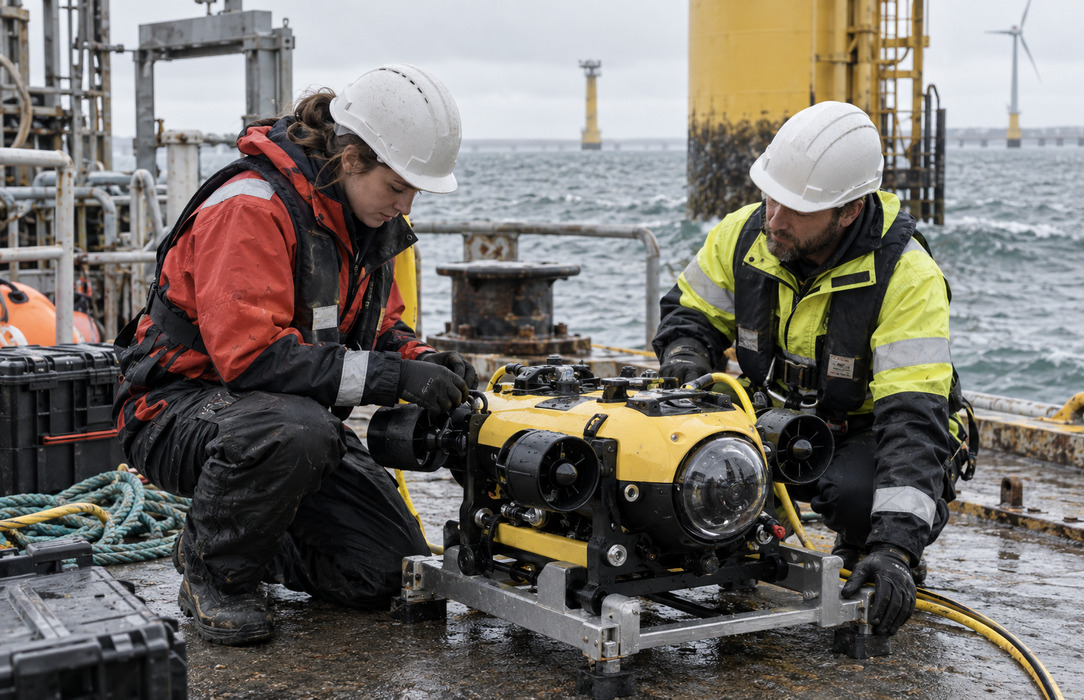
Field technicians inspect a lightweight autonomous underwater vehicle on a harbor work deck before deployment.
2: A viable operating alternative
The assessment needed to establish where a lightweight autonomous vehicle could complement diver-based inspection or serve as an alternative, considering availability, cost and operating limitations.
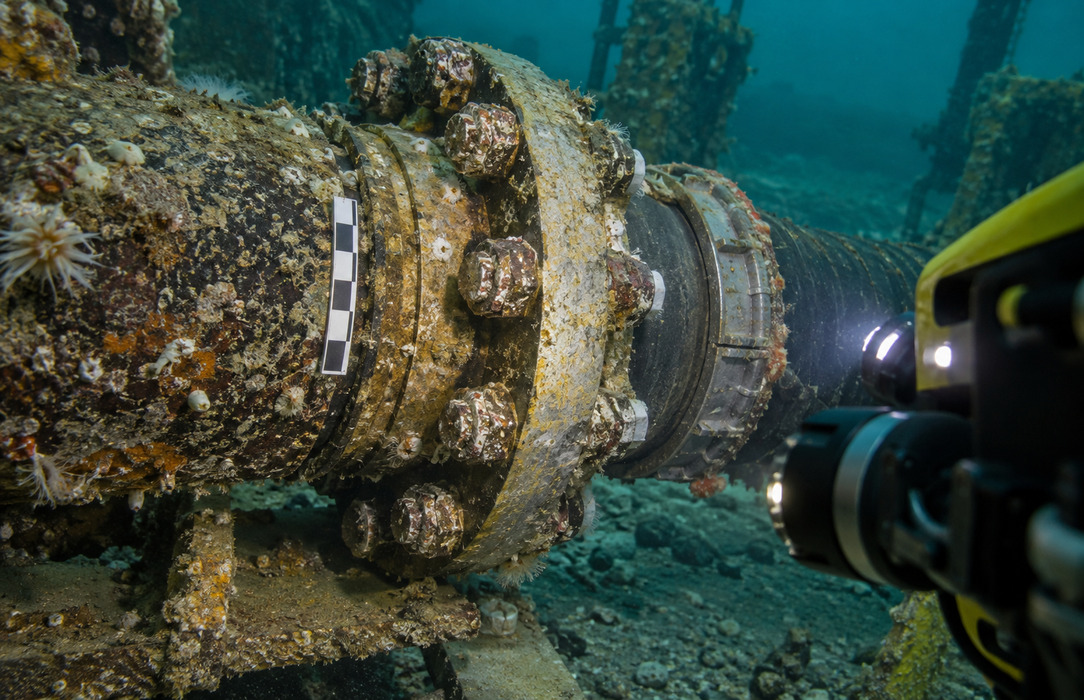
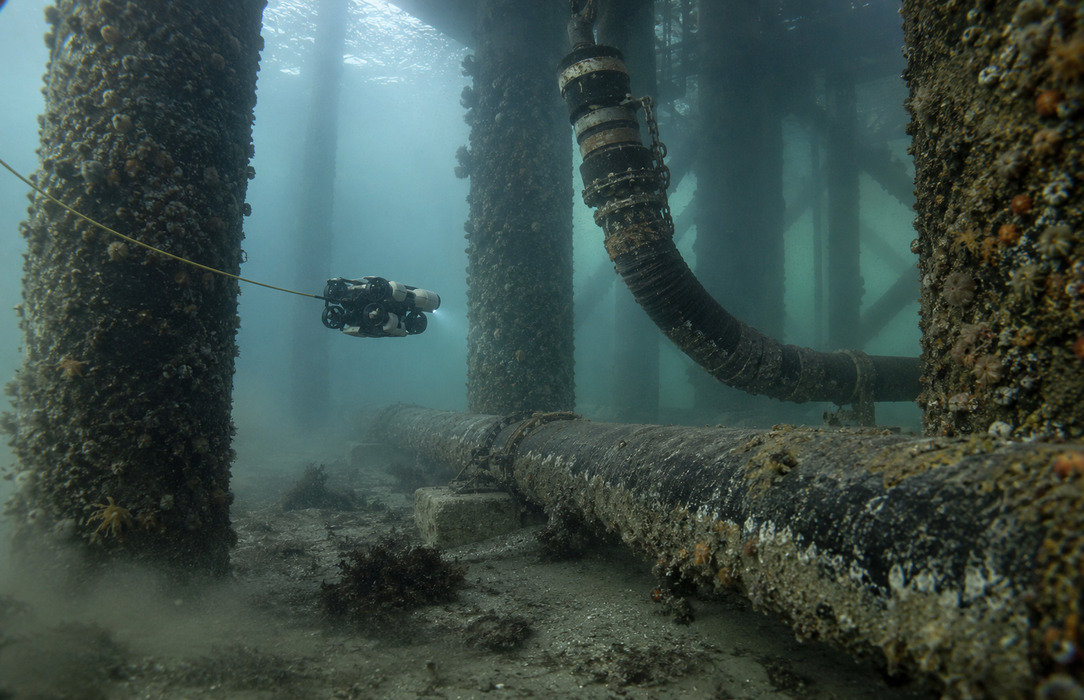
Underwater camera system documenting a marine-grown subsea pipe flange and connection for engineering review.
3: Evidence teams can trust
Physical-world data had to become traceable information that engineering, operations and maintenance teams could review, reuse and act on.
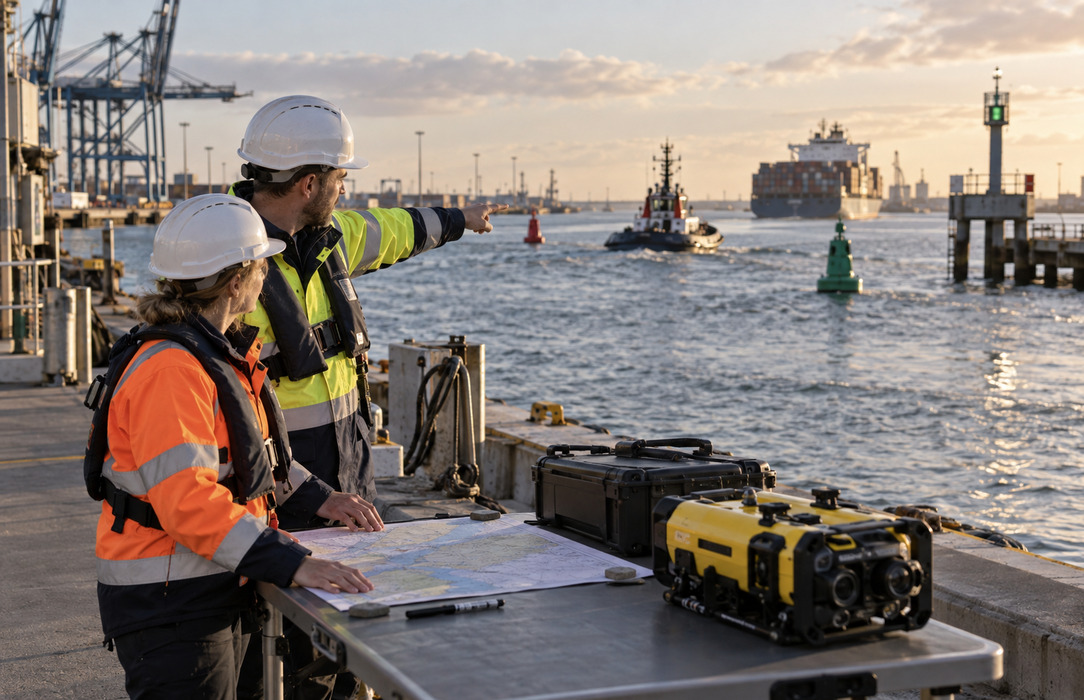
Maritime operations specialists coordinate an underwater inspection mission beside an active commercial harbor channel.
4: Port and maritime constraints
Any inspection mission had to account for the operating requirements and coordination needs of port and maritime authorities.
解決策
From mission definition to operational follow-through

The assessment linked vehicle feasibility with the data, process and user workflow required to move underwater evidence from capture into operational review and follow-up.

チェックアイコン
Scenario-led assessment

Defined target underwater inspection scenarios across marine infrastructure, grounding the evaluation in specific assets and operating needs.

チェックアイコン
Feasibility comparison

Assessed lightweight autonomous underwater vehicles and compared the approach with conventional diver-based inspection.

チェックアイコン
End-to-end evidence workflow

Combined field technology with a digital workflow for evidence capture, processing, review and operational follow-up.

チェックアイコン
Repeatable operating design

Designed missions and procedures for repeatability, while considering the constraints and coordination required by port and maritime authorities.

影響
A clearer route to underwater inspection at scale

The assessment gave the operator a clearer view of where unmanned underwater inspection can be viable. It also established a foundation for repeatable digital evidence capture, identified where human exposure to hazardous underwater tasks may be reduced and defined the constraints that must be addressed before operational scaling.
ドラッグ