60% less fresh waste and 40% fewer incidents across grocery stores
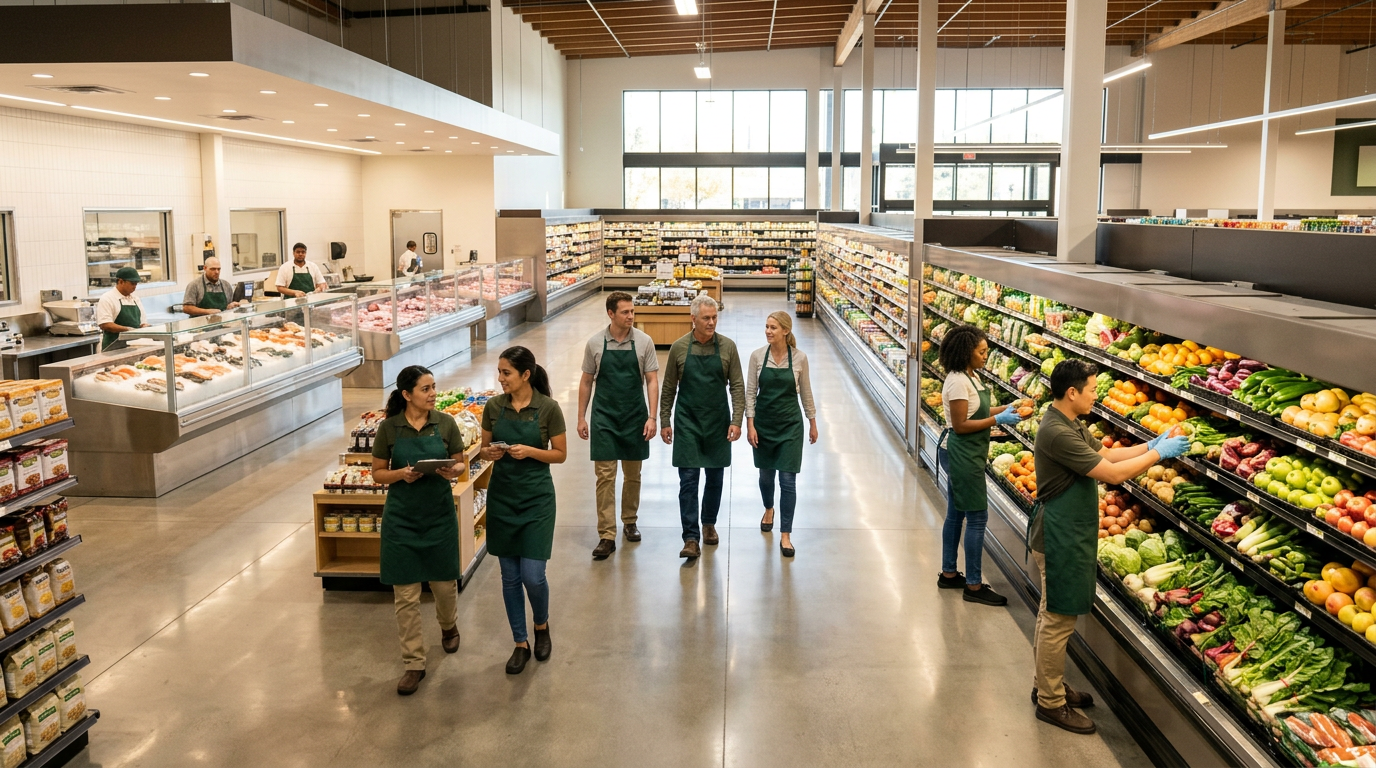
In grocery retail, margins are won or lost on the shop floor: in the fresh counters, the back-room warehouse and the daily routines of every store team. Working with NTT DATA, a grocery retailer ran a store process efficiency programme that combined detailed diagnostics, standardised scorecards and continuous-improvement routines, turning store-level discipline into measurable results across waste, stock and operational incidents.
Fresh Waste -60%
Reduction in fruit, meat and fish waste.
Decisions Stock -50%
Reduction in in-store warehouse stock.
Incidents -40%
Decrease in registered operational incidents.
Governance: Continuous Improvement per Store
A governed model with scorecards, routines and progress reporting.
Store execution that turns daily discipline into measurable savings
The retailer needed to break the cycle of chronic operational incidents, high shrink in fresh categories and excess stock in store warehouses, moving from reactive firefighting towards consistent, measurable execution in every store.
目的
The programme set out to diagnose and improve operational efficiency at store level, reducing chronic incidents, waste and excess stock through disciplined execution. The ambition was not simply to fix problems one by one, but to give store teams shared objectives, clear routines and the tools to resolve issues at their root.
機会
With standardised scorecards and team-based routines in place, the retailer can turn store-level discipline into measurable savings and repeat the same model across its network. A governed continuous-improvement approach per store creates a stable foundation to keep raising performance in the areas that matter most in grocery: fresh, stock and daily operations.
Stopping waste, stock and incidents from repeating

The retailer faced the practical challenge of addressing problems that kept coming back in its stores, where day-to-day pressure left little room to analyse causes, align priorities or sustain improvements over time.
主な課題
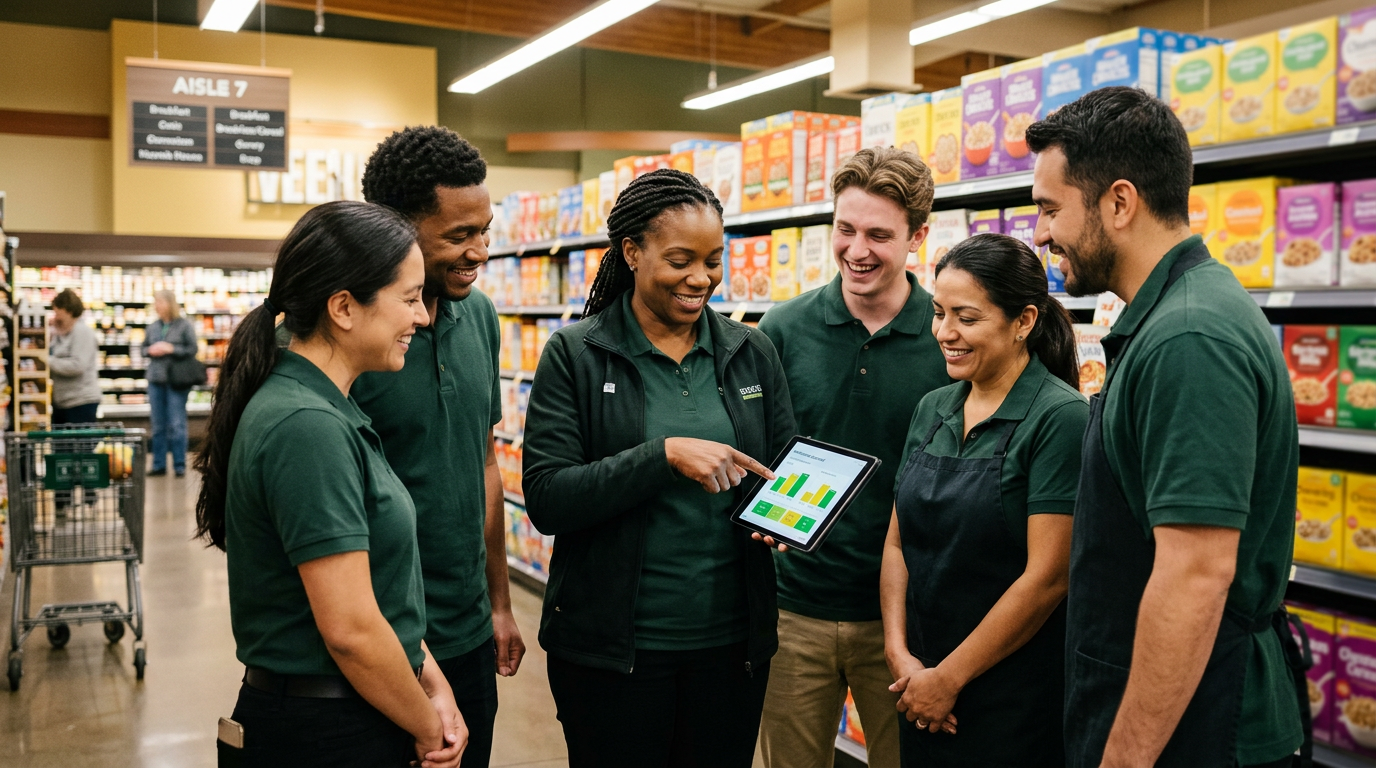
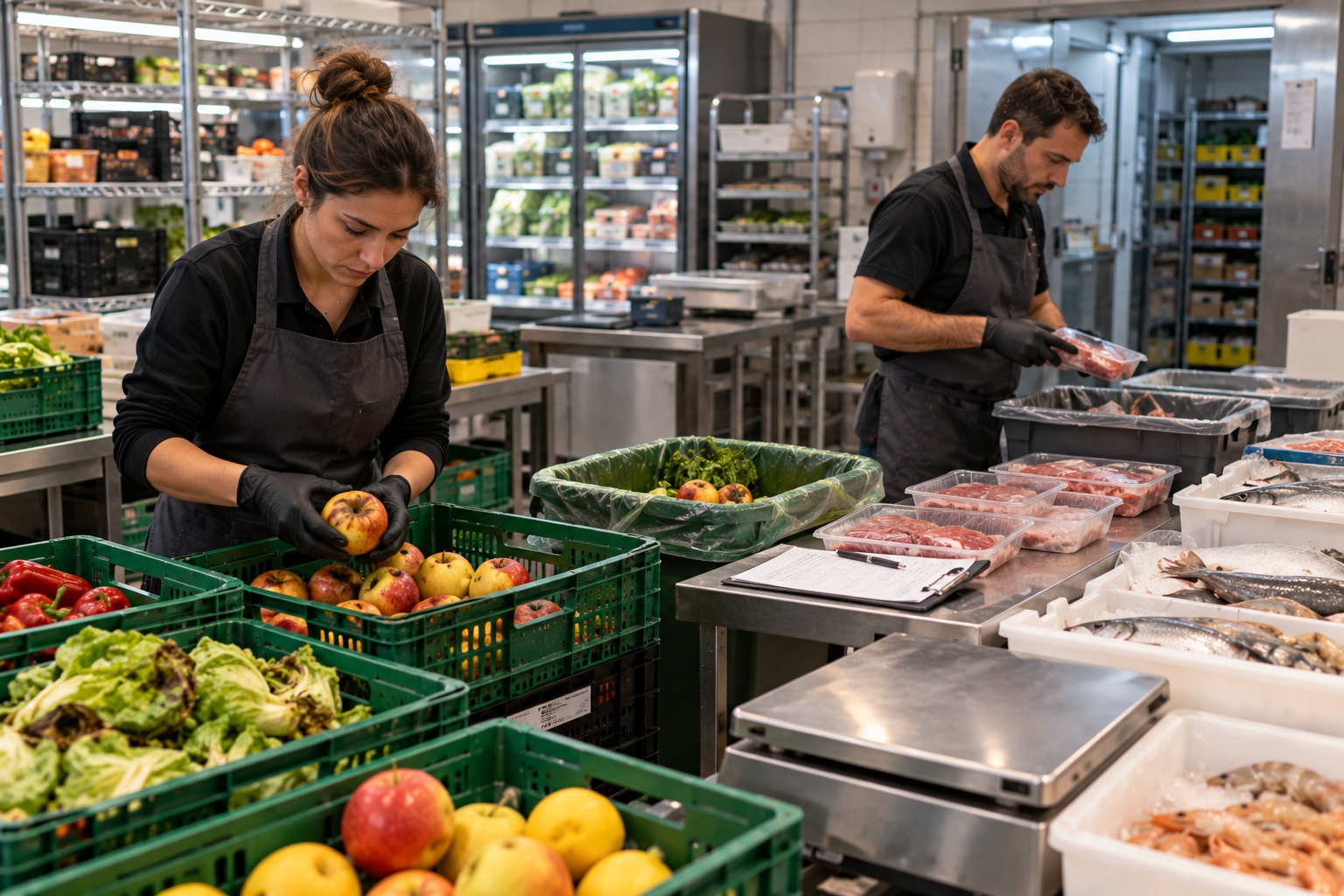
Grocery store employees resolving recurring stock and fresh-area operational issues that interrupt daily routines and consume frontline time.
1: Chronic operational incidents. The same operational issues recurred in stores, consuming team time and affecting the customer experience.
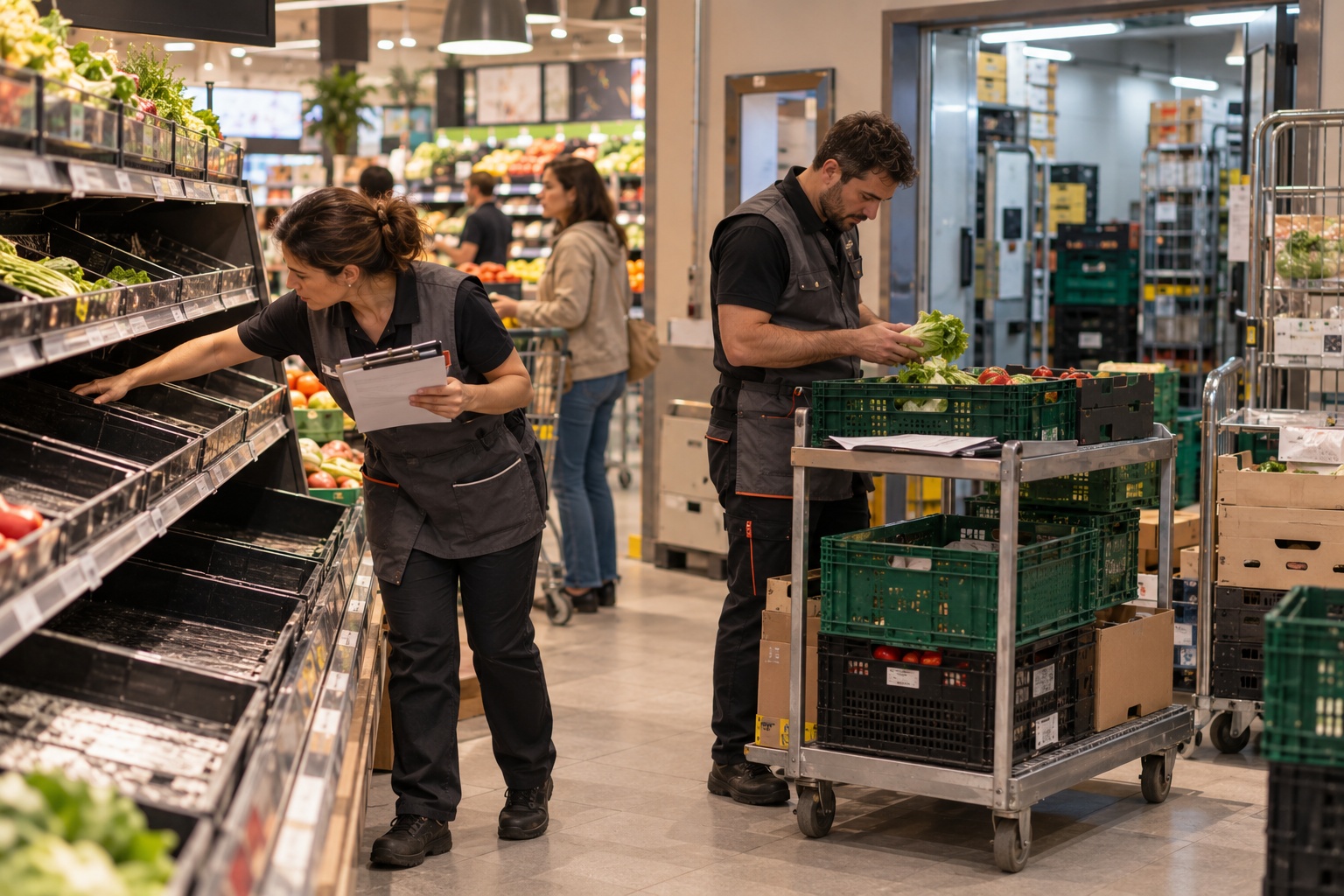
Grocery employees sorting unsellable fruit, meat and fish in a fresh-food back room, showing how shrink in perishable categories reduces saleable stock and margins.
2: High shrink in fresh categories. Fruit, meat and fish generated significant waste, directly eroding margins in some of the most sensitive categories in grocery.
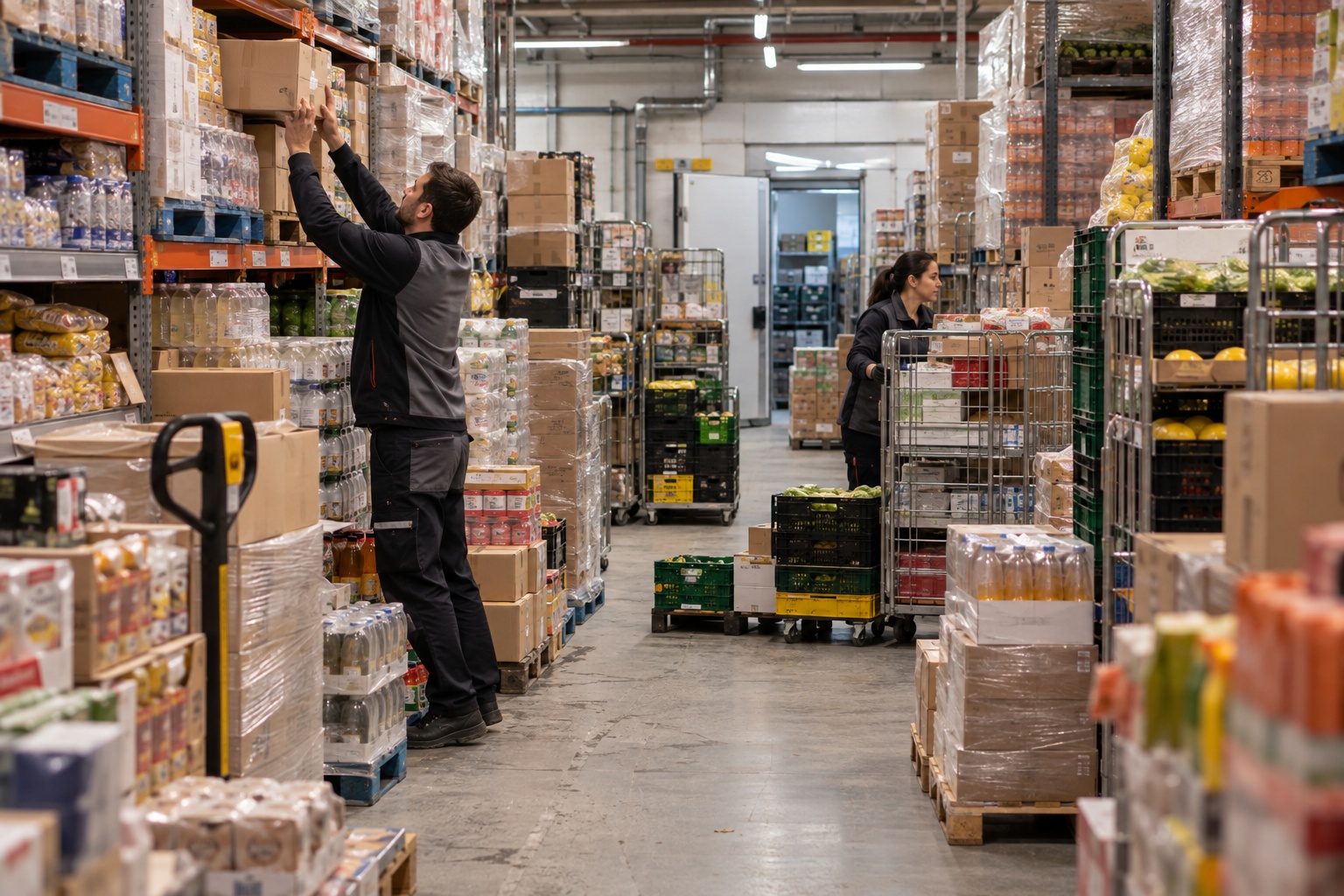
Grocery store employees working around excess inventory in an overcrowded back-room warehouse, where surplus stock takes up space and increases the risk of waste.
3: Excess stock in store warehouses. In-store warehouses held more stock than needed, tying up space and working capital and adding to the risk of waste.
Regional grocery operations team comparing inconsistent store performance reports without a common set of standardized indicators.
4: No common view of store performance. Without standardised indicators aligned with regional priorities, it was difficult to compare stores, set objectives and track progress consistently.
解決策
A centralised purchase order engine built around forecasting, DRP and control

NTT DATA designed a centralised Global Purchase Order system with optimised logistics parameters and implemented automated purchasing, forecasting and DRP capabilities, giving buyers one environment to plan, adjust and release supplier orders.

チェックアイコン
Assessed current procurement, stock and demand processes

Mapped how purchasing, stock management and demand planning worked in practice, identifying where manual steps and fragmented information were limiting order accuracy.

チェックアイコン
Designed centralised parameters and order logic

Defined common logistics parameters, safety stock levels and ordering rules, so every replenishment decision follows the same consistent logic.

チェックアイコン
Implemented forecasting, DRP projections and supplier orders

Deployed demand forecasting and Distribution Requirements Planning (DRP) projections that feed the automated generation of purchase orders for suppliers.

チェックアイコン
Enabled manual adjustments and optimisation before release

Gave buyers the ability to review, adjust and optimise orders before they are sent, keeping human judgement in the loop while protecting the model’s logic.

影響
Replenishment under control, driven by data rather than instinct

The Global Purchase Order engine turns purchasing into a model-driven process. By connecting demand forecasts, centralised logistics parameters and DRP projections with a controlled release of supplier orders, the company has reduced waste and improved product availability, while gaining higher efficiency in stock and replenishment management. Buyers now base their decisions on optimised models and data-driven adjustments, creating a more reliable and transparent foundation for day-to-day procurement.


ドラッグ