RoboLab: 360° Collaboration to Introduce Robotics in Energy Facilities
Robotics can reshape how energy facilities inspect, diagnose and intervene in physical assets, but value only emerges when promising ideas can move safely and repeatably from trial to operations. This initiative established an end-to-end collaboration model for a multinational energy-sector company, connecting use-case discovery, technology selection, field validation and industrialization so robotics could be assessed as an enterprise capability rather than a collection of isolated pilots.
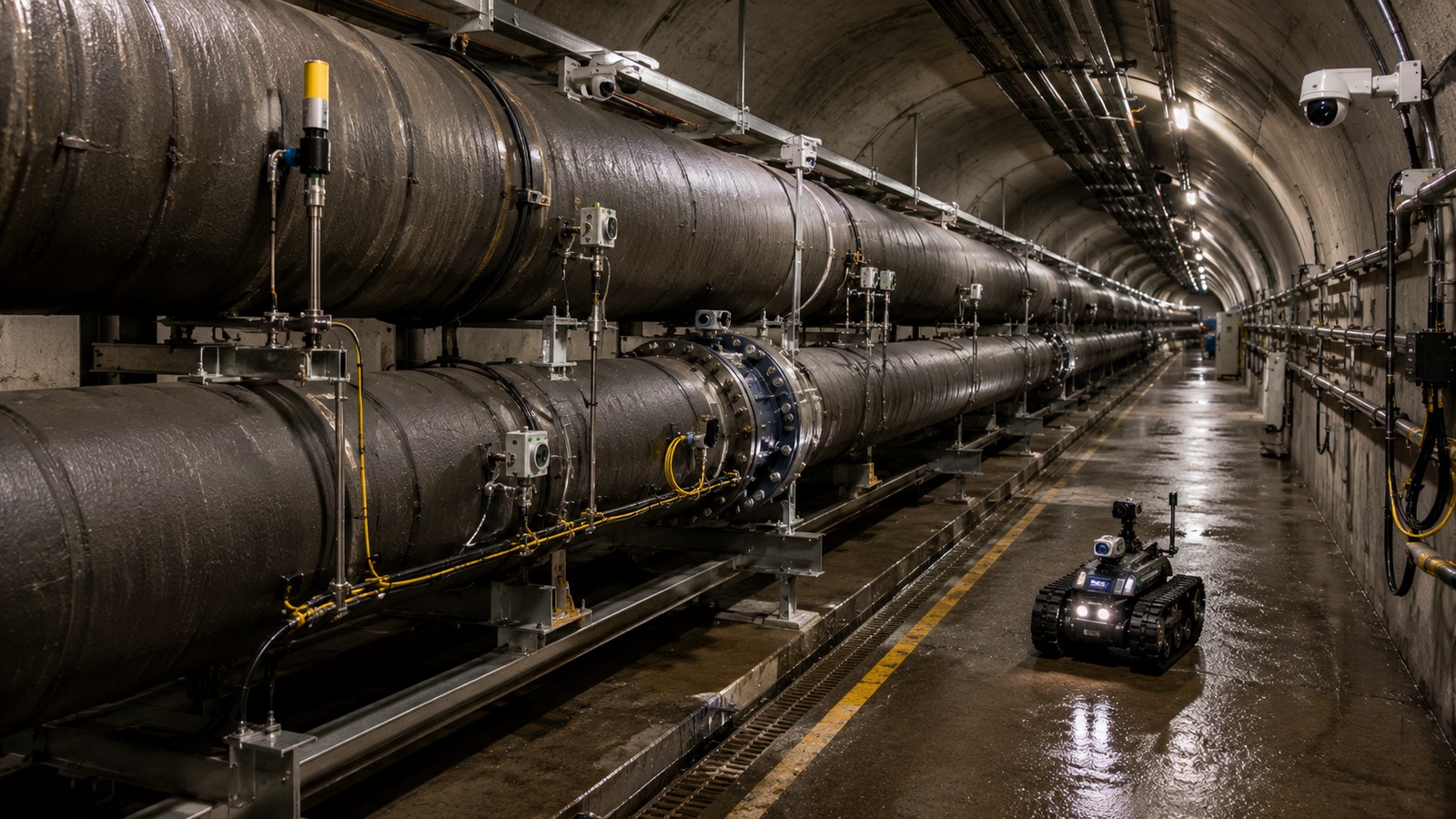
Tracked inspection robot traveling through an underground energy-facility tunnel lined with large pipes, sensors and service infrastructure.
Inspection Frequency
Increase reported
Worker Exposure
Reduction reported
Failure Occurrence
Reduction reported
Process Standardization
Improvement reported
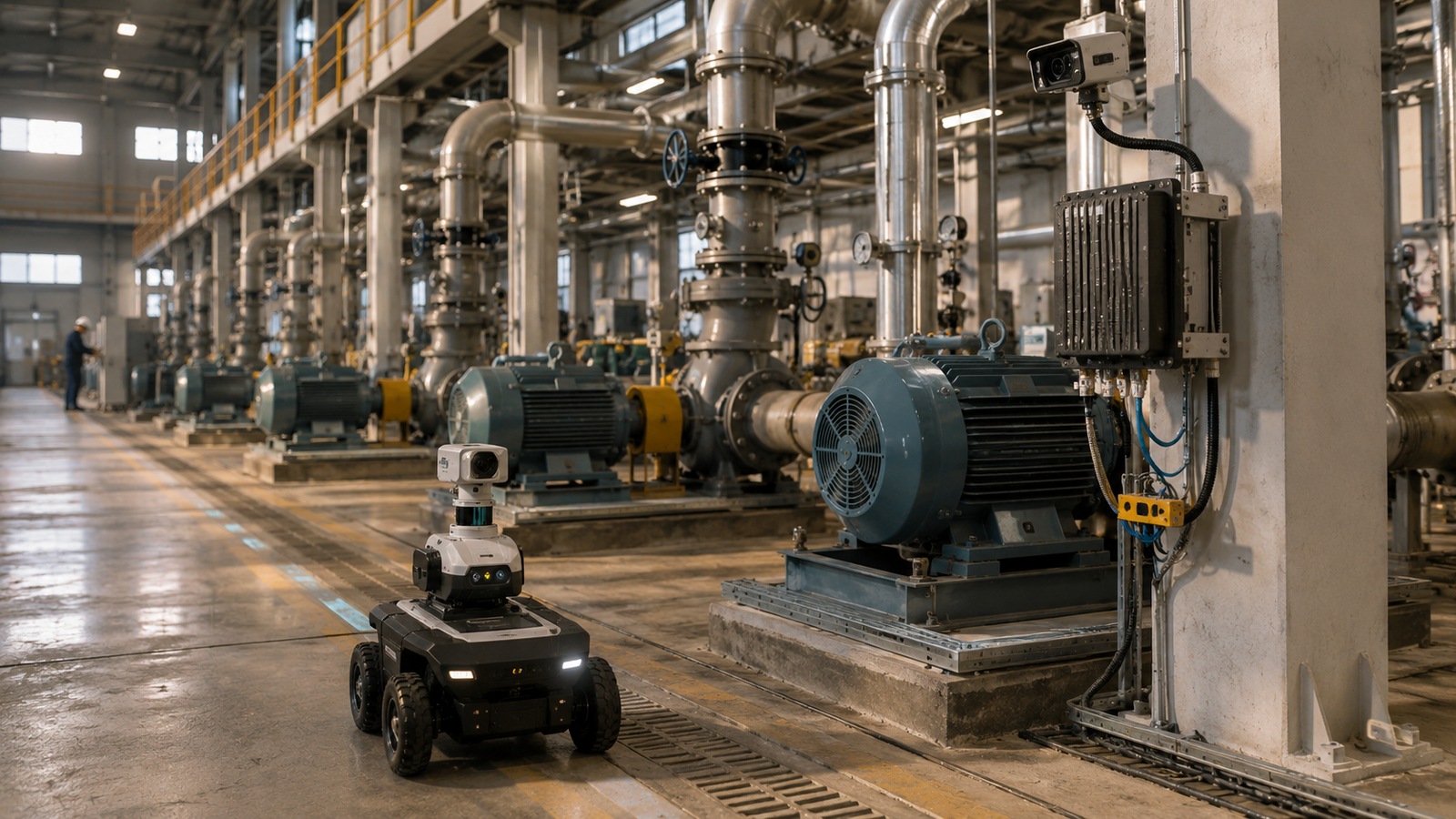
Autonomous inspection robot moving through a pump hall with industrial motors, pipework and monitoring equipment in an energy facility.
Scaling Robotics from Pilot to Operations

RoboLab created a structured path for identifying valuable use cases, testing technologies in the field and engineering validated solutions for operational use. Initial work included tunnel and primary-cabin inspections, while the wider model linked field evidence, repeatable missions and operational follow-up to support long-term deployment across energy facilities.

Robotics had strategic potential for diagnostics, remote control and automation, but scaling it required a repeatable operating model that could match the right technology to the right facility, validate performance in real conditions and move successful pilots into everyday operations.
目的
Establish a repeatable enterprise approach to identify, validate and scale high-value robotics use cases across energy facilities. The ambition was not simply to prove that a robot could perform a task, but to create a disciplined way to prioritize opportunities, evaluate technology fit, test solutions in real operating environments and prepare successful concepts for industrialization. This would give the organization a clearer basis for using robotics as a strategic enabler for diagnostics, remote control and automation across physical operations.
機会
Use RoboLab as an entry point for a broader Physical AI strategy across the utility landscape. The documented approach creates a path to extend future pilots and industrialization into additional inspection, maintenance and remote-execution scenarios, potentially combining robotics with drones, machine vision, positioning or immersive technologies where those capabilities fit the operating context. The opportunity is to reuse the same discovery-to-scale discipline across more facilities while preserving operational integration, traceability and repeatability.
Turning robotics potential into scalable operating capability

The central challenge was to move beyond technology experimentation. Robotics opportunities differed by facility, task and risk profile, so the initiative needed to combine operational context, specialist validation, safe field execution and a clear path to long-term deployment.
主な課題
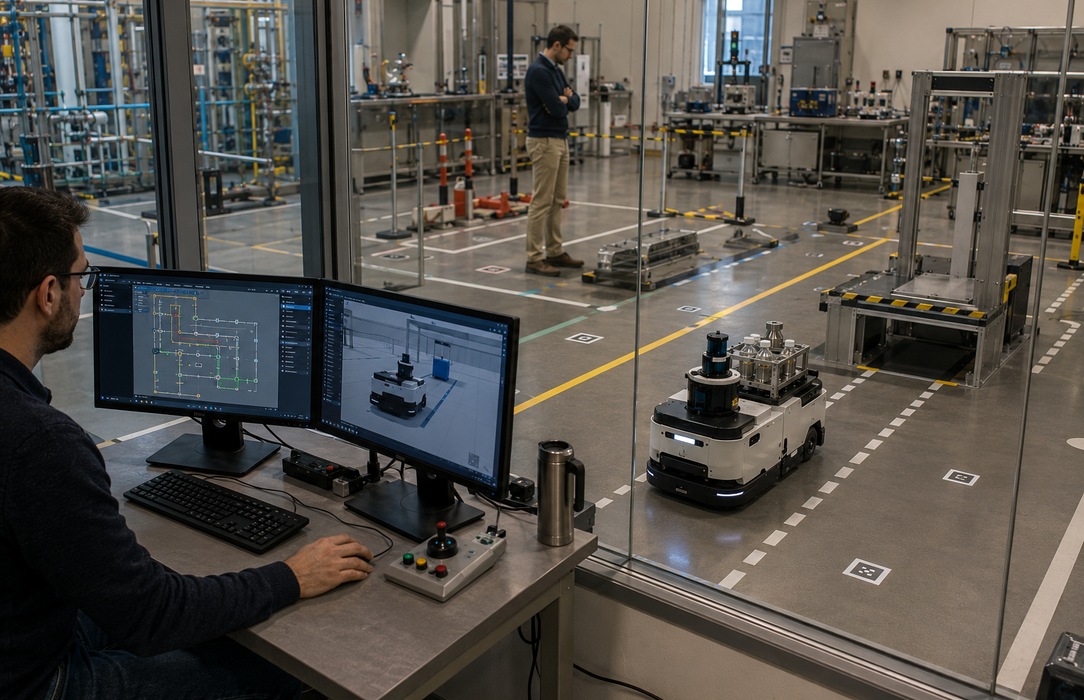
Engineer monitoring a mobile robot in an industrial robotics test facility with marked test routes and energy-sector equipment.
1: Prioritizing the right use cases
Different facilities, processes and risk profiles created a broad opportunity space, making it necessary to identify where robotics could deliver the most relevant operational value first.
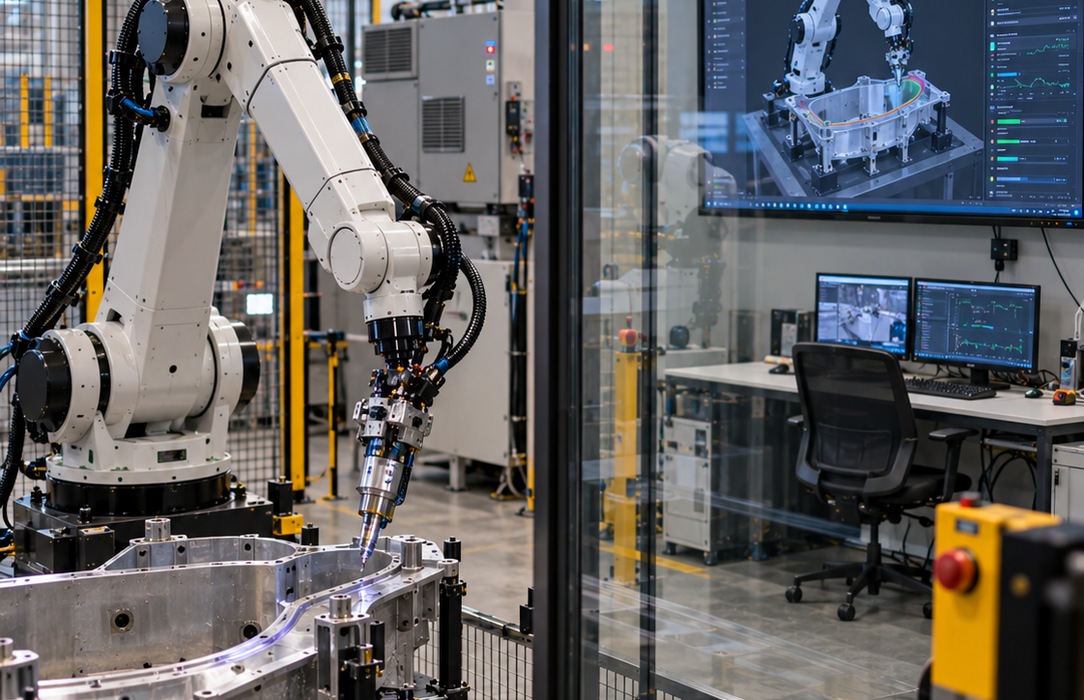
Industrial robotic arm undergoing controlled validation beside a glass-walled engineering workstation in a robotics test environment.
2: Validating technology in the field
Technology selection and field validation required specialist robotics, AI and operational expertise, not only laboratory performance.
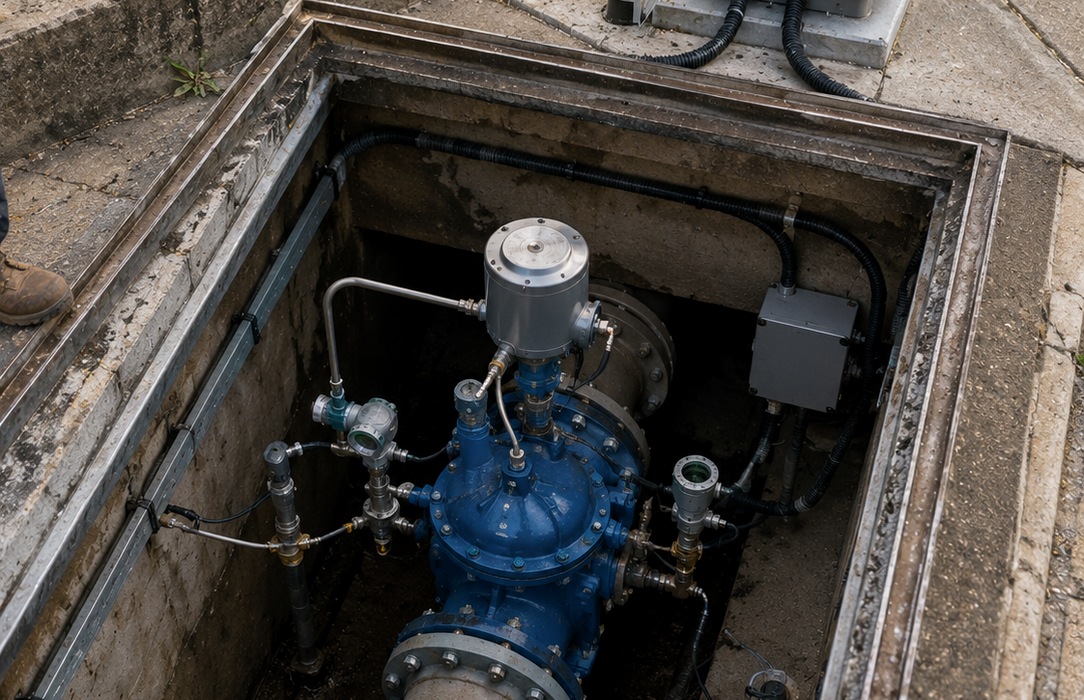
Open underground utility chamber with a large instrumented valve and confined access illustrating difficult manual inspection conditions.
3: Reducing exposure in difficult inspections
Some inspection and intervention activities were slow, difficult to standardize or exposed personnel to operational constraints and safety risk, increasing the need for repeatable robotic missions.
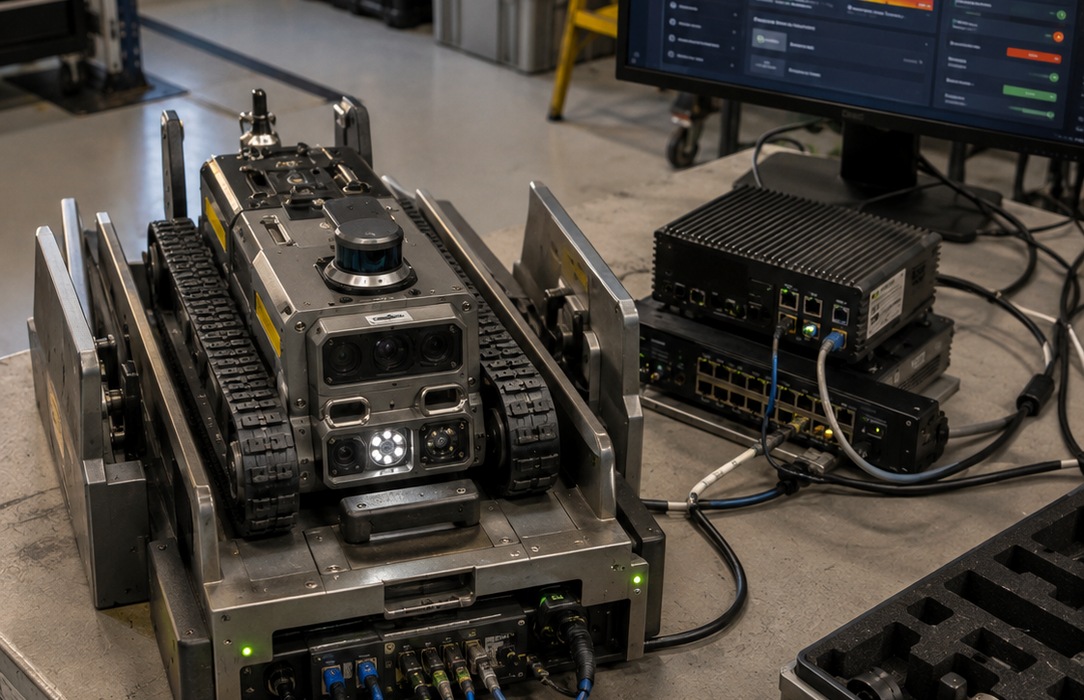
Tracked inspection robot positioned in a docking and charging station beside industrial computing equipment and inspection monitoring screens.
4: Moving from pilot to scalable operations
A successful pilot still needed to become part of day-to-day operations. Field evidence had to be captured, processed, reviewed and traced, while validated solutions had to be engineered for compliance, integration and scalable deployment.
解決策
A 360° path from discovery to industrialization

The collaboration model combined use-case strategy, technology evaluation, field experimentation and operational integration. Rather than treating robotics as a standalone device deployment, it connected physical execution with the digital and process disciplines required to make validated capabilities reusable at scale.

チェックアイコン
Prioritize high-value missions

The team identified the most valuable initial use cases, including tunnel and primary-cabin inspections, creating a focused starting portfolio for robotics adoption.

チェックアイコン
Scout and validate technology

Technology advisory, robotic-solution selection, benchmarking, experimentation and field testing were used to evaluate technical fit and implementation options in the client operating context.

チェックアイコン
Build repeatable field workflows

Robotic field technology was connected with a digital workflow for evidence capture, processing, review and operational follow-up, and missions were designed around repeatable procedures rather than one-off demonstrations.

チェックアイコン
Industrialize for operations

Validated solutions were engineered for compliance and integration into operational workflows, creating a more disciplined path from pilot activity to scalable long-term deployment.

影響
A stronger foundation for scalable robotics adoption

The initiative strengthened the foundation for scalable robotics adoption, with reported increases in inspection frequency and operational efficiency, reduced worker risk exposure and failures, and greater standardization of robotic processes. By linking field evidence, repeatable missions and industrialization, the approach also supported a stronger corporate robotics culture and a clearer path to long-term deployment.
ドラッグ