- All Foundries

- 商品管理と取引

- 顧客とマーケティング戦略

- デジタルエンジニアリング

- ステーション・スタジオ

- サプライチェーン&インダストリー5.0
- サステナビリティ

- Physical AI

- Next-Gen Infrastructure












Sustainable Aviation Fuels: From Mandate to Trusted Scale
Sustainable Aviation Fuel is moving from ambition to obligation.
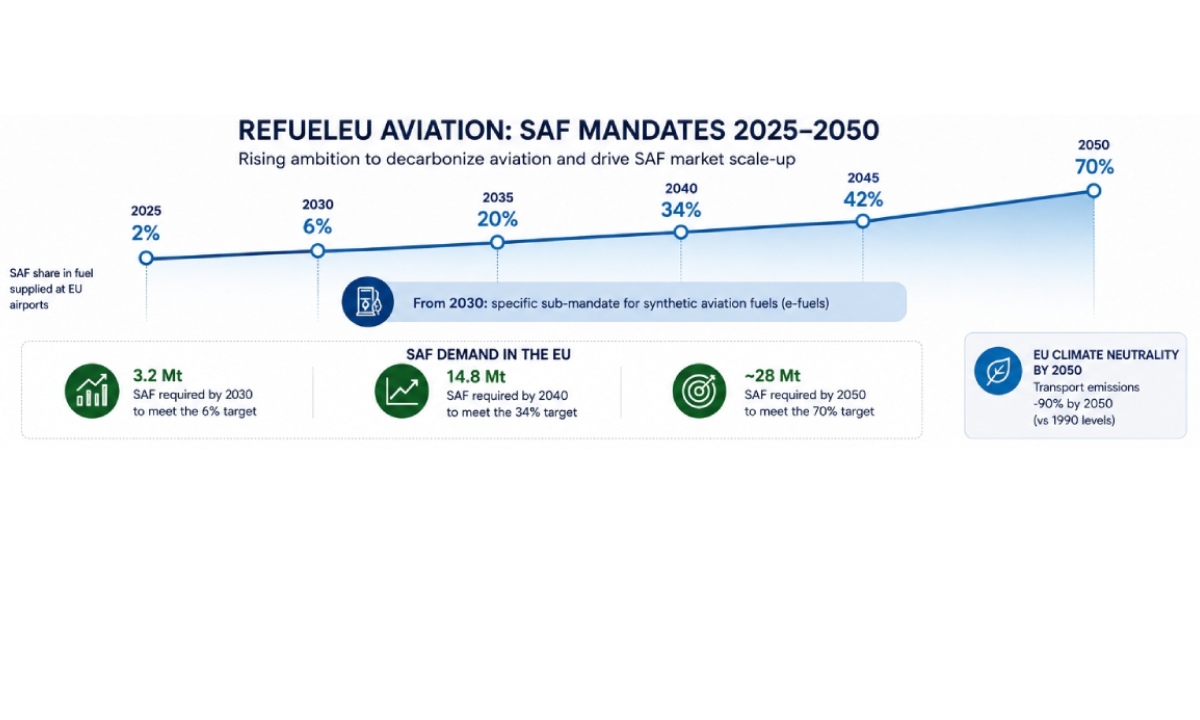
Under ReFuelEU Aviation, SAF must represent 2% of aviation fuel supplied at EU airports in 2025, rising to 6% in 2030, 34% in 2040 and 70% by 2050. Meeting that trajectory will require a significant increase in supply: around 3.2 million tonnes of SAF by 2030 and 14.8 million tonnes by 2040.
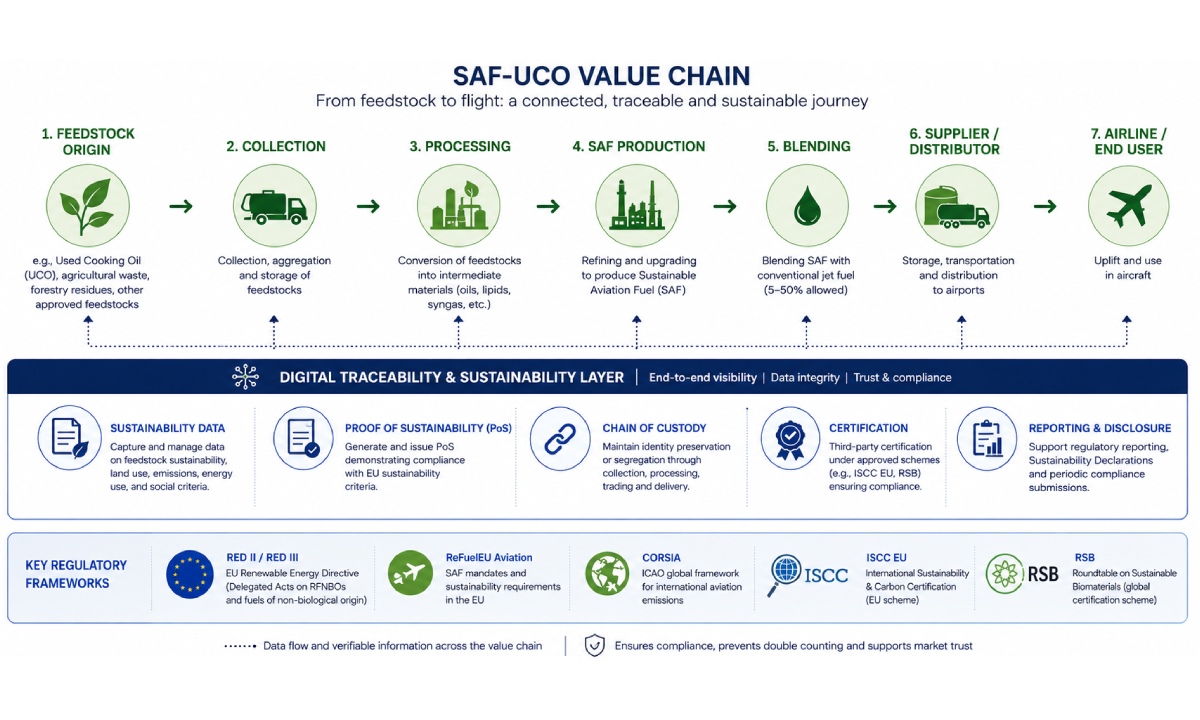
Yet an important question remains: what happens when SAF scales faster than the systems designed to prove its sustainability?
NTT DATA’s whitepaper explores the market, regulatory and technology forces shaping the next phase of Sustainable Aviation Fuel — from ReFuelEU Aviation and sustainability certification to digital traceability, accounting systems and emerging Book & Claim models.

Understand how EU mandates are accelerating demand and why meeting future targets will require significant production and infrastructure scale-up.
Explore how sustainability information must remain connected across the SAF value chain to support certification, compliance and trusted emissions claims.
See how IoT, operational platforms, blockchain, digital identity and compliance solutions can support visibility, data integrity, auditing and reporting.
Discover how separating SAF’s environmental attributes from its physical delivery could expand market access — and why governance, interoperability and protection against double counting will be critical.
Executives and senior decision-makers across aviation, energy and the SAF ecosystem — including airlines, airports, fuel producers and suppliers, sustainability and regulatory teams, technology and data leaders, and other organizations involved in SAF production, certification, distribution, accounting and adoption.
The path toward sustainable aviation requires more SAF. But scale alone will not establish trust.
As physical supply chains, sustainability certification, regulatory reporting and environmental claims become increasingly interconnected, the ability to create a reliable digital thread across the ecosystem becomes more important.
And emerging models such as Book & Claim introduce another dimension: environmental attributes could move independently from the physical fuel, opening new possibilities for SAF adoption while making credible accounting and governance even more important.
The question is no longer simply how to scale SAF. It is how to scale it without losing sight of its origin, its impact or the trust behind every claim.
Download the full whitepaper to explore the technologies, regulations, certification frameworks and digital traceability solutions shaping the future of Sustainable Aviation Fuel.
NTT DATA Insights