From Headcount to Outcomes: A Service-Oriented BPS Transformation at One of Brazil’s Largest Utilities

One of Brazil's largest electricity companies transformed a fragmented administrative support model into a service-oriented BPS operation. The initiative consolidated more than 1,200 tasks supporting over 60 business areas and shifted management from allocated headcount toward delivered activities, service levels, productivity and capacity, combining operational standardization with automation, data and AI
A multidisciplinary team using data-driven insights to optimize operations in the energy sector
Productivity Gain
34% increase in productivity
Idle Time Reduction
22% less non productive time
Knowledge Retention
97% workforce retention during transition
Operational Scale
1,200+ tasks across 60+ areas
Electric utility technician performing power line maintenance from a bucket truck, supporting reliable electricity distribution and essential energy services
From Headcount-Based support to Service-Oriented operations
Administrative activities had been distributed across multiple service providers contracted and managed independently by different departments, requiring a new operating model centered on measurable service delivery rather than the number of people assigned
Objectives
Transition administrative support to a service-oriented BPS model in which work is managed and compensated based on activities delivered, creating a foundation for measurable service levels, productivity, capacity management and continuous improvement
Opportunity
Proven results in selected areas can support broader adoption of the service-oriented model across additional departments, while continued use of automation, data and AI provides opportunities to extend productivity improvements and intelligent operations
Shifting from Workforce Allocation to Outcome-Based Delivery

The transformation required operational, organizational and cultural changes to consolidate fragmented ways of working while maintaining service continuity and establishing confidence in a delivery model governed by measurable outcomes
Key Challenges
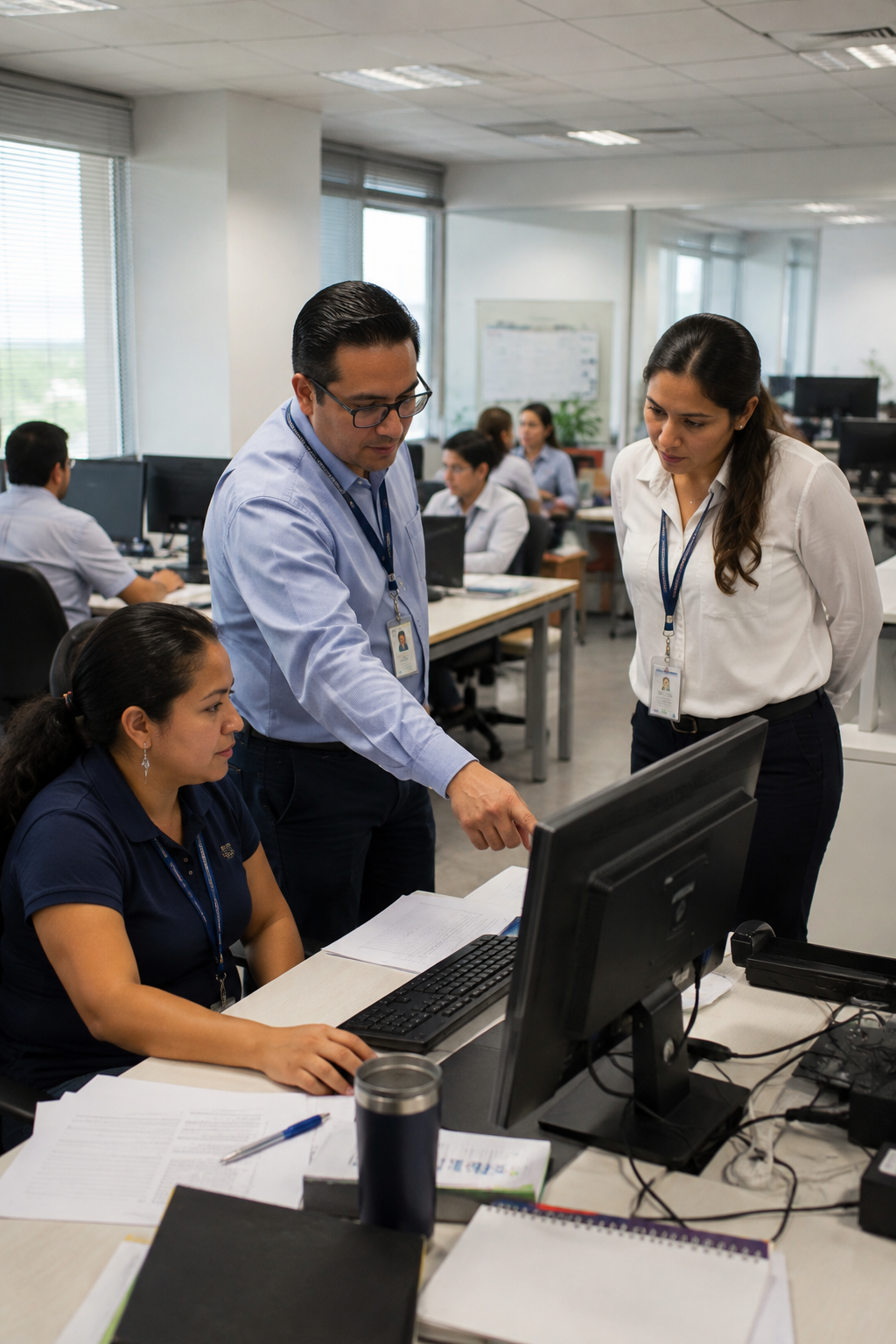
Operations team collaborating on knowledge transfer and service transition, ensuring business continuity and preserving critical expertise during workforce transformation
The transition needed to preserve critical operational knowledge and minimize disruption while moving approximately 500 people from previous providers into the new operation
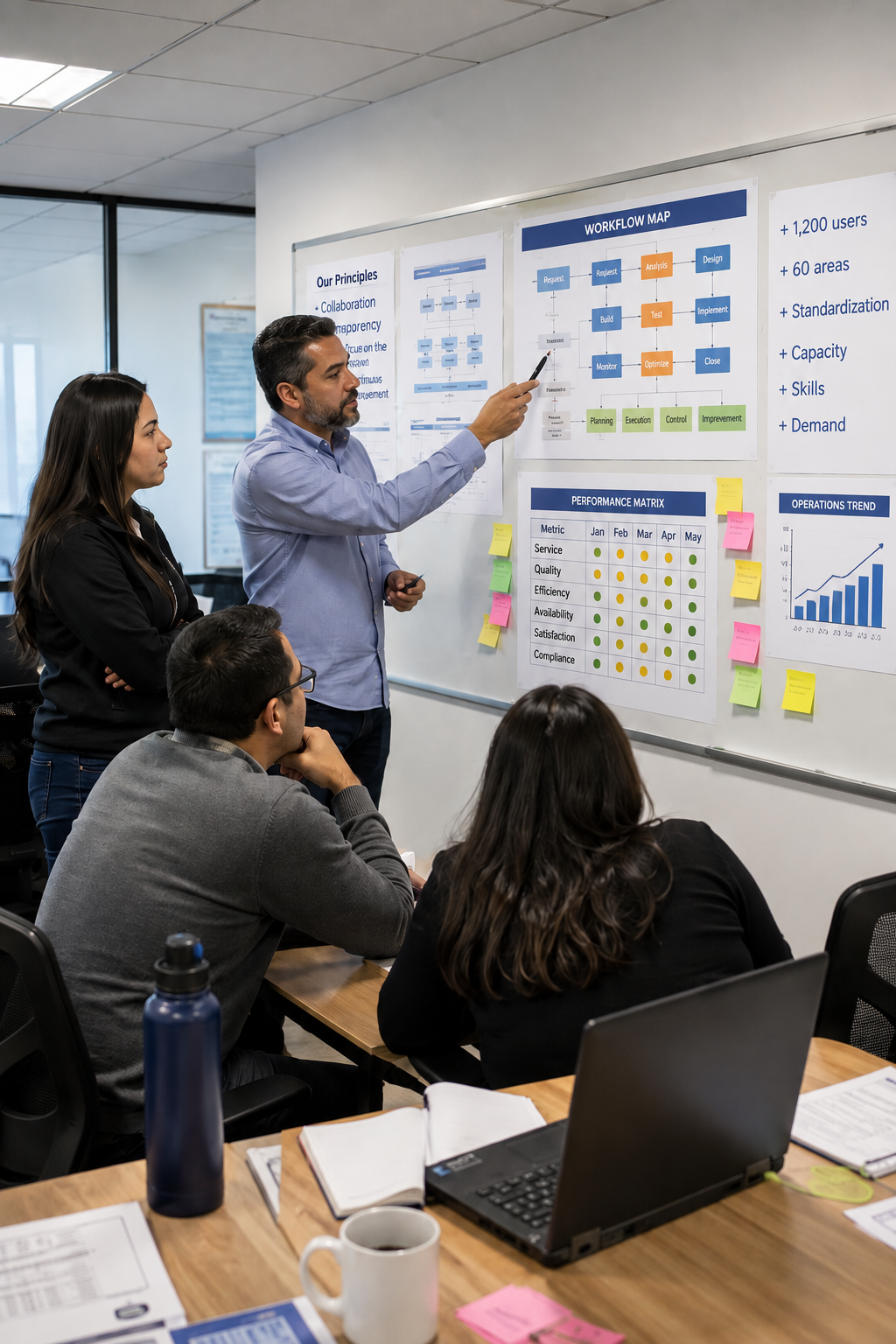
Operations team standardizing more than 1,200 tasks across 60 business areas, aligning capacity, workforce skills and demand through collaborative process planning
More than 1,200 distinct tasks across over 60 areas required standardization and coordinated management of capacity, skills and demand
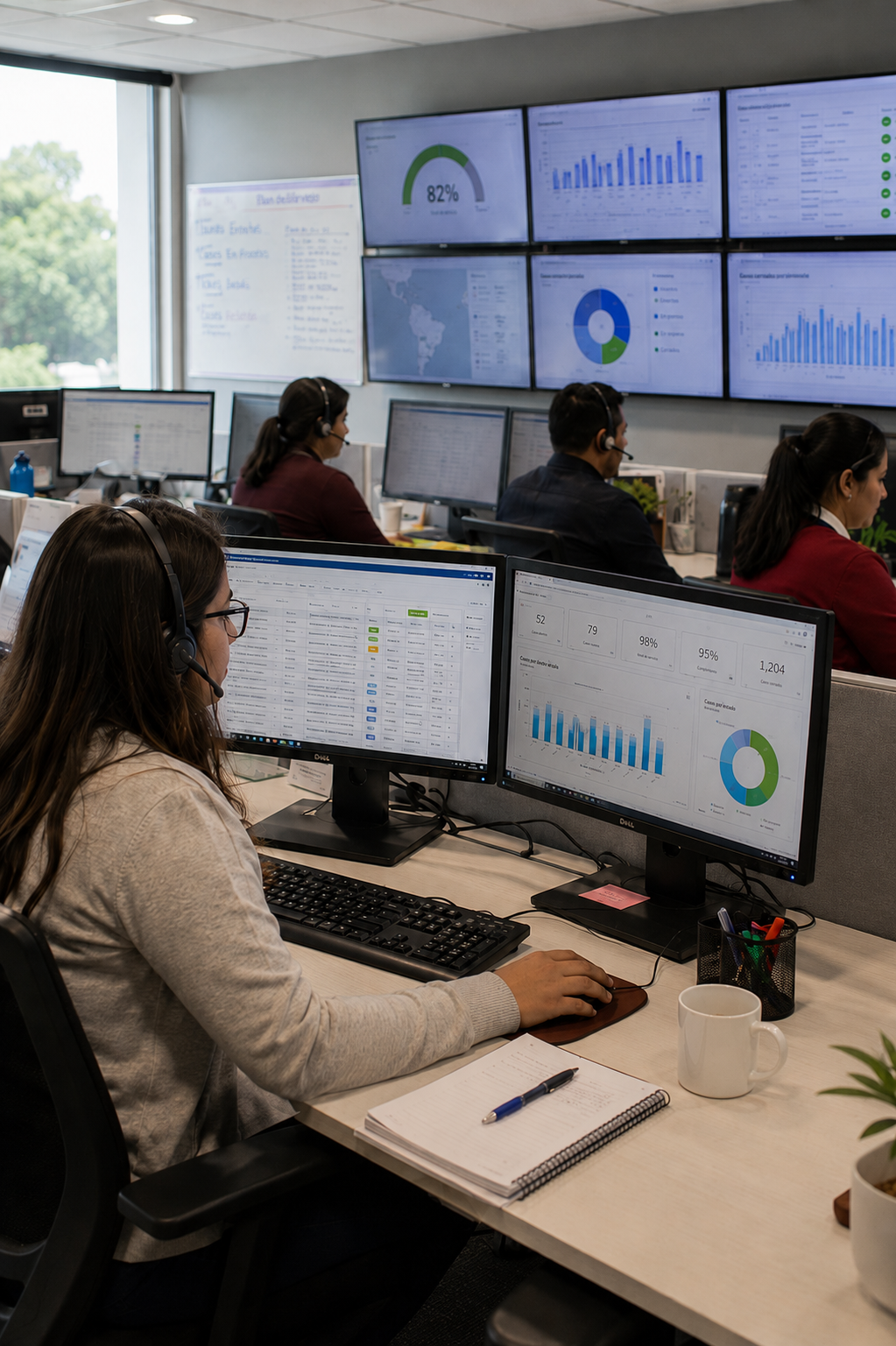
Remote operations team monitoring analyst productivity, service level agreements and workload capacity to optimize task assignment and improve service delivery
The scale of the remote operation required visibility into analyst productivity and activity SLAs, together with effective assignment of work based on availability and capacity
Operations leaders reviewing productivity, service quality, SLA compliance and automation metrics to strengthen operational transparency and service-oriented delivery
The new model required stakeholder confidence in productivity metrics, operational transparency, service quality and automation while teams adapted from headcount-based management to service-oriented delivery
Solution
Phased transformation toward intelligent operations

The approach combined transition stabilization, process redesign, operational orchestration and technology enablement, progressing from knowledge continuity toward a standardized and measurable service delivery model

check icon
Knowledge-Preserving Transition

The transition prioritized hiring employees from previous providers, achieving 97% retention from a workforce of around 500 people. This reduced the learning curve, preserved critical knowledge and minimized transition impact

check icon
Process and Capacity Standardization

Processes and activities were mapped to identify standardization opportunities, while capacity and skills were aligned with demand and employees received training to support a more orchestrated operating model with less dependence on individuals

check icon
Automated Work Orchestration

An operational orchestration platform supported workload distribution, productivity monitoring and SLA management, automatically routing activities to analysts based on availability and capacity

check icon
Technology-Enabled Change

The transformation combined stakeholder engagement and visible pilot results with automation, data and AI capabilities. Generative AI was applied to extract information from documents and client systems and prepare reports, supporting productivity and report quality

Impact
Measurable Gains from Service-Oriented Delivery

The transformed operation achieved a 34% productivity increase, driven mainly by the Generative AI engine used for information extraction and report preparation, while automated task distribution reduced non-productive time by 22%. The service-oriented model also enables flexible service scaling, allows internal resources to focus on core business activities and aligns the client and service provider around productivity and efficiency

Drag