- All Foundries

- Commodity Management & Trading

- Customer & Marketing Strategy

- Digital Engineering

- Station Studio

- Supply Chain & Industry 5.0
- Sustainability

- Physical AI

- Next-Gen Infrastructure













Corroborative Task Scheduler for Robots
Automation fails when it ignores the moment.
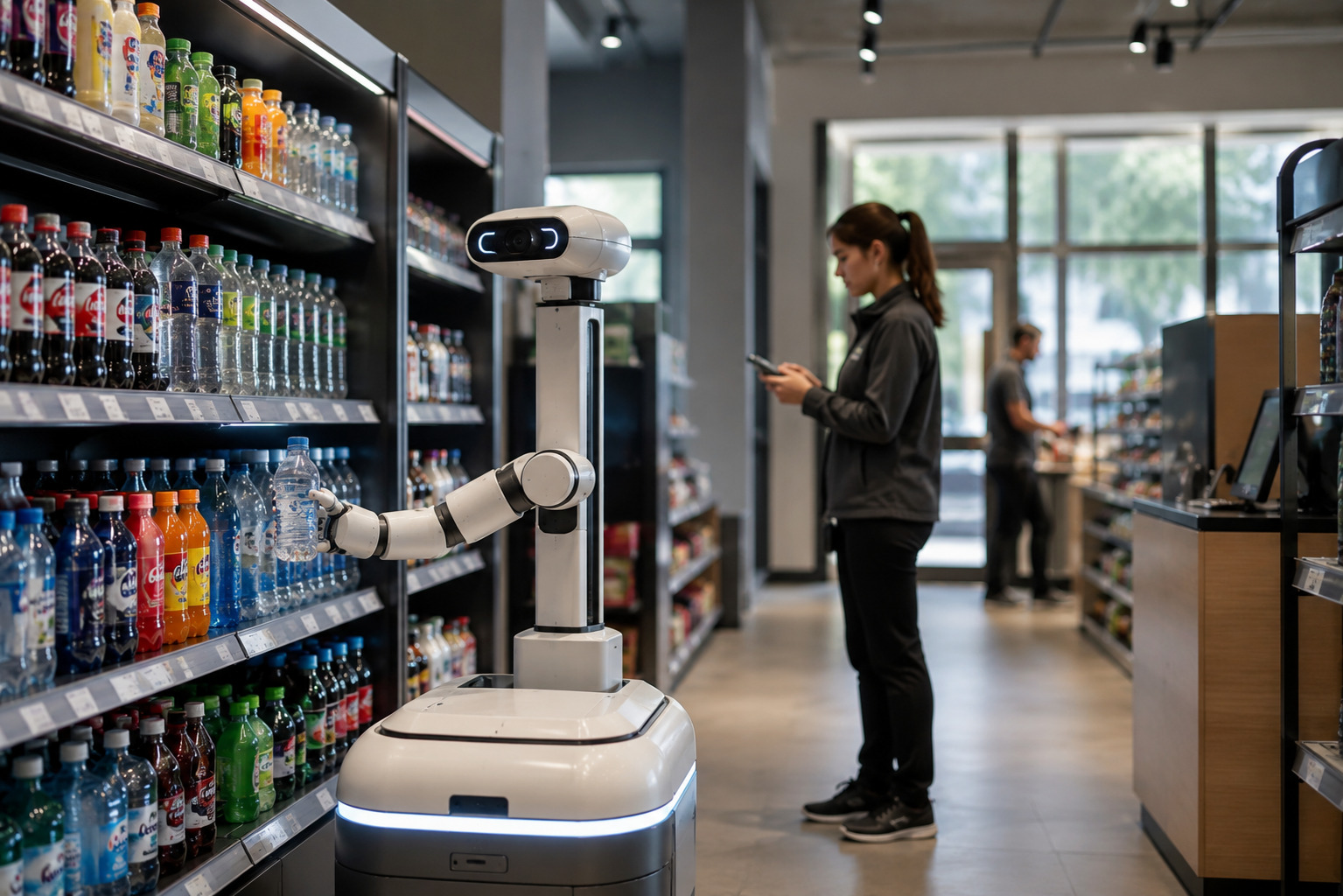
A multinational manufacturer is exploring multi-task robots with arms and multimodal AI to support convenience-store employees. The first target is restocking drinks, but the hard part is deciding what happens next based on priorities.

Shelf status, customer presence and employee availability help determine what action should happen next.
Restocking tasks are coordinated across employees and robots according to store priorities.
A digital store model tests robot actions for safety and efficiency before real deployment.
Better task timing helps customers find what they need while reducing repetitive work.
How NTT DATA helps
Live store context is captured: shelf status, product availability, customer presence, and employee location.
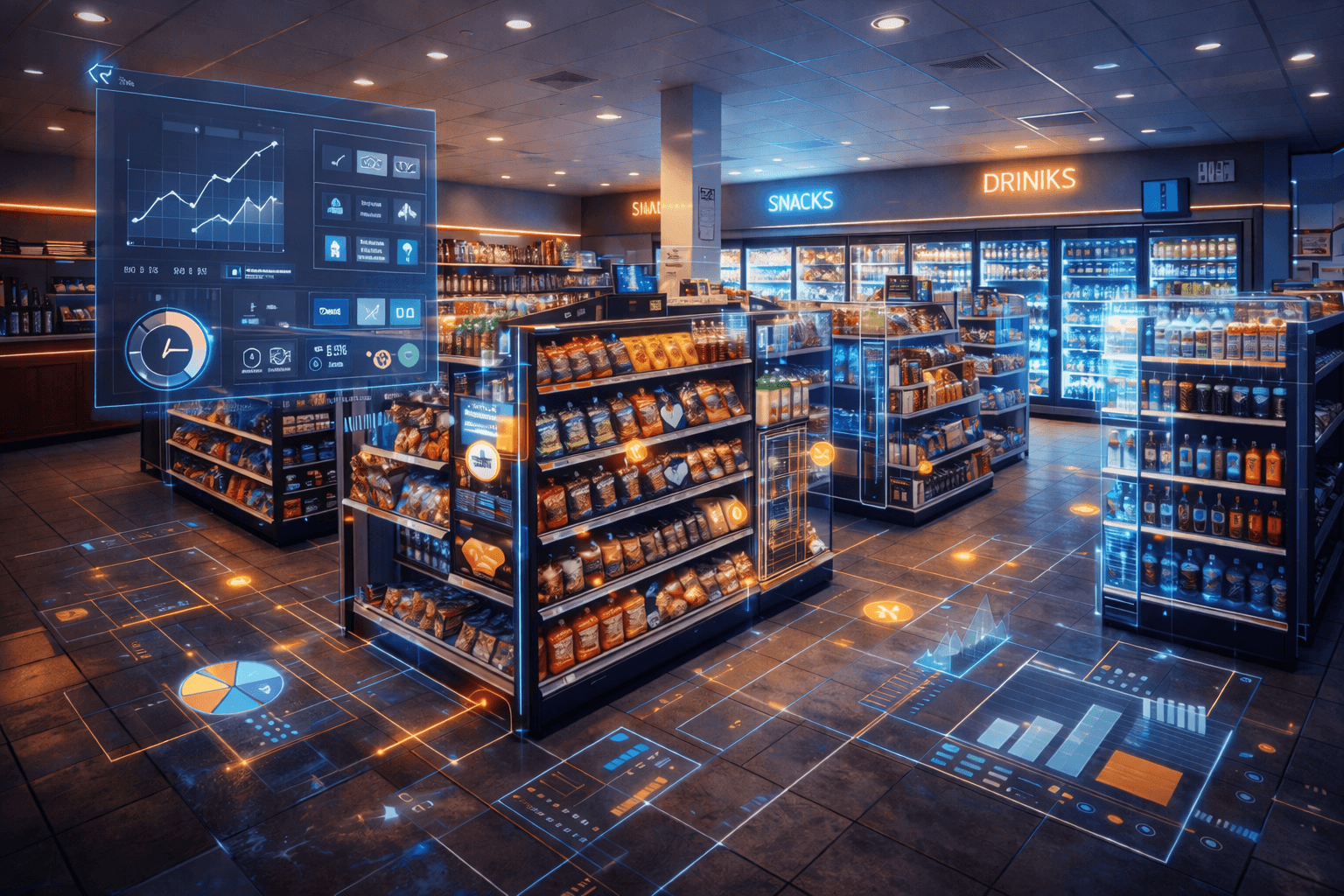
Scheduling models balance sales priorities, operating cost, store policies, and available human-robot capacity.

Robot actions are simulated inside a virtual store environment to test movement, sequence, safety, and efficiency before deployment.

Task logic helps people and robots work together with less friction, instead of automating around employees.

Prototype logic moves into repeatable processes that can support broader store robotics adoption.

Robots start supporting the people already keeping shelves moving, instead of working around them.
Coordinate restocking so customers are more likely to find the products they want.
Use live store data to reduce missed replenishment moments and avoid unnecessary stock pressure.
Shift repetitive checking, arranging and restocking prompts into a coordinated scheduling system.
Validate actions in a digital store model before robots operate around customers and employees.
Drive the conversation that turns live store conditions into coordinated action