- All Foundries

- Commodity Management & Trading

- Customer & Marketing Strategy

- Digital Engineering

- Station Studio

- Supply Chain & Industry 5.0
- Sustainability

- Physical AI

- Next-Gen Infrastructure














Exception-led mining operations: turn disruptions into learning
Who gets called first? Who can create an alternative? Whose estimate changes the decision? Who can commit the mine to a different route?
Studying exceptions can reveal where integrated capability already exists informally.

Studying exceptions can reveal where integrated capability already exists informally, built around the path of a decision under pressure.
It shows where repeated dependence on individual memory or personal networks creates fragility that the organization chart cannot see.
Operating-model design starts from real situations in which the mine must recognize change, construct alternatives and decide across boundaries.
Analytics and decision records can turn a one-off response into evidence for the next iteration of how the mine is organized to operate.
How NTT DATA helps
Follow the condition from first signal through the people, systems, alternatives and physical actions that resolved it.

Identify which human interventions are valuable judgment and which exist because information or authority cannot travel reliably.
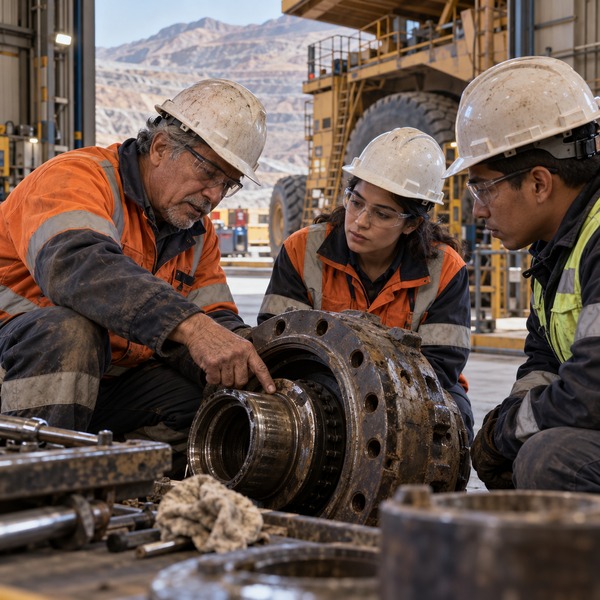
Event histories, workflow traces, Dispatch and process logs can reveal recurring paths from signal to action without surveillance of individuals.
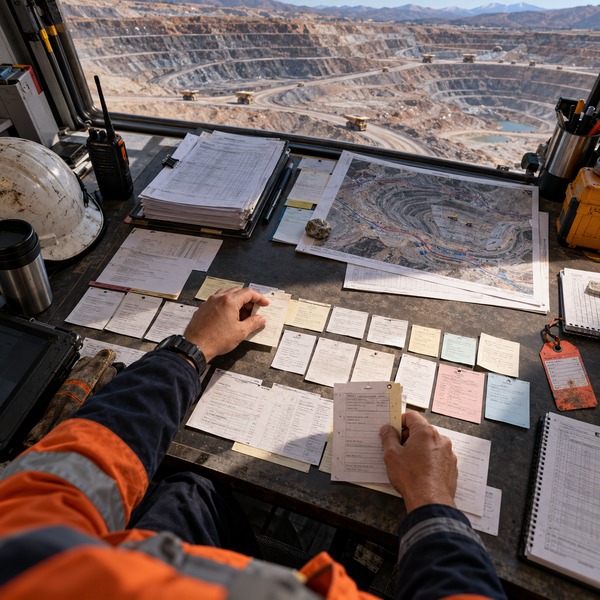
For recurrent exceptions, define what context must travel, who can commit a response and what should trigger escalation.
Workflow, APIs and OT integration can carry the chosen response into Dispatch, process control, maintenance or logistics.
Analytics and decision records can turn a one-off response into evidence for the next operating-model iteration.


The path from alternatives through authority, executed option and later result is not always reconstructed with the same depth. A response can succeed without the organization understanding why.
A mine should certainly reduce avoidable exceptions. But it should never waste the ones that reveal how it really operates.
Return to the interrupted ore route. The exception did more than test continuity. It exposed the operating model behind the response.
The operation sees where knowledge lives, how authority moves and which interfaces become critical when normal routines are not enough.
It identifies which human interventions are valuable judgment and which exist because information or authority cannot travel reliably.
For recurrent exceptions, the mine defines what context must travel, who can commit a response and what should trigger escalation.
Explore how reconstructing decision paths can turn operational exceptions into a better operating model for integrated mining.