- All Foundries

- Commodity Management & Trading

- Customer & Marketing Strategy

- Digital Engineering

- Station Studio

- Supply Chain & Industry 5.0
- Sustainability

- Physical AI

- Next-Gen Infrastructure











Mining connectivity as a safety-critical operating system
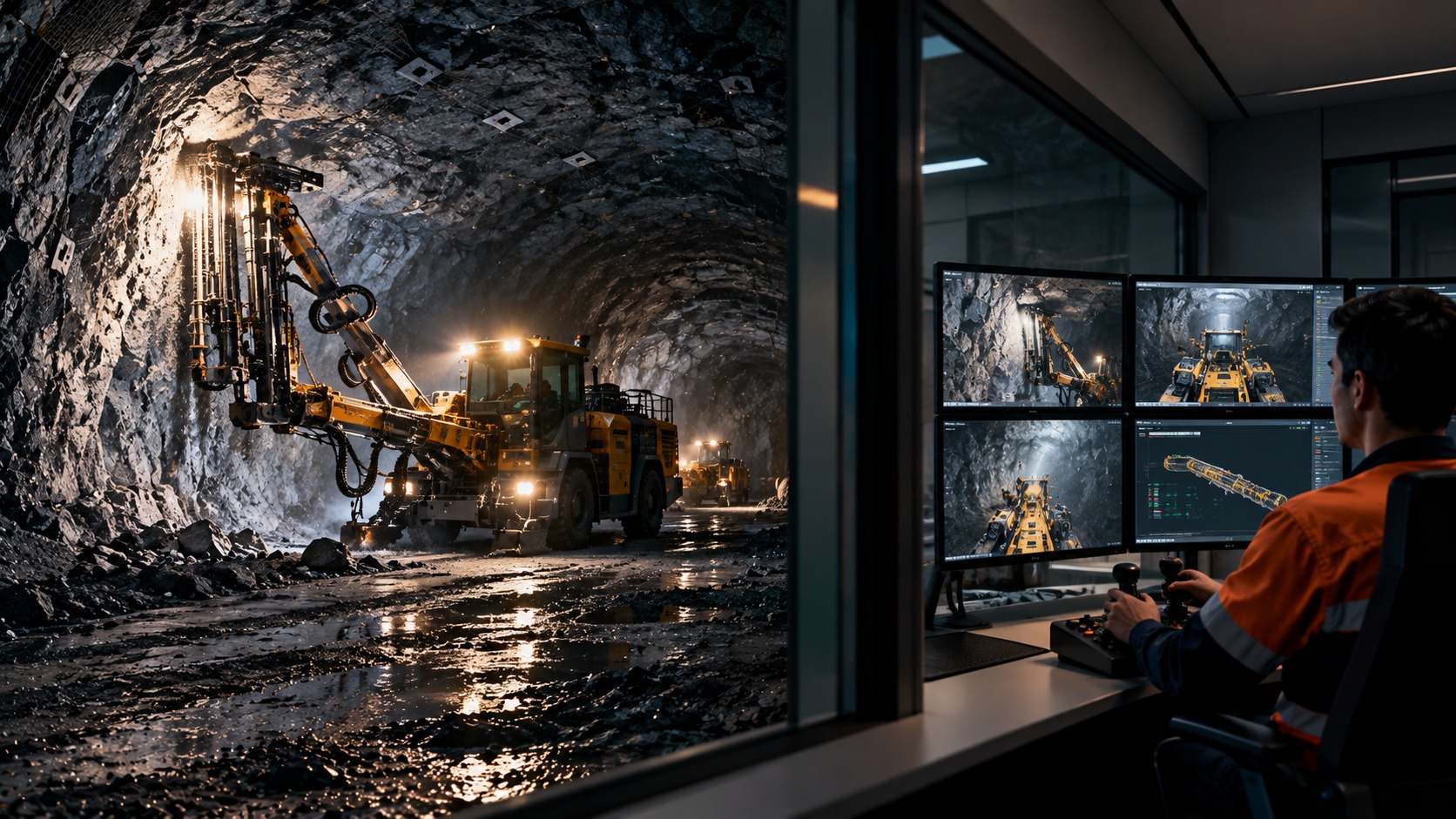
The question is no longer how much bandwidth the mine has. It is whether the operator can still perceive and control the machine inside a defined envelope when the network is under stress.
This reframing changes what the mine protects: perception and command must remain aligned.

Bandwidth matters because several high-definition views may be needed to recreate enough of the machine’s environment for the operator
Latency matters because perception and command must stay aligned; jitter matters because inconsistent delay makes control less predictable.
Resilience matters because a lost communications path cannot be allowed to become an improvised operating condition at the face.
The production value follows the safety mechanism: work continues without the operator sharing the machine’s exposure envelope.
How NTT DATA helps
Start with the task, equipment, zone people must be separated from, required fields of view and conditions under which remote operation is allowed.

Define what video, telemetry and command traffic require from bandwidth, latency, jitter, availability and coverage for that operating mode to remain usable.

Design from machine to radio access, transport network, compute, applications and remote cockpit. The weakest segment can define the experience.

Make video loss, rising delay or path failure explicit operating states, with predefined responses such as restricting motion or transferring control.

Correlate communications performance with the remote session and equipment state to see when the path nears the limit of acceptable control.

Validate the operating envelope under realistic load and failure conditions, then use exceptions to refine the network and the operating procedure.


Demonstrations connect remote operability with low-latency, low-jitter communications, multiple video feeds and control signals. The evidence proves the mechanism, not a mining outcome.
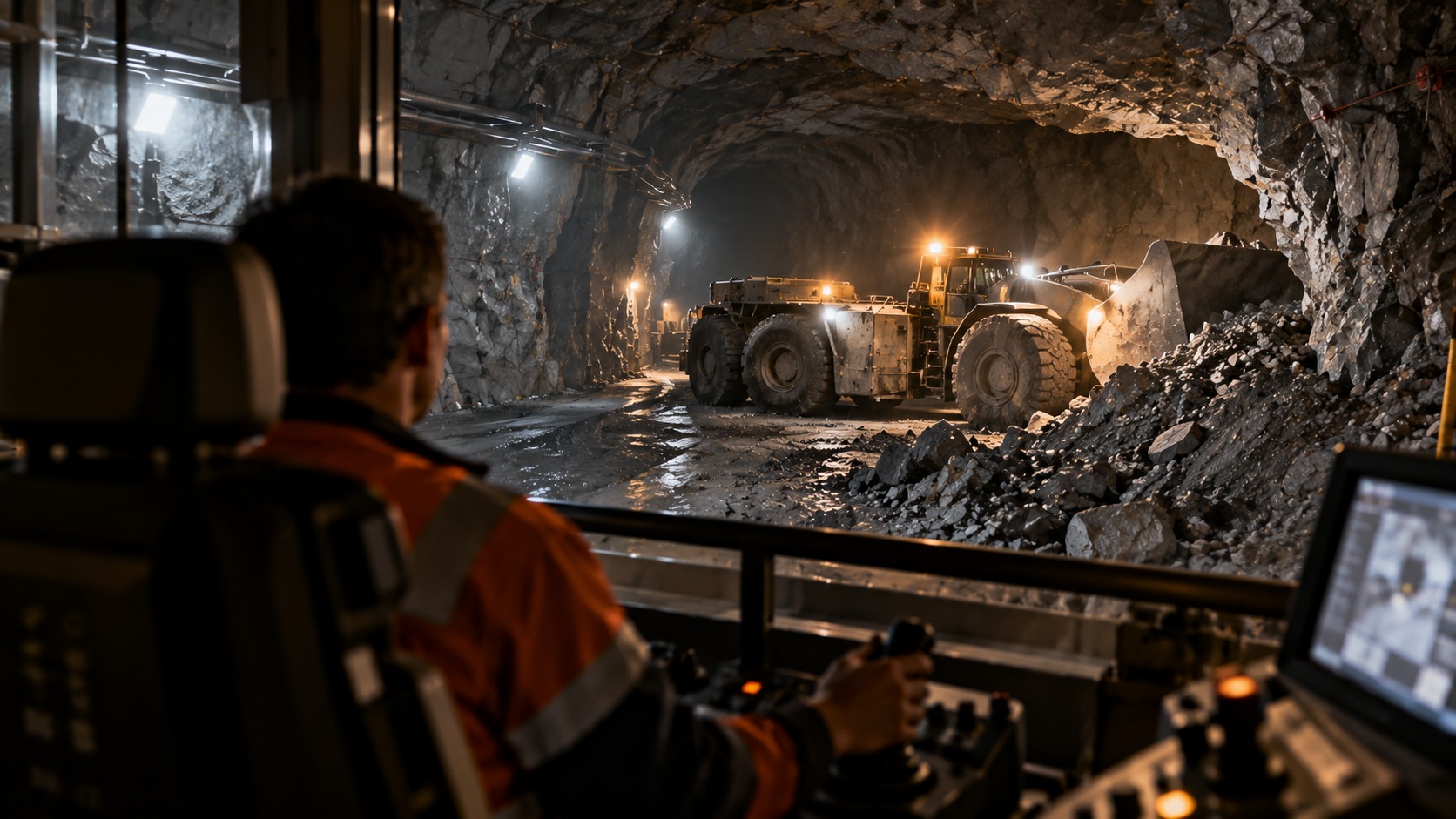
At the face, the machine is still surrounded by rock and consequence. The difference is where the person has to be.
Machine, perception, network, control, fallback and observability are engineered as one system, not as a connectivity project.
Video, telemetry and command traffic requirements for bandwidth, latency, jitter and coverage are defined for each operating mode.
Loss of video quality, rising delay or path failure trigger predefined responses, such as moving the machine to a safe condition.
The envelope is validated under realistic load and failure conditions, and exceptions refine the network and the operating procedure.
Explore how end-to-end remote operation design can keep people away from hazardous mining faces while preserving control.