- All Foundries

- Commodity Management & Trading

- Customer & Marketing Strategy

- Digital Engineering

- Station Studio

- Supply Chain & Industry 5.0
- Sustainability

- Physical AI

- Next-Gen Infrastructure














Mining value chain trade-offs: arbitrate critical decisions
Coordination helps areas work together once the direction is known. Arbitration is required when legitimate objectives point toward different directions.
Explicit arbitration can protect chain value when competing objectives cannot all be maximized at the same time.

Throughput, recovery, quality, water, filtration or continuity are protected when they cannot all be maximized at the same time.
Explicit arbitration prevents the trade-off from hiding inside a local setpoint and silently deciding for everyone else downstream.
Instead of discovering the compromise downstream, the operation can compare alternatives while the physical lever is still available.
The chain can decide what result to protect now, with clear rules on who may adjust locally and who can commit the trade-off
How NTT DATA helps
Connect the change in grinding response to the downstream variables it can influence.

A contextual operational model can bring treatment, recovery, water, filtration and quality into the same decision without replacing specialist controls.

Simulation, optimization and predictive models can compare feasible responses and expose where one gain creates another constraint.

Define who may adjust locally, when the decision must become cross-chain, and who can commit the trade-off.

Workflow, orchestration and control-system integration can carry the decision from arbitration into the relevant operating setpoints and commitments.
Observability can compare the expected and actual downstream consequences and improve the next arbitration.

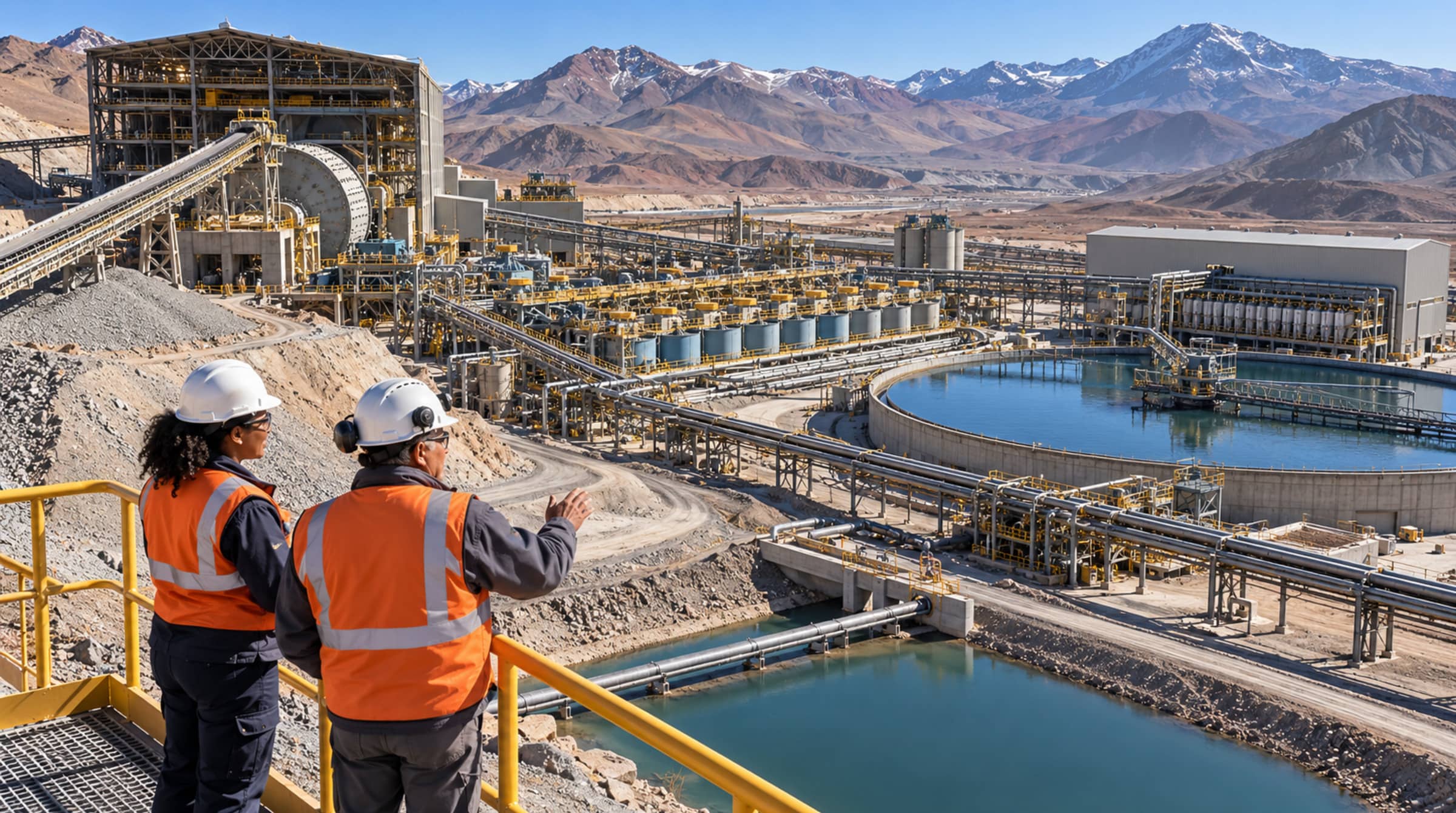
Other operating evidence shows plant and water objectives can require an inter-area decision rather than two independent local responses. The trade-off mechanism itself is operationally real.
Return to the grinding setpoint. The number on the control loop may still be changed locally.
What changes in an integrated operation is that the consequence for flotation, filtration and water is visible before commitment.
Treatment, recovery, water, filtration and quality are made explicit together, instead of the compromise being discovered downstream.
Who may adjust locally, when the decision becomes cross-chain and who can commit the trade-off are defined before the condition appears.
Observability compares expected and actual downstream consequences, so each arbitration informs the next time good objectives conflict.
Explore how explicit arbitration can protect throughput, recovery and water across the integrated mining value chain.