


- All Foundries

- Commodity Management & Trading

- Customer & Marketing Strategy

- Digital Engineering

- Station Studio

- Supply Chain & Industry 5.0
- Sustainability

- Physical AI

- Next-Gen Infrastructure













Collaborative Task Scheduler for Robots
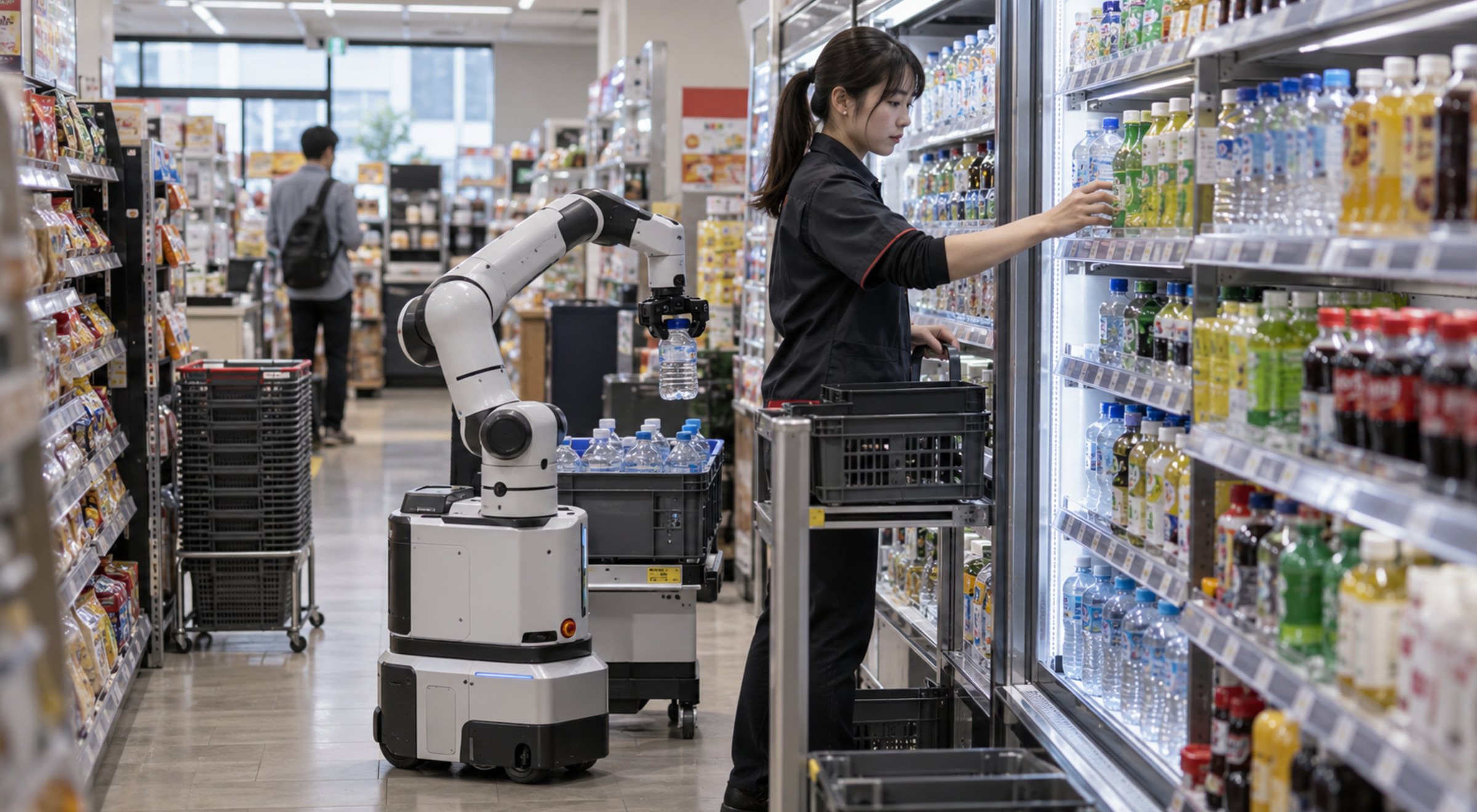
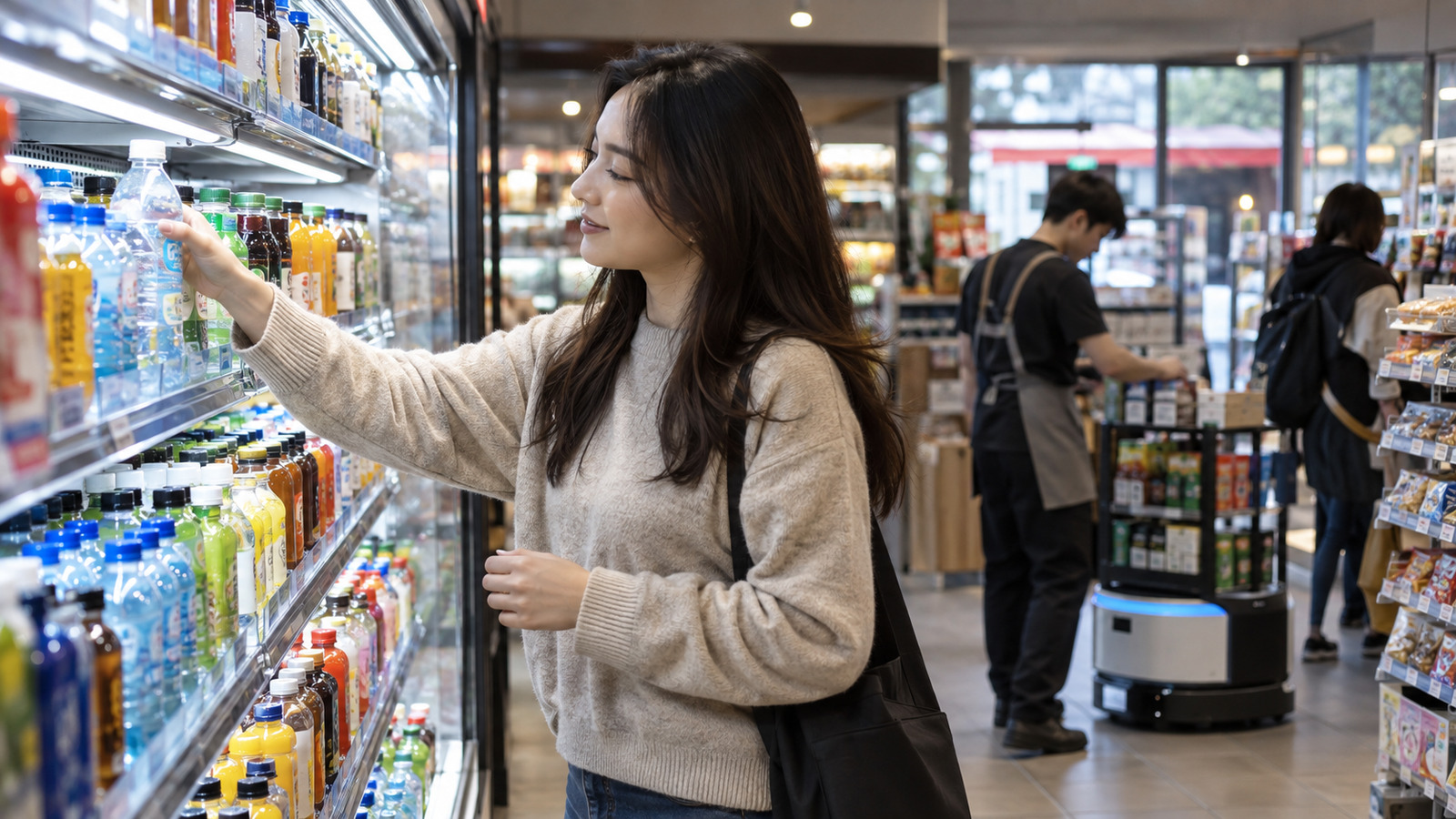
A corroborative task scheduler connects current store conditions with task allocation, helping employees and robots determine what requires attention next. The approach brings sensing, mathematical optimization, human-robot communication and digital-twin simulation into one operational concept.
The initial use case required more than a robot capable of moving products. The initiative needed a reliable view of current store conditions, a way to prioritize competing tasks, a controlled method for testing robot behavior and a practical coordination model for employees and robots.
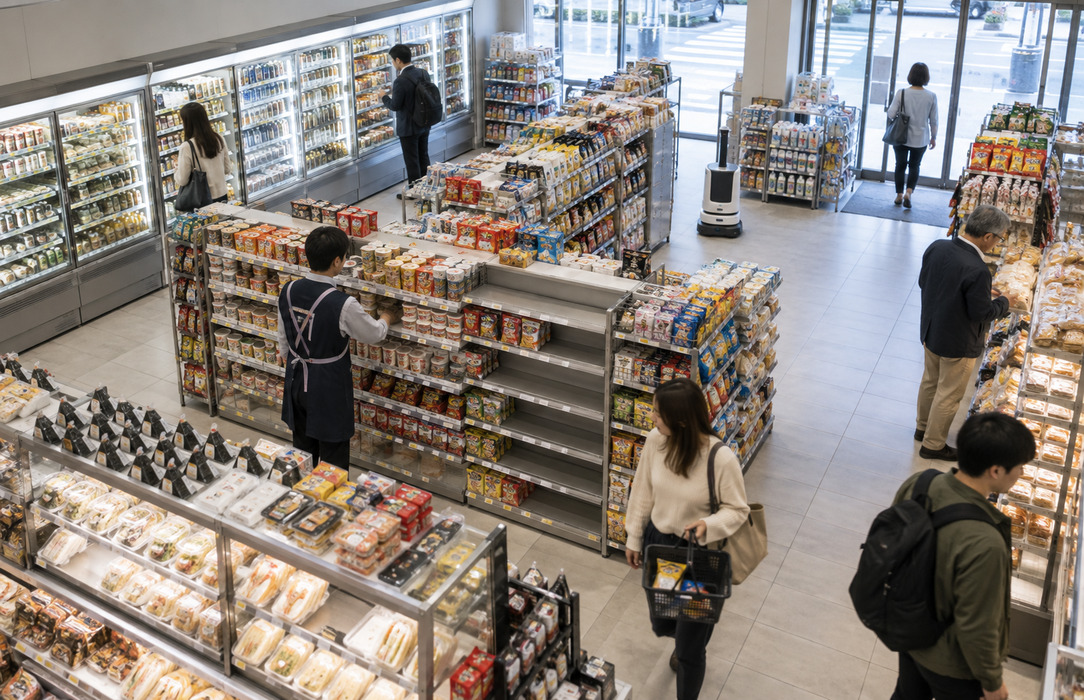
The scheduling process needed to understand how many products were on the shelves and how many customers and employees were present. Without this situational context, task decisions could not reflect what was happening in the store.
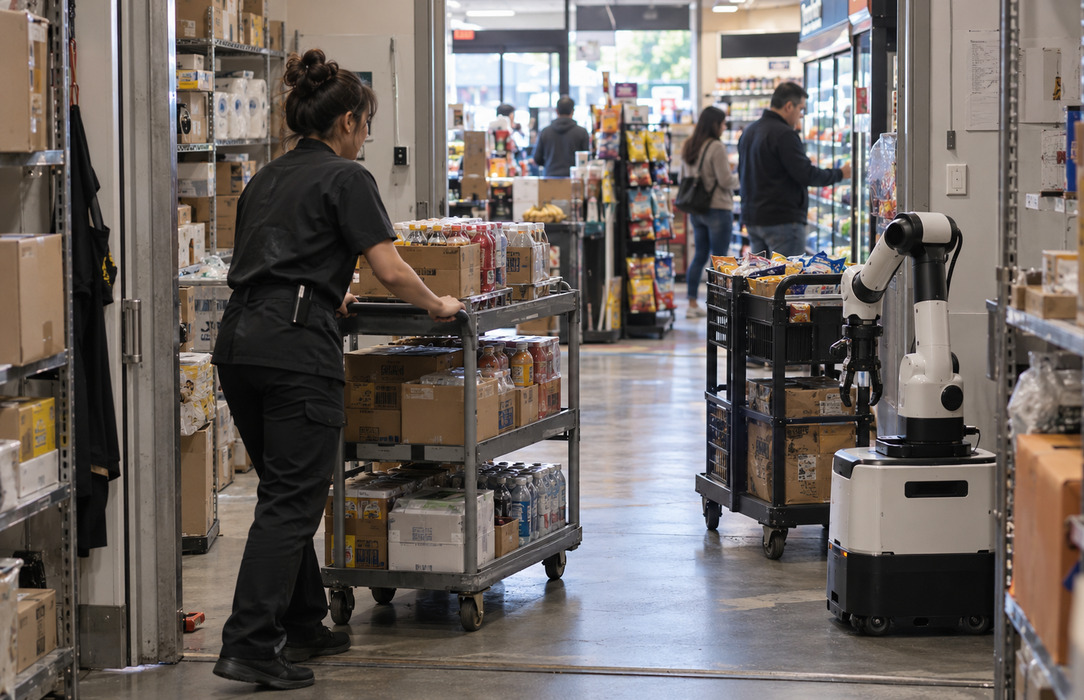
Convenience-store tasks are interdependent and can change with demand. The initiative required a way to prioritize restocking work against sales considerations, cost and store policies, an area that was outside the client's original team scope.
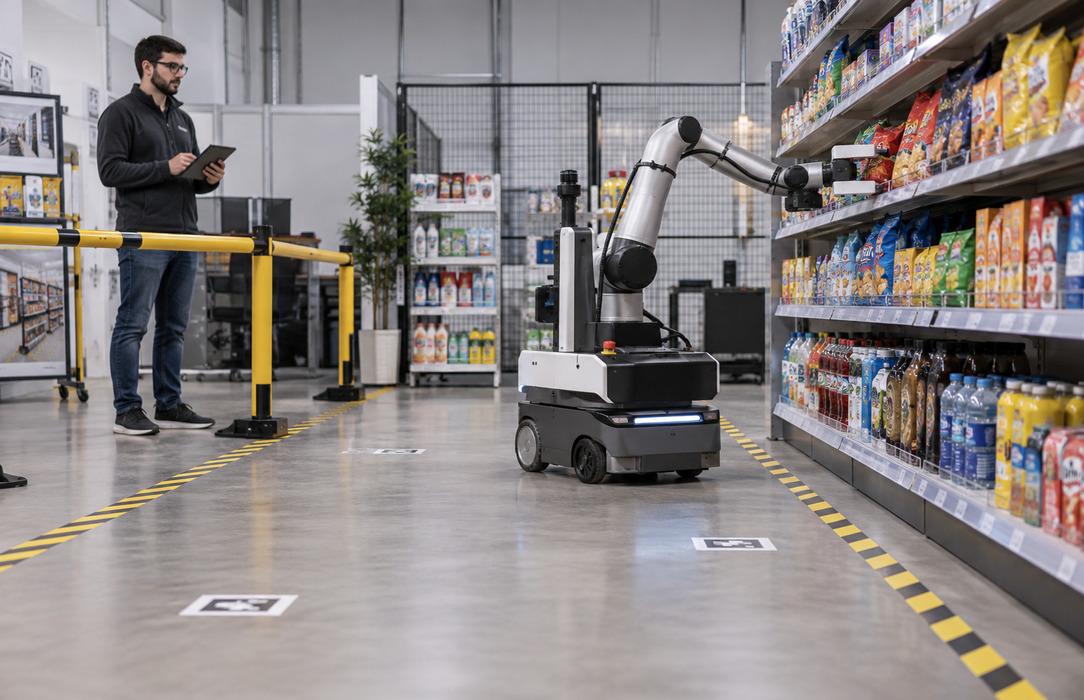
Robot actions needed to be examined before they entered a live retail environment. The approach therefore had to support simulation of movement and task execution with safety and efficiency in view.
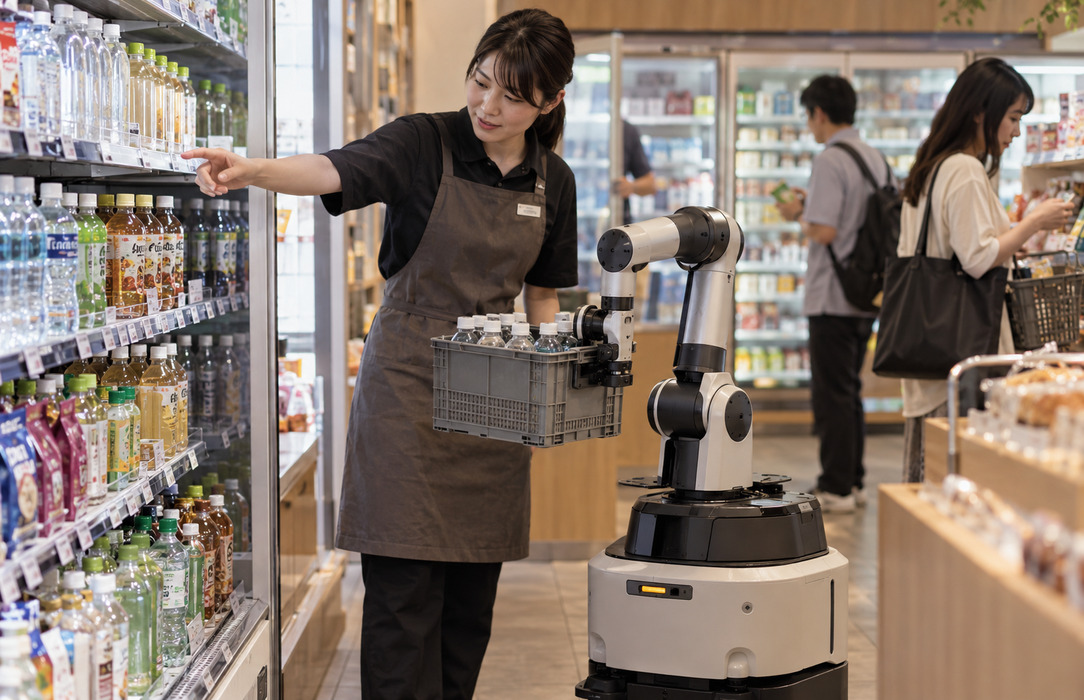
The operating model needed to preserve communication between employees and robots, allowing people to signal work, request help and remain part of task execution rather than treating automation as a separate workflow.
The described solution combines sensing technologies, mathematical optimization and a digital twin to convert store conditions into task requests for employees and robots. Python and ROS are identified as supporting technologies, while the simulation approach draws on experience from manufacturing and robotics research and development.

Sensing technologies establish the operational context by capturing shelf product levels and the number of customers and employees in the store. This gives the scheduler a grounded view of current conditions.
Scheduling technologies use the current situation to prioritize work while considering sales, cost and store policies. The system can then request restocking activity from employees and robots.
A digital twin of the store is used to simulate robot actions before deployment. The source positions this step as a way to examine safety and efficiency, referencing simulation practices already used in manufacturing and robotics research and development.
The operating concept supports task requests and communication between employees and robots. Employees can indicate what needs to be done, while the robot can collect shelf-status information and support assigned tasks.
By connecting store management and frontline work through data, the approach can support better shelf availability, lower inventory pressure, reduced employee workload, safer execution and easier customer access to products. The source presents increased sales and decreased inventory as expected value, but provides no baseline, measurement period or quantified outcome. These benefits should therefore be treated as intended impact until validated.
success stories
