Critical Process Monitoring in Vehicle Assembly
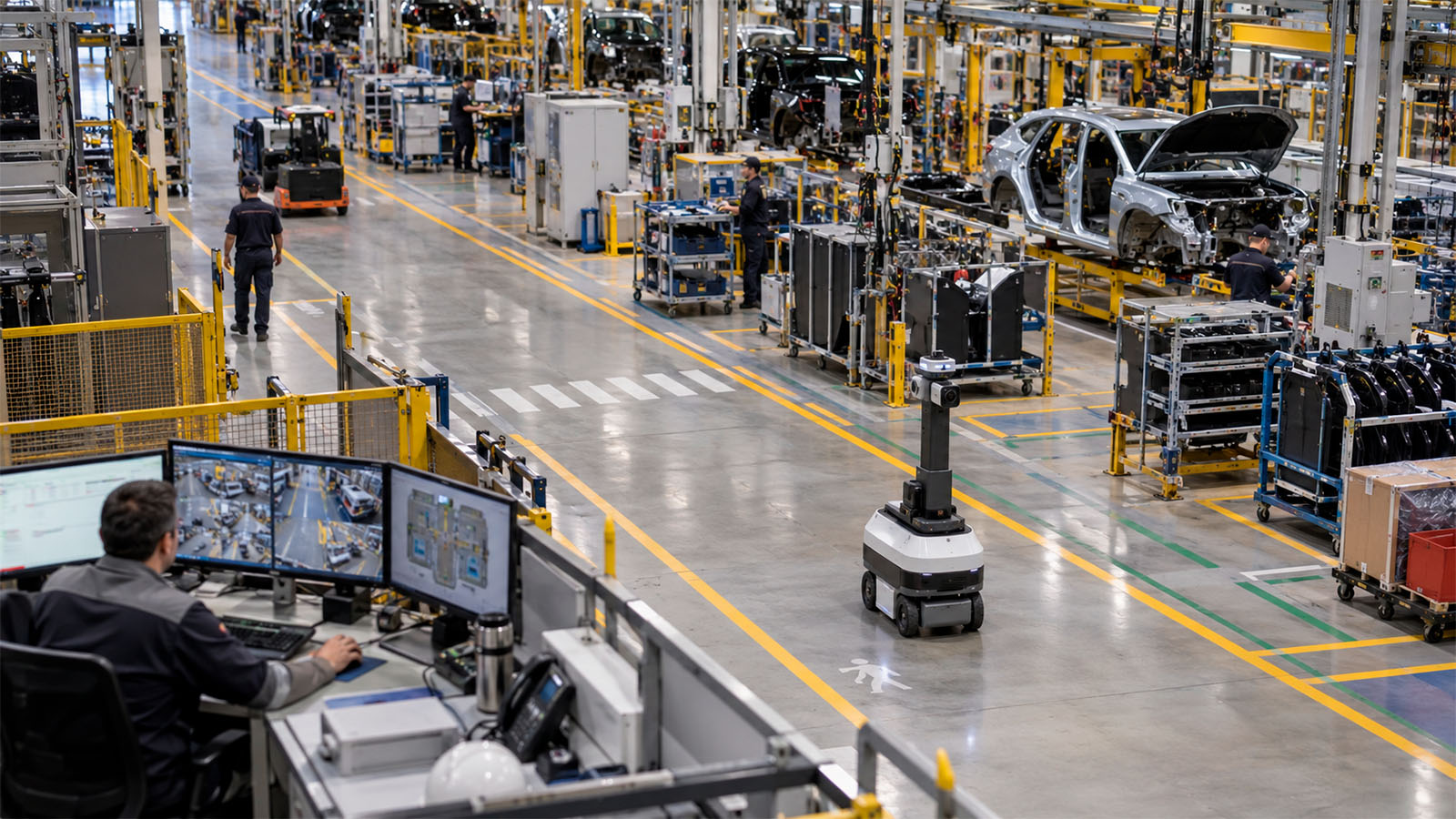
In a large vehicle assembly building, safety depends on seeing what happens beyond the reach of fixed cameras and continuous human supervision. The client introduced autonomous patrol robotics to extend monitoring across complex work areas, detect when people were operating alone and turn that condition into a real-time alert. The approach combines mobile vision, 3D mapping and risk-based patrol logic within the existing facility environment.
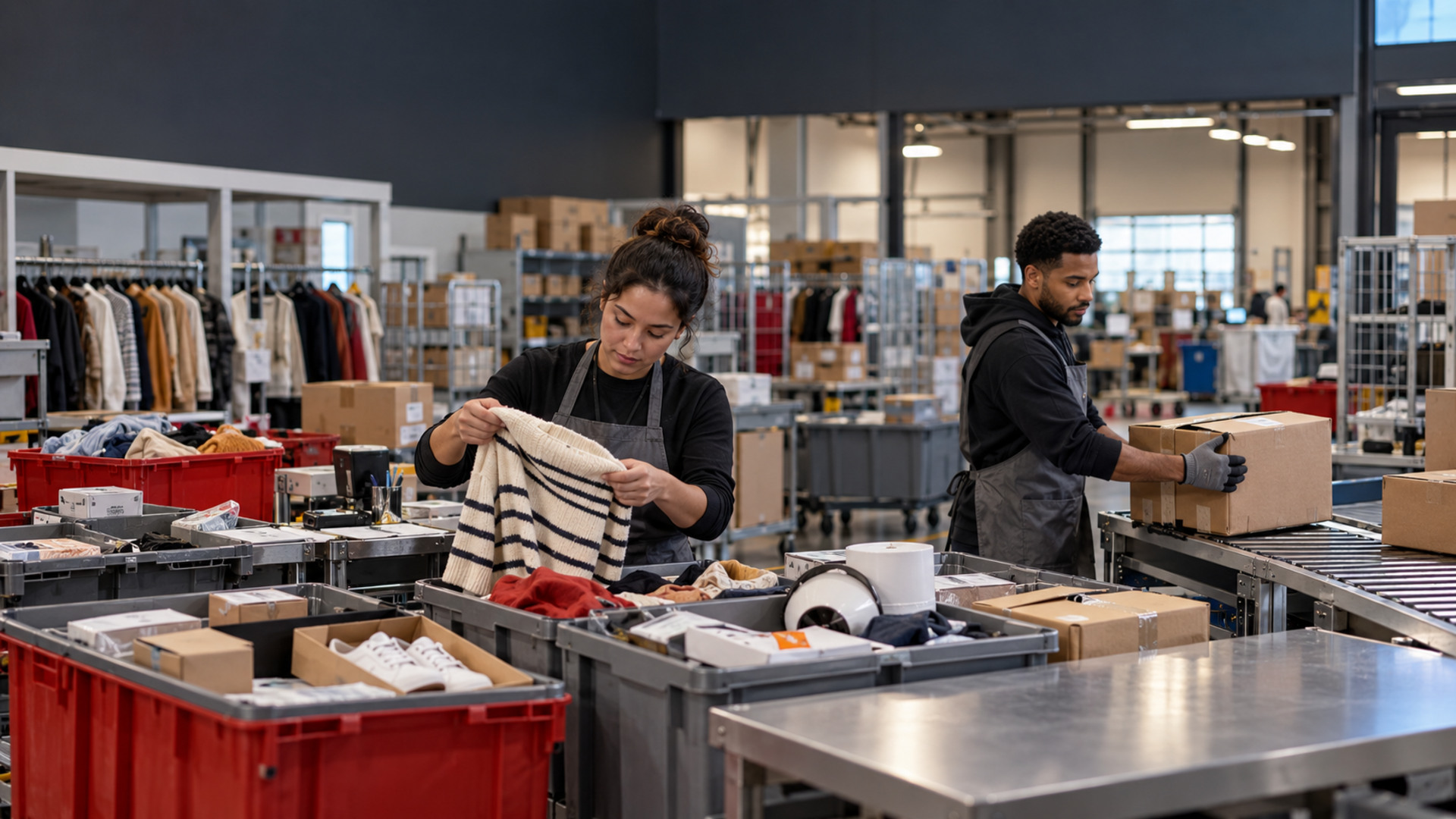
Autonomous patrol robot moving through a vehicle assembly building while workers operate across separate production areas.
Real-time worker detection
Camera-based detection identifies people in monitored areas as the robot patrols the facility.
Autonomous 3D navigation
3D LiDAR supports mapping, localization and autonomous movement through the premises.
Risk-based patrol routing
Patrol routes can be adjusted around shift schedules and areas with higher safety risk.
Lone-worker alerting
When a solitary worker is detected, the system can trigger an alarm and connect it to existing facility management systems.
Vehicle assembly floor with an autonomous patrol robot extending safety visibility across several active work zones.
Continuous safety coverage where fixed surveillance reaches its limit

The autonomous patrol model gives safety teams a mobile layer of visibility across large assembly areas. It can locate workers, navigate independently, adapt patrols to operational conditions and escalate lone-worker situations through the facility’s existing management environment.

Autonomous patrols extend worker visibility across complex assembly areas
Objectives
The client needed to improve worker safety across a large manufacturing environment where fixed surveillance and human supervisors could not continuously observe every area at the same time. A specific concern was identifying people working alone in spaces where a lack of nearby support could increase operational risk. The objective was to extend monitoring coverage without making safety dependent on additional continuous manual patrols, while keeping alerts connected to the facility’s existing operating processes.
Opportunity
Mobile autonomous monitoring created an opportunity to take safety visibility into areas that fixed cameras may not cover consistently. A patrol robot could move through the building, detect workers in real time, understand its own position and the relative position of people, and adjust its route according to shift schedules and higher-risk zones. By combining those capabilities with lone-worker alarms and integration into existing facility management systems, the client could create a more responsive monitoring model that can also be extended to additional facility zones.
Extending safety monitoring across a complex industrial environment

The client needed broader monitoring coverage without relying on fixed cameras or continuous human observation alone. The operating environment also required autonomous movement, reliable awareness of worker location and a clear response when someone was detected working alone.
Key Challenges
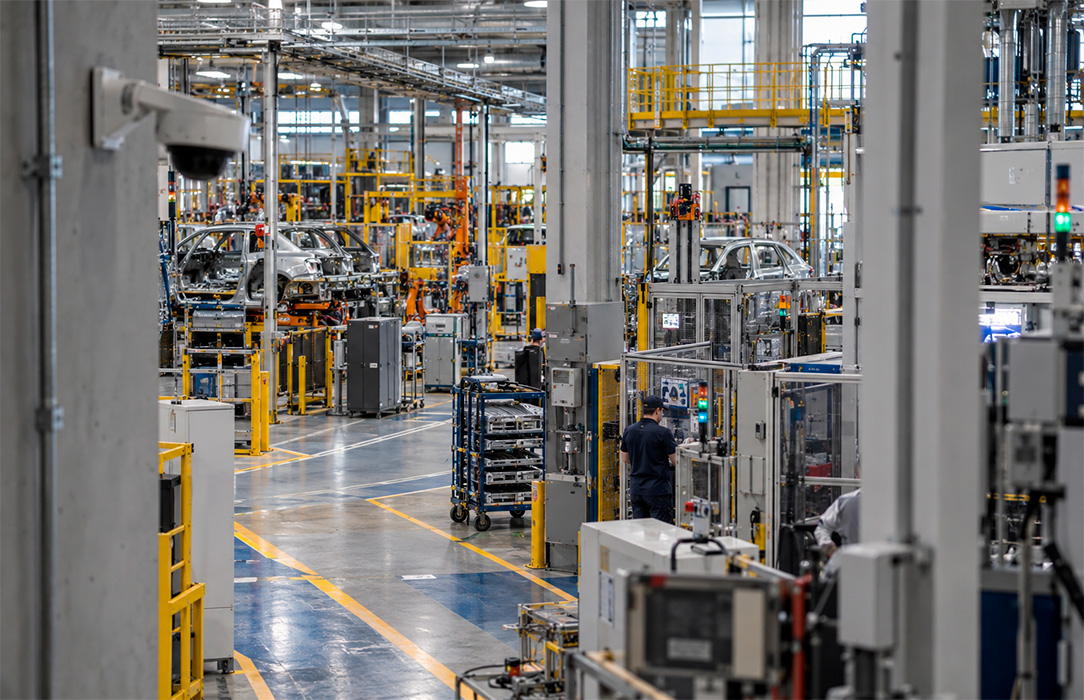
Complex vehicle assembly area where columns and production equipment obstruct the view from a fixed surveillance camera.
1: Coverage beyond fixed cameras
Traditional fixed surveillance can leave blind spots in large and complex industrial spaces, especially where production layouts and work areas extend beyond a single line of sight.
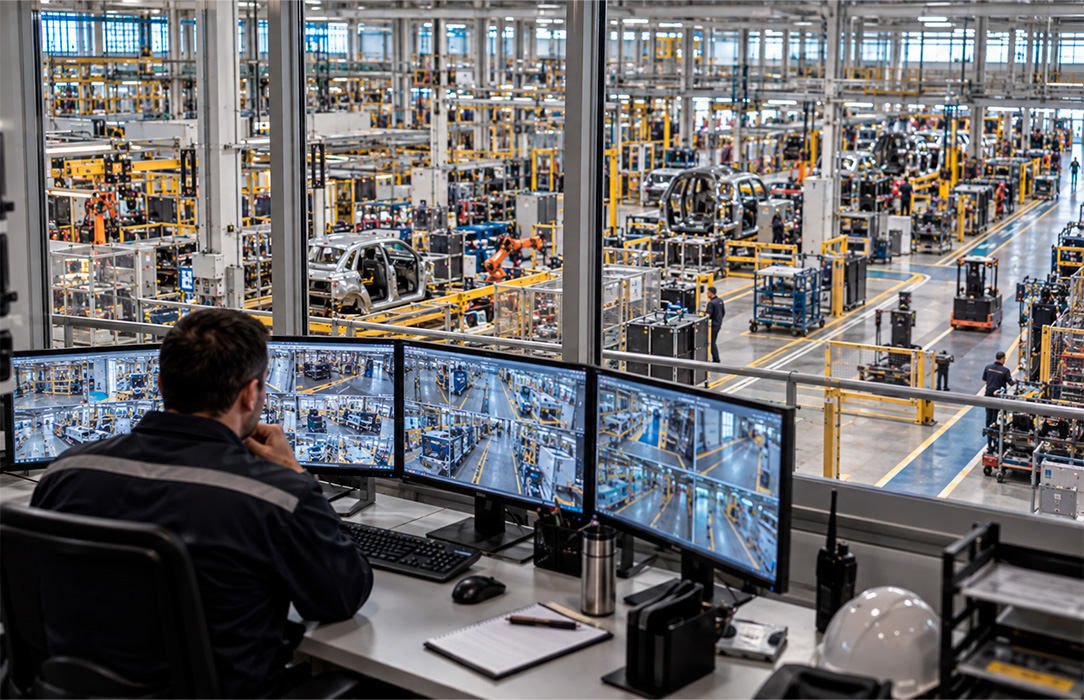
Ultra-photorealistic 1084x700 documentary photograph inside a vehicle manufacturing facility. Show one safety supervisor at a practical workstation overlooking several camera feeds on conventional monitors while the real factory floor extends far beyond the nearby observation area through windows or an open mezzanine view. The composition should make the scale mismatch clear: one person, many separate production zones, multiple activities occurring at once. Screens should contain only unreadable video thumbnails. Natural lighting, no futuristic control room, no brand marks, no readable text.
2: Limits of continuous human supervision
Human supervisors cannot monitor every area simultaneously across a large facility, which makes continuous manual observation difficult to sustain.
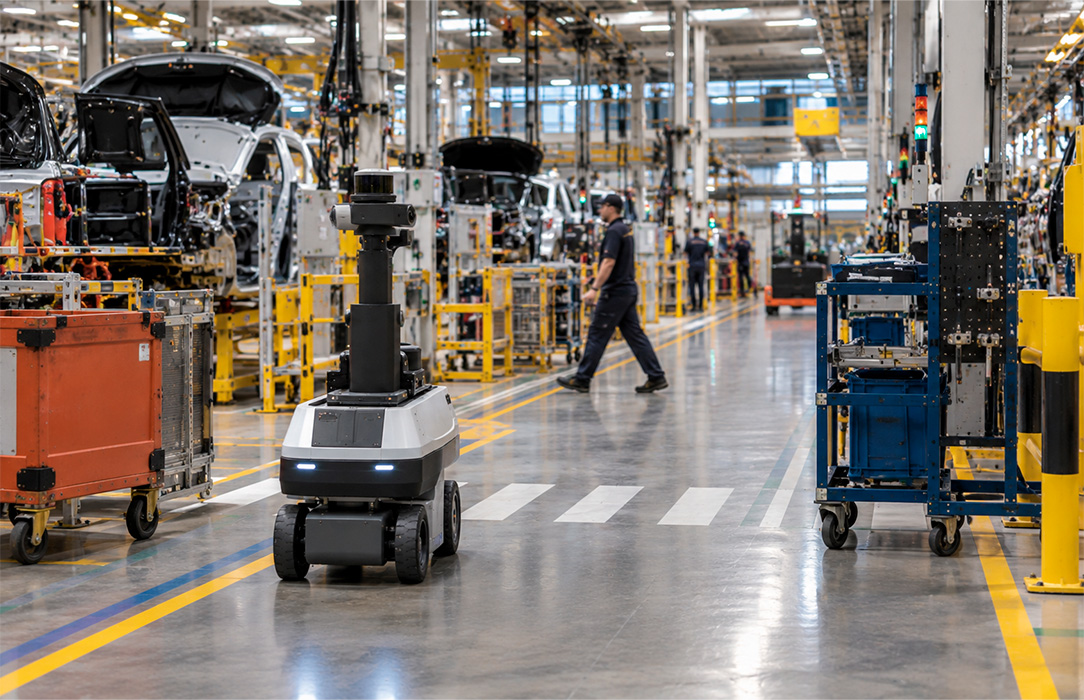
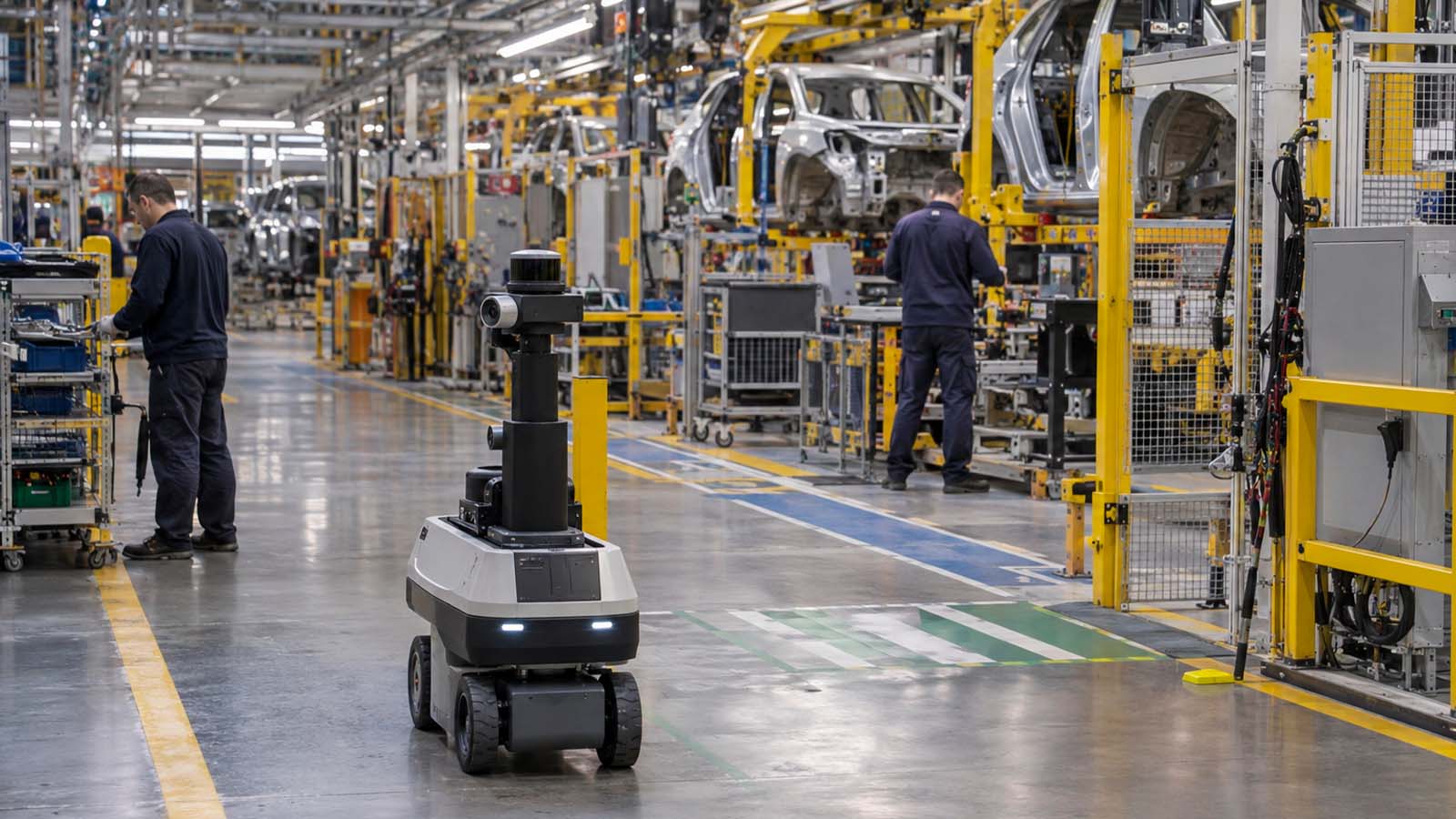
Autonomous patrol robot navigating around equipment and changing activity inside a vehicle assembly aisle.
3: Safe autonomous movement
A mobile patrol system needs to map the facility, understand its own position and navigate independently through an active industrial environment.
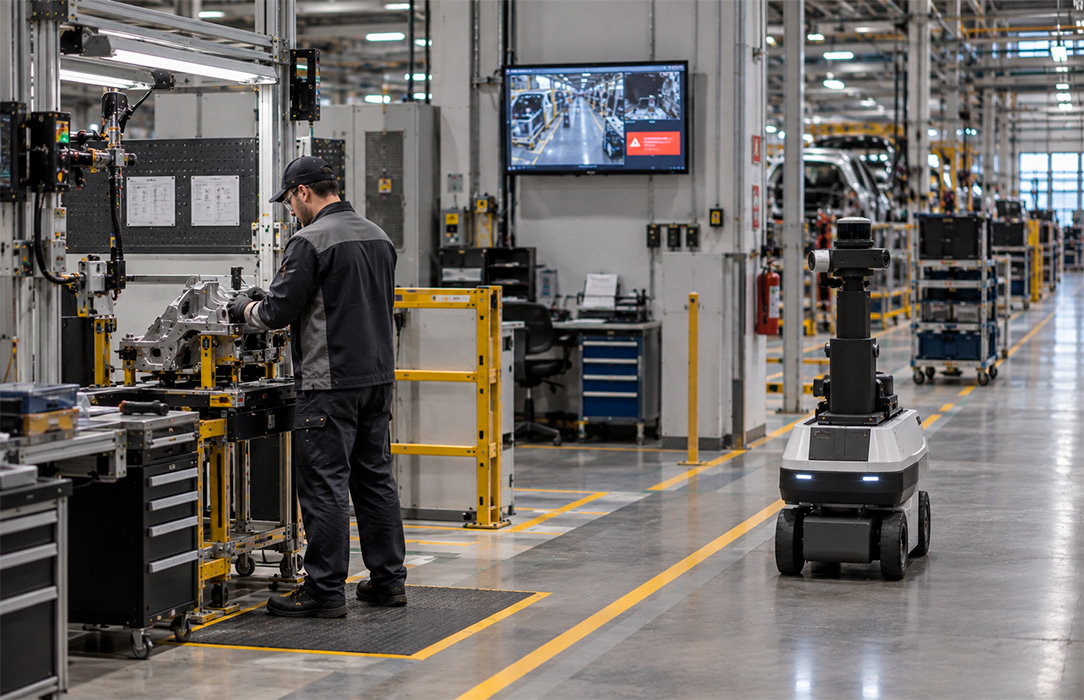
Worker in a quieter vehicle assembly support area as an autonomous patrol robot approaches to monitor a lone-worker condition.
4: Actionable lone-worker detection
Detecting a solitary worker has value only when the condition can trigger an alert and connect with the facility’s existing response processes.
Solution
A mobile monitoring layer built around autonomous patrols

The solution combines onboard vision, 3D LiDAR, autonomous navigation and operational patrol logic. The robot detects people, tracks its own location in relation to workers, follows workers when required and changes its patrol pattern according to shifts and higher-risk areas. When the system identifies a lone-worker situation, it can activate an alarm that integrates with existing facility management systems.

check icon
Detect workers during patrols

An onboard camera and real-time human-detection capability identify workers as the robot moves through monitored areas.

check icon
Map and navigate the facility autonomously

3D LiDAR supports environmental mapping, localization and autonomous navigation so the robot can patrol without continuous manual control.

check icon
Maintain awareness of worker position

The robot tracks the relative position of people and can follow a worker when continuous accompaniment is required by the operating scenario.

check icon
Prioritize patrols and trigger alerts

Patrol routes can be optimized around shift schedules and higher-risk areas. If a worker is detected alone, an alarm can be activated and connected to existing facility management systems.

Impact
Broader safety visibility with less reliance on continuous manual supervision

The source reports improvements in safety and operational efficiency, together with a reduced need for continuous human supervision. The implementation adds a real-time alert path for lone-worker conditions and supports safety-compliance processes through continuous mobile monitoring. The same approach can be deployed across multiple facility zones. No quantified improvement, deployment scale or before-and-after performance data is provided in the source.

Drag