Yumeshima Container Terminal enhances efficiency with Private 5G
At a terminal where cargo movement depends on continuous coordination across 1,350 metres, connectivity has become operational infrastructure. Yumeshima Container Terminal used a private 5G proof of concept to create a stable, terminal-wide network for remote machine control, real-time video, sensor data and digital work records. The initiative connects port digitization with smoother cargo handling, faster response and stronger operational coordination, while establishing a foundation for potential cost savings and safer working practices.
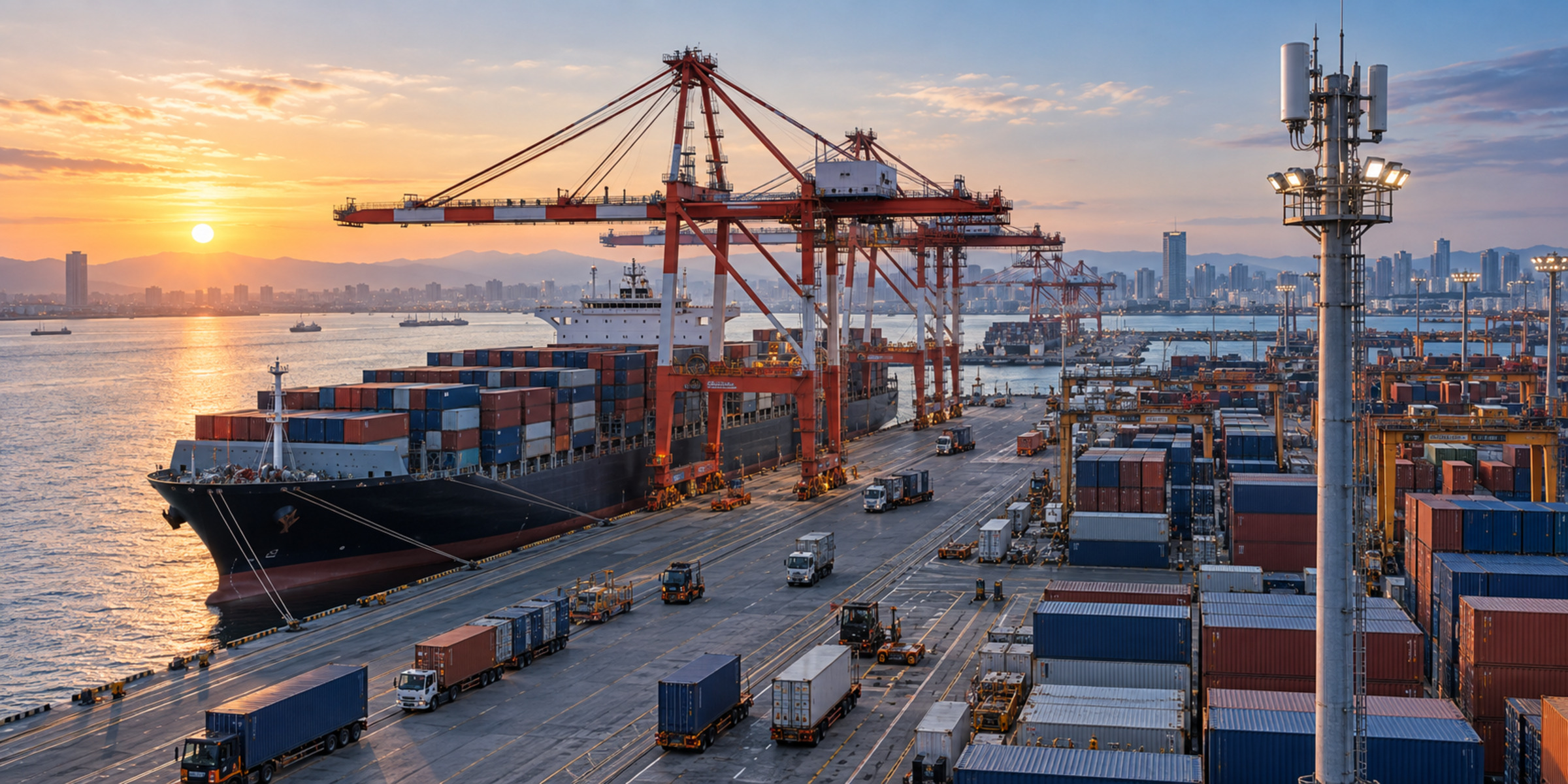
Wide sunrise view of a Japanese container terminal with a berthed ship, quay cranes, container stacks, terminal vehicles and a private 5G mast.
Connected reach
1,350-metre terminal.
Network deployment
13 private 5G base stations.
Savings potential
Up to ¥27 million annually.
Response speed
Reported improvement in loading operations.
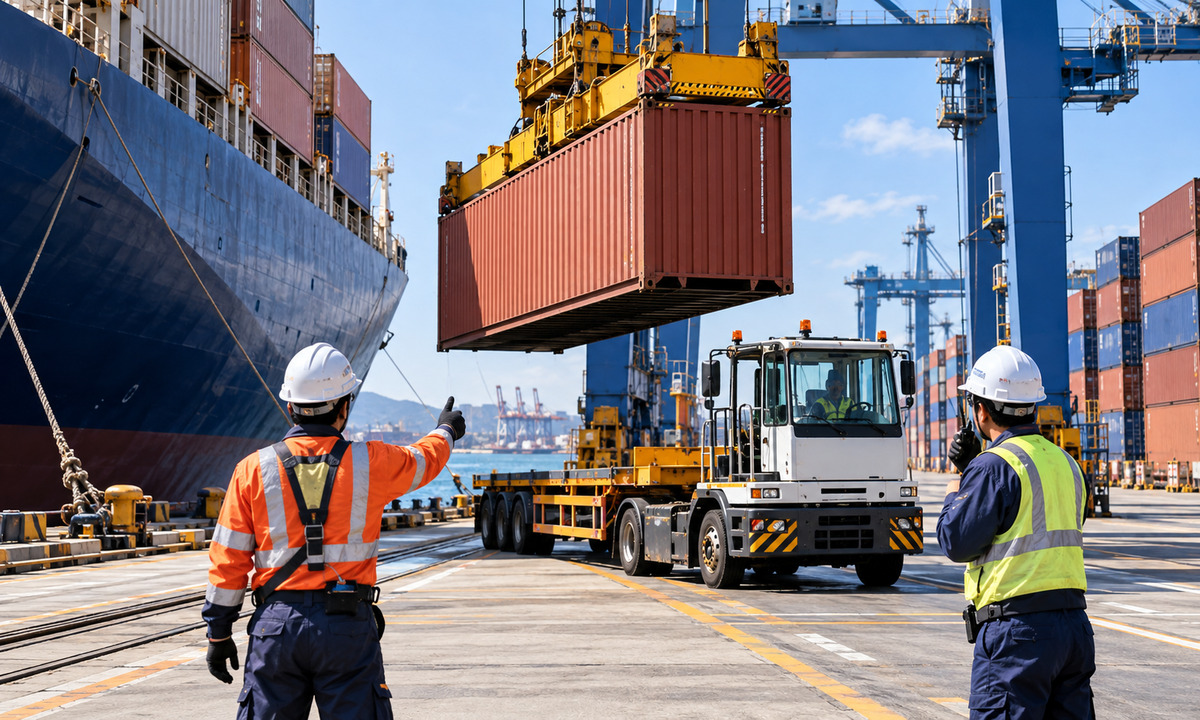
Dock workers coordinate a container transfer beside a cargo ship, quay crane and terminal tractor at a Japanese container terminal.
Yumeshima Container Terminal enhances efficiency with Private 5G
Private 5G replaced the need to switch between multiple area-based wireless antennas with one network covering the terminal. Onsite radio-wave measurement and communication-quality evaluation supported a network environment designed to minimize delays and deviations in remote control and real-time video transmission.

One connected terminal. Faster decisions across every cargo move.
Objectives
Connect the full 1,350-metre terminal and support the digitization of port logistics. The initiative sought to manage a wide range of facilities and equipment more efficiently, increase productivity and strengthen security, while providing the communications quality needed for remote machine control, real-time video and sensor-enabled operations.
Opportunity
With a single private 5G network spanning the terminal, Yumeshima can extend connected workflows across vessel cargo handling, container damage checks, equipment operations and employee coordination. The source identifies potential annual savings of up to ¥27 million from smart-device use and presents the project as a reference for smarter, more efficient and safer port operations across Japan. The financial and replicability claims require validation before publication.
Keeping a complex port operation continuously connected

The terminal needed a communications layer that could span a long operational footprint, keep critical data moving and connect people, equipment and records without adding friction to time-sensitive port work.
Key Challenges
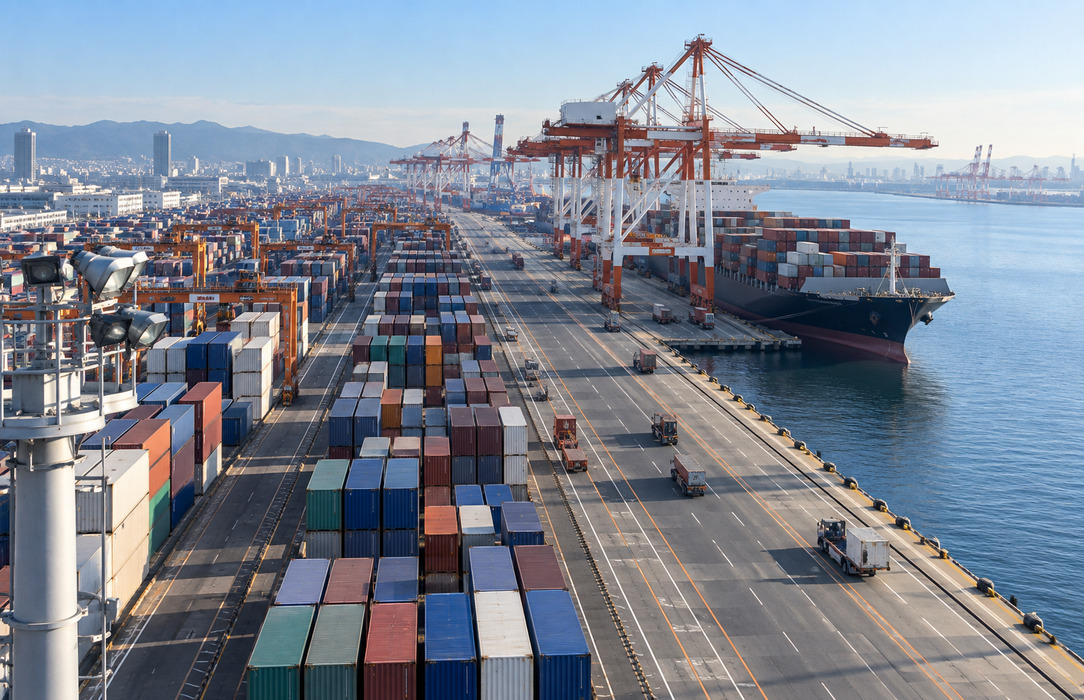
Elevated view along an extensive Japanese container terminal, with long rows of containers, gantry cranes, a berthed ship and harbor water.
1. A long operational footprint:
The network needed to serve a 1,350-metre container terminal with facilities and equipment distributed across the site.
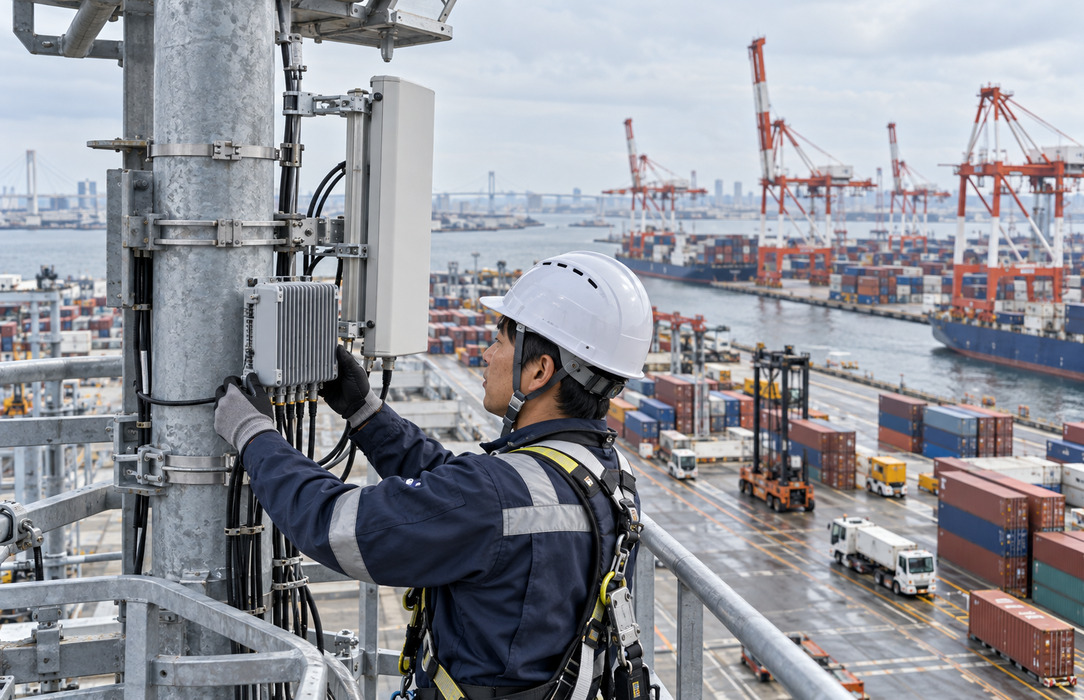
A port telecommunications technician inspects radio equipment on a lighting tower above an active Japanese container yard.
2. Fragmented wireless coverage:
Multiple area-based antennas created a risk of communication interruption as connected operations moved between coverage areas.
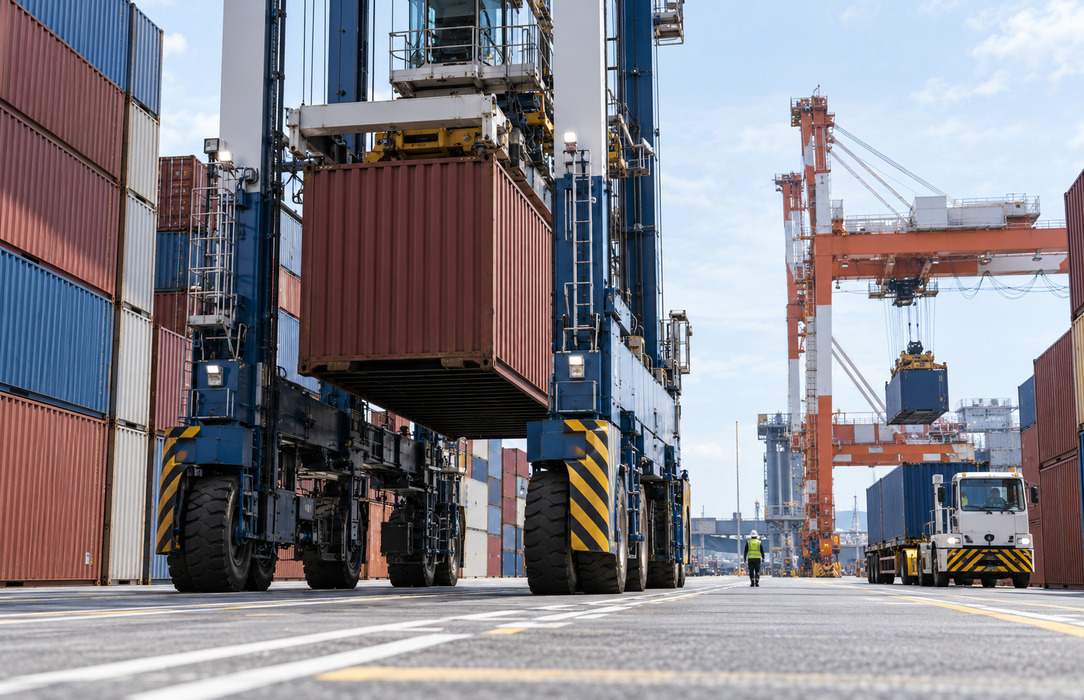
Low-angle view of a straddle carrier moving a container between stacks, with cranes and terminal vehicles operating in the background.
3. Precision-critical data flows:
Remote control, real-time video transmission and sensor data required stable, high-quality communications with minimal delay or deviation.
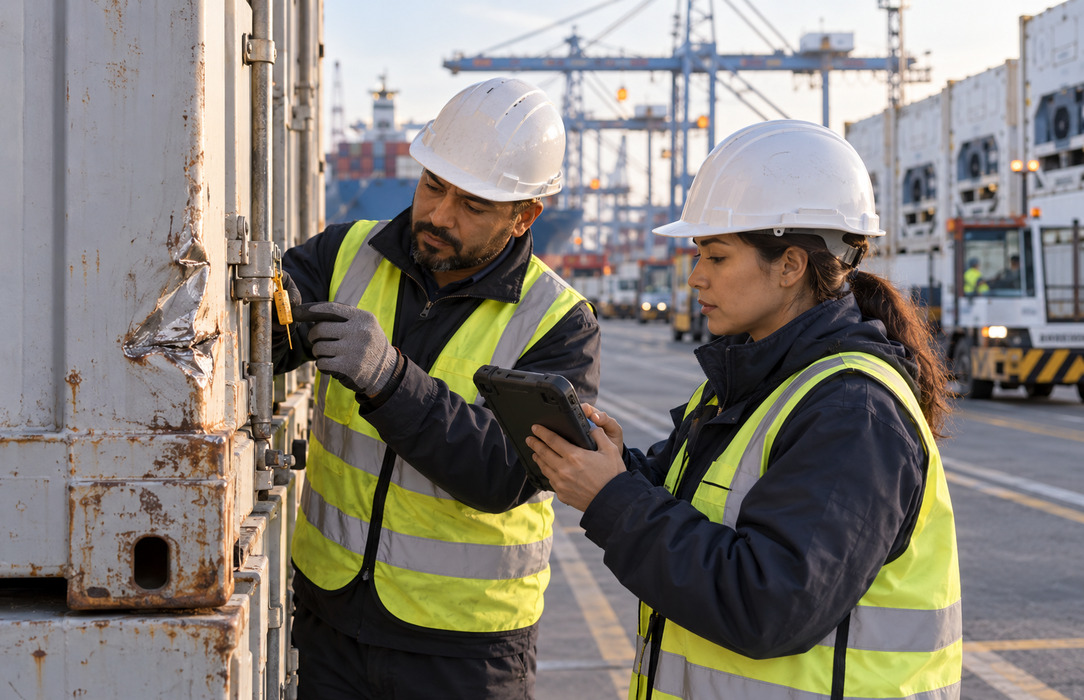
Two port specialists inspect damage on a shipping container and document the finding with a rugged handheld device in a working terminal.
4. Coordinating people and records:
Work instructions and inspection records needed to be shared and confirmed quickly to support clearer communication and reduce human error.
Solution
A private 5G layer built around port operations

For the proof of concept, NTT DATA deployed private 5G infrastructure across the terminal and evaluated radio-wave performance and communication quality onsite. The approach created one network environment for operational use cases that had previously depended on separate area-based wireless connections.

check icon
Terminal-wide deployment

Thirteen private 5G base stations were installed on the terminal’s lighting towers, supported by onsite radio-wave measurements and communication-quality evaluation.

check icon
Single-network coverage

The private 5G network covered the terminal as one environment, reducing the switching risk associated with multiple area-based wireless antennas.

check icon
Operational communications

Stable, high-quality connectivity supported the remote control of large machines, real-time video transmission and the use of real-time sensor data.

check icon
Digitized frontline workflows

Smart devices supported vessel cargo handling and container damage checks, while work instructions and inspection records could be shared and confirmed instantly.

Impact
More dependable paint quality decisions before release

According to the source, the client improved the overall efficiency of paint inspection and detected errors with greater accuracy. The catalogue also reports fewer vehicles being recalled from dealerships because of paint issues. No baseline, measured improvement, timeframe or attribution method is provided, so these outcomes should remain qualitative until the client validates the supporting evidence.

Drag