- All Foundries

- Commodity Management & Trading

- Customer & Marketing Strategy

- Digital Engineering

- Station Studio

- Supply Chain & Industry 5.0

- Sustainability

- Physical AI

- Next-Gen Infrastructure











From Network Alarms to Root Cause: Accelerating Complex Incident Response with AI and Digital Twins
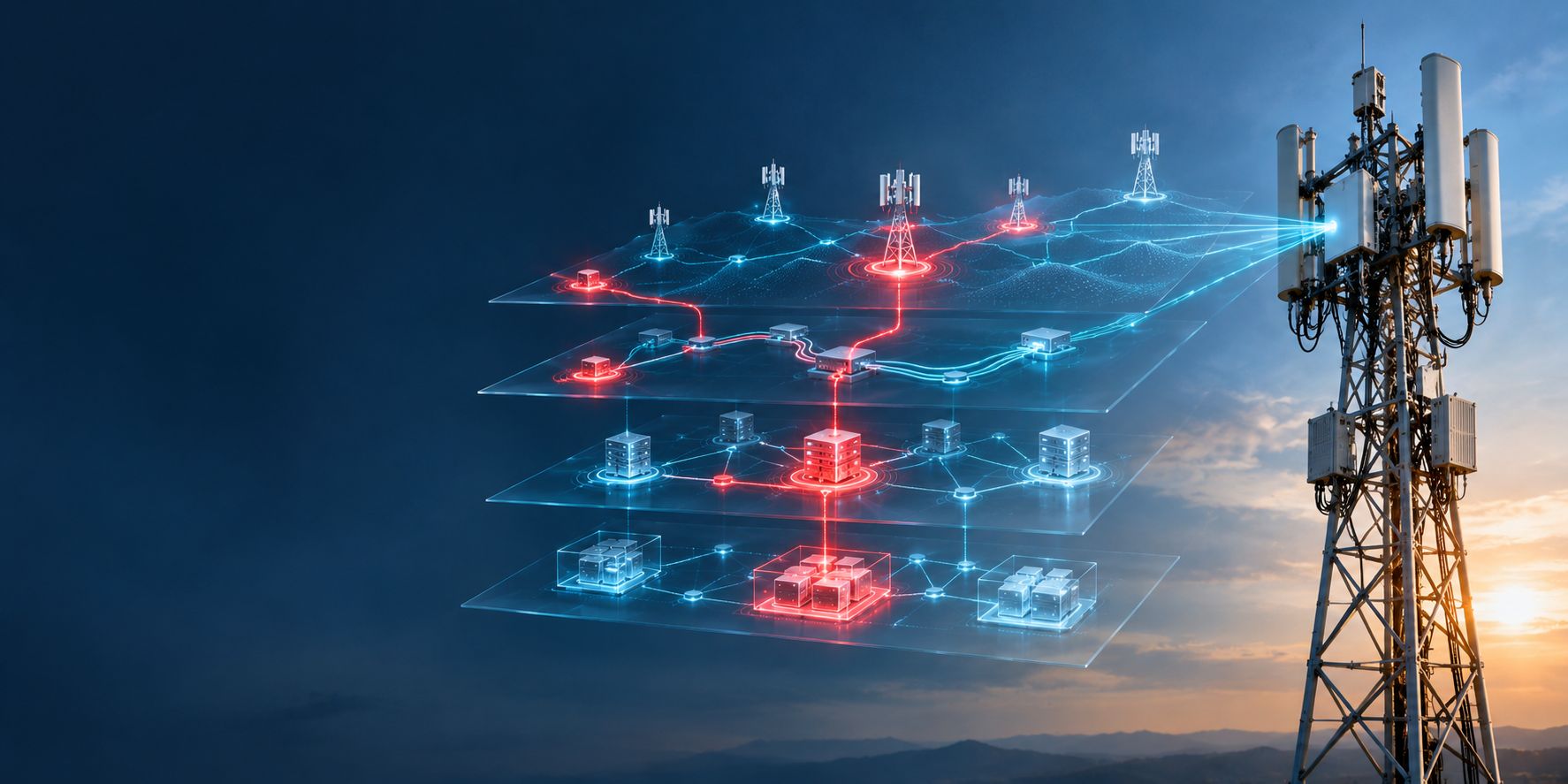

Large multi-vendor networks generate alarms, performance indicators and topology data across multiple operational domains. The operator could see events as they occurred, but complex incidents still required engineers to build the full network context manually before determining where a failure began.
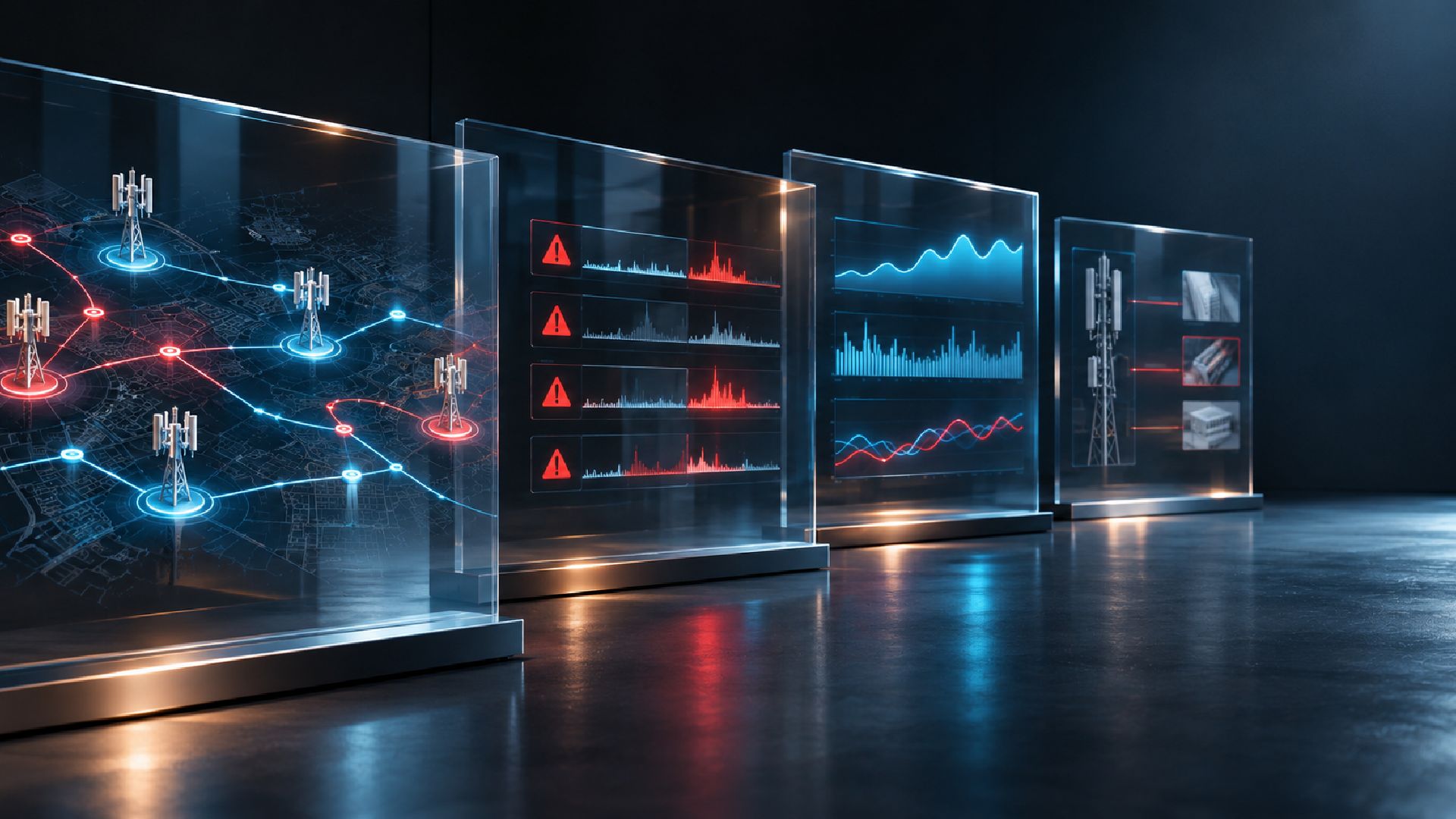
Topology, alarms, performance data and domain knowledge were distributed across multiple systems and teams.
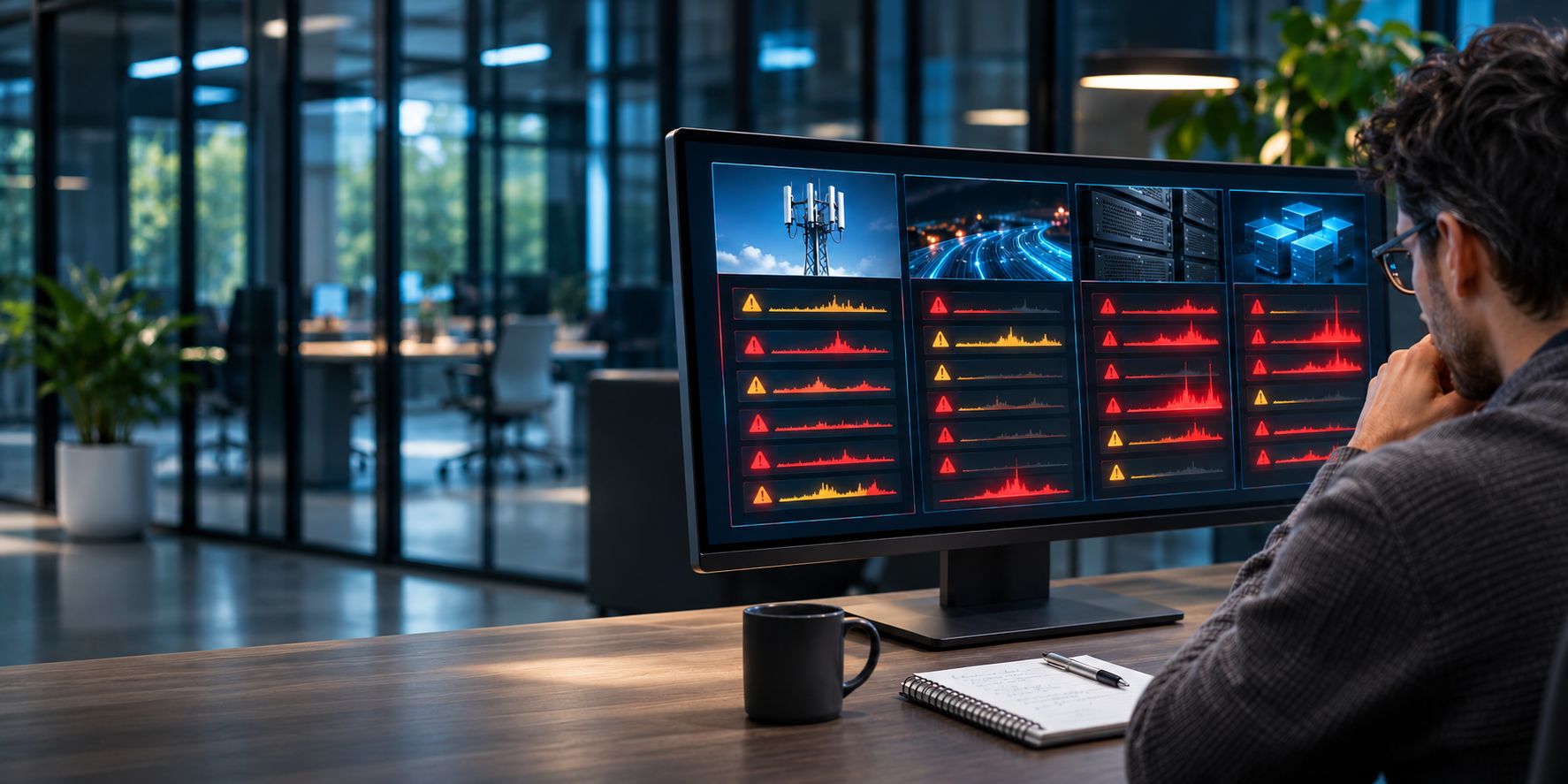
Event visibility did not show how affected elements were connected or where failure propagation had started.
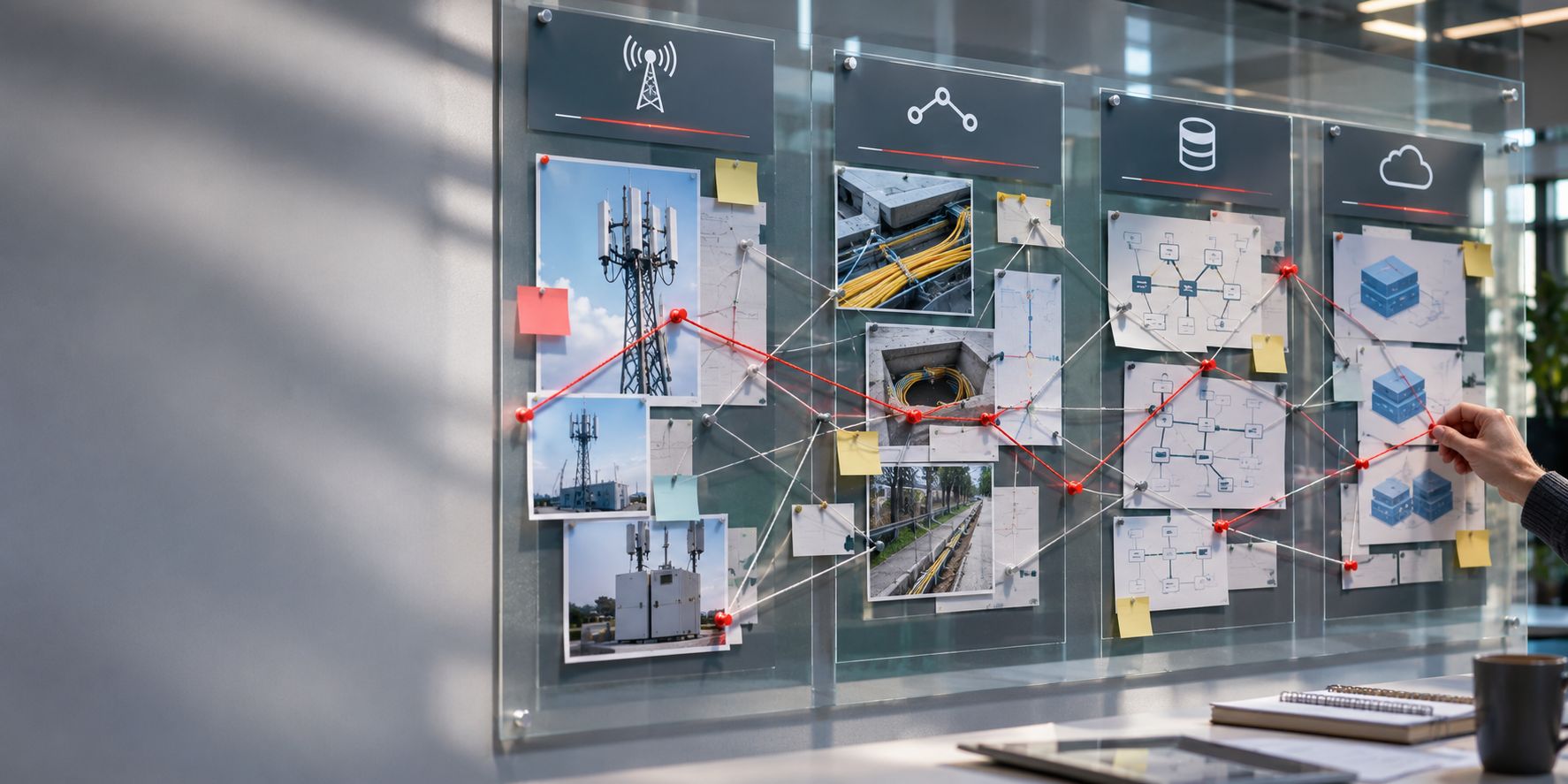
Incidents could span RAN, transport, core and virtualized infrastructure, making isolation more difficult.
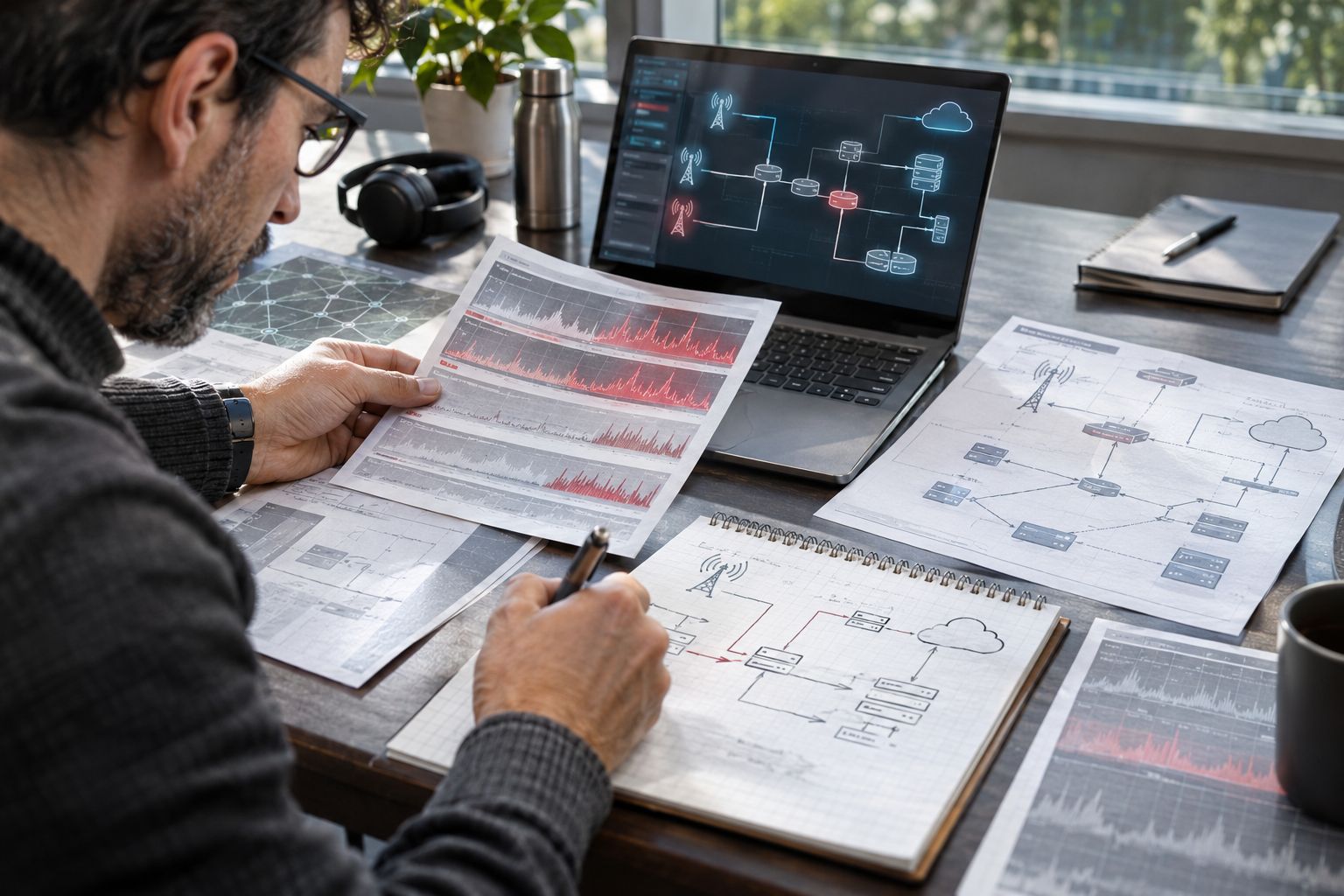
Complex root-cause analysis depended on engineers manually correlating network knowledge with operational evidence, delaying the path from detection to action.
NTT DATA combined telecommunications expertise, automated data preparation, a graph-based topology model and AI-assisted root-cause analysis. The approach connects symptoms with likely causes and presents maintenance engineers with evidence and recommended actions for review.

Topology, performance and alarm data are ingested and prepared across network domains so analysis starts from a shared operational context.
An end-to-end topology model makes dependencies between network elements and potential propagation paths explicit.
Event triggers, graph analytics and AI-assisted analysis identify suspected failure points and generate root-cause hypotheses across the connected network model.
Maintenance engineers review topology, analysis results and recommended actions in one view, preserving human judgment and accountability at the point of action.
By combining live operational signals with topology-aware analysis, the operator moved from extensive manual correlation toward AI-assisted diagnosis at scale. According to the source case, the platform correlates data from more than one million network elements and reduced response time for complex failures by more than 50%. Engineers also gained a clearer, evidence-based path from alarm to action.
success stories