


- All Foundries

- 商品管理と取引

- 顧客とマーケティング戦略

- デジタルエンジニアリング

- ステーション・スタジオ

- サプライチェーン&インダストリー5.0

- サステナビリティ

- Physical AI

- Next-Gen Infrastructure













Nature-Based Solutions for Hydropower Infrastructure Risk Mitigation

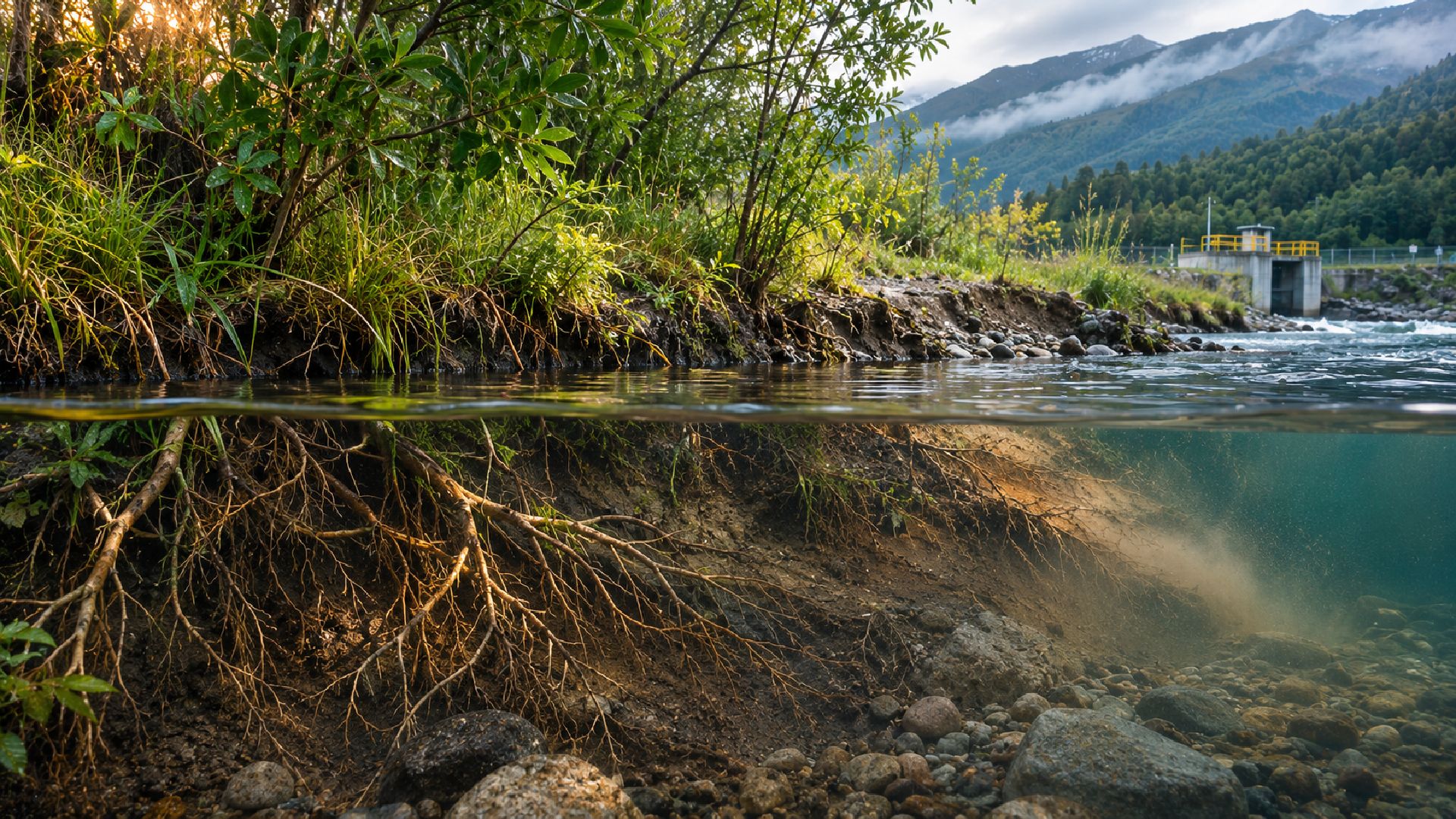
Erosion, land-use change, vegetation condition and degradation of ecosystem services can affect water regulation, sediment dynamics, territorial risk and relationships with local communities. NTT DATA assessed ecosystem services across a large portfolio of natural assets associated with hydropower operations, created a natural-capital inventory and reviewed environmental liabilities. The work also analysed the value that ecosystem services contribute to the company, society and indigenous communities, then translated the evidence into a sustainable management proposal and a standardised methodology for natural-capital valuation.
The programme had to bring different ecosystem services, environmental liabilities and stakeholder perspectives into a consistent decision framework across a geographically varied portfolio. The challenge was to preserve the distinct forms of ecological and social value while producing information that could guide practical management choices.

Different ecosystem services had to be represented within one decision framework without collapsing them into a single environmental measure.

The assessment covered a large and geographically diverse set of natural assets, requiring a method that could be applied consistently across territories.

Natural-capital value and environmental liabilities needed to be translated into information relevant to conservation, restoration and infrastructure-management decisions.

The analysis had to consider value to the company, society and indigenous and local communities within the same management view.
NTT DATA structured the work around natural-capital inventory, ecosystem-service identification, prioritisation and valuation. This produced a management view of the properties and their environmental, social and corporate value. The programme considered carbon sequestration potential and environmental co-benefits and framed management options using nature-based-solutions principles, including alignment with the IUCN Global Standard for Nature-based Solutions. A standardised methodology improved accountability and comparability across territories, creating a reusable basis for deciding where conservation or restoration could support broader hydropower and catchment objectives.

NTT DATA structured the work around natural-capital inventory, ecosystem-service identification, prioritisation and valuation.
This produced a management view of the properties and their environmental, social and corporate value.
The programme considered carbon sequestration potential and environmental co-benefits and framed management options using nature-based-solutions principles, including alignment with the IUCN Global Standard for Nature-based Solutions.
A standardised methodology improved accountability and comparability across territories, creating a reusable basis for dec
The documented scope covers 45,224 hectares across four regions. These figures demonstrate portfolio scale, not a percentage improvement in resilience. The main outcome is a repeatable natural-capital and ecosystem-services management framework; the reviewed source does not state measured reductions in erosion, flood impact or infrastructure failures.
