The City of Las Vegas shapes the future of urban living
Las Vegas is more than an entertainment destination. It is a fast-moving urban community where public safety, sustainability, mobility and resident services all depend on the city’s ability to understand what is happening in real time. Working with NTT DATA, the City of Las Vegas advanced a smart city model that connects data, IoT devices, secure networks, edge analytics and cloud infrastructure to help city teams protect public spaces, improve traffic safety and plan services around how people actually use the city.
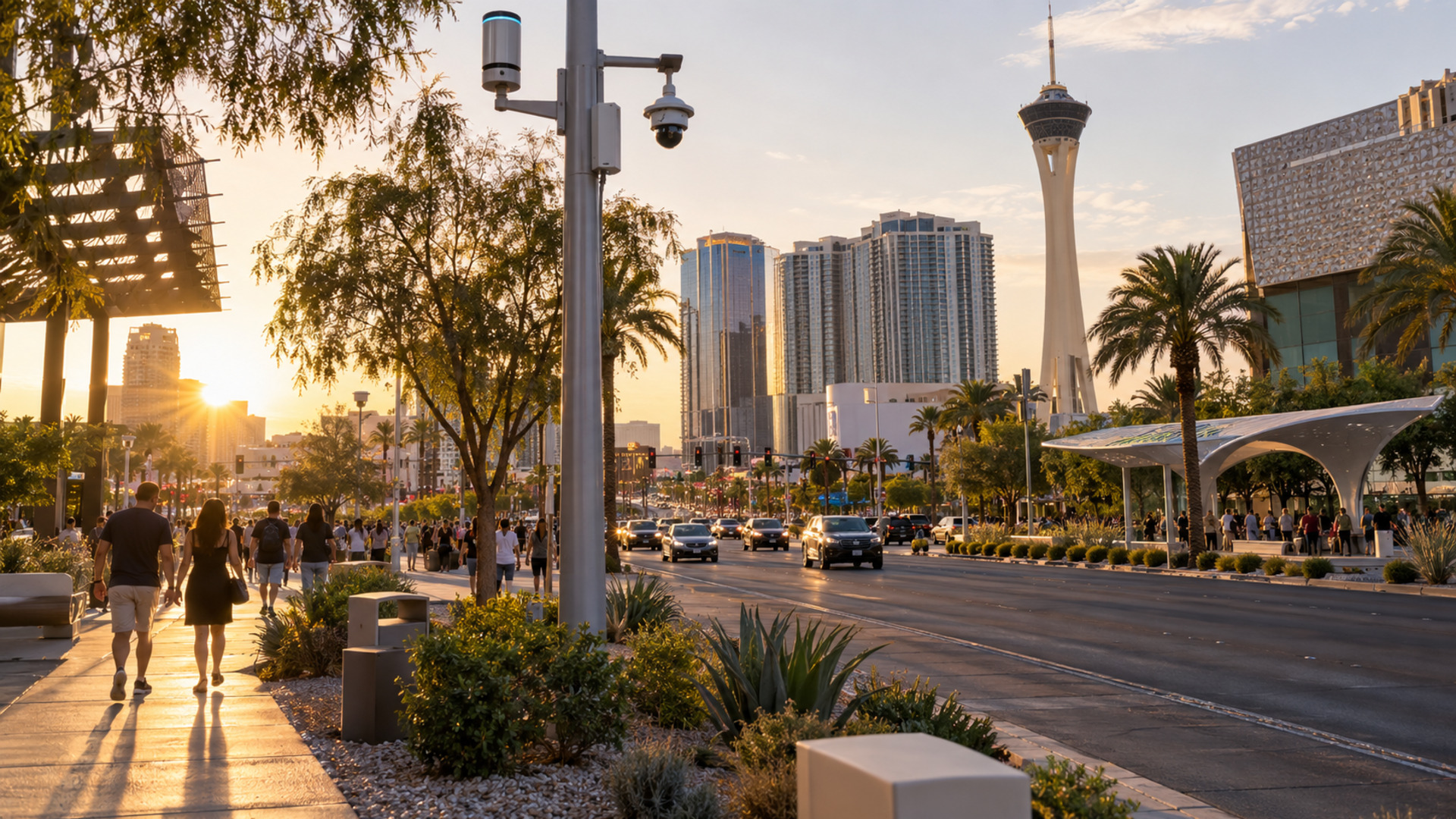
A Las Vegas civic streetscape with public spaces, road infrastructure and discreet sensors representing a connected smart city environment
>90% reduction reported
Wrong-Way Reduction
>14K predictions per week
Weekly Predictions
>USD1M savings per year
Annual Savings
Seven parks connected
Smart Parks
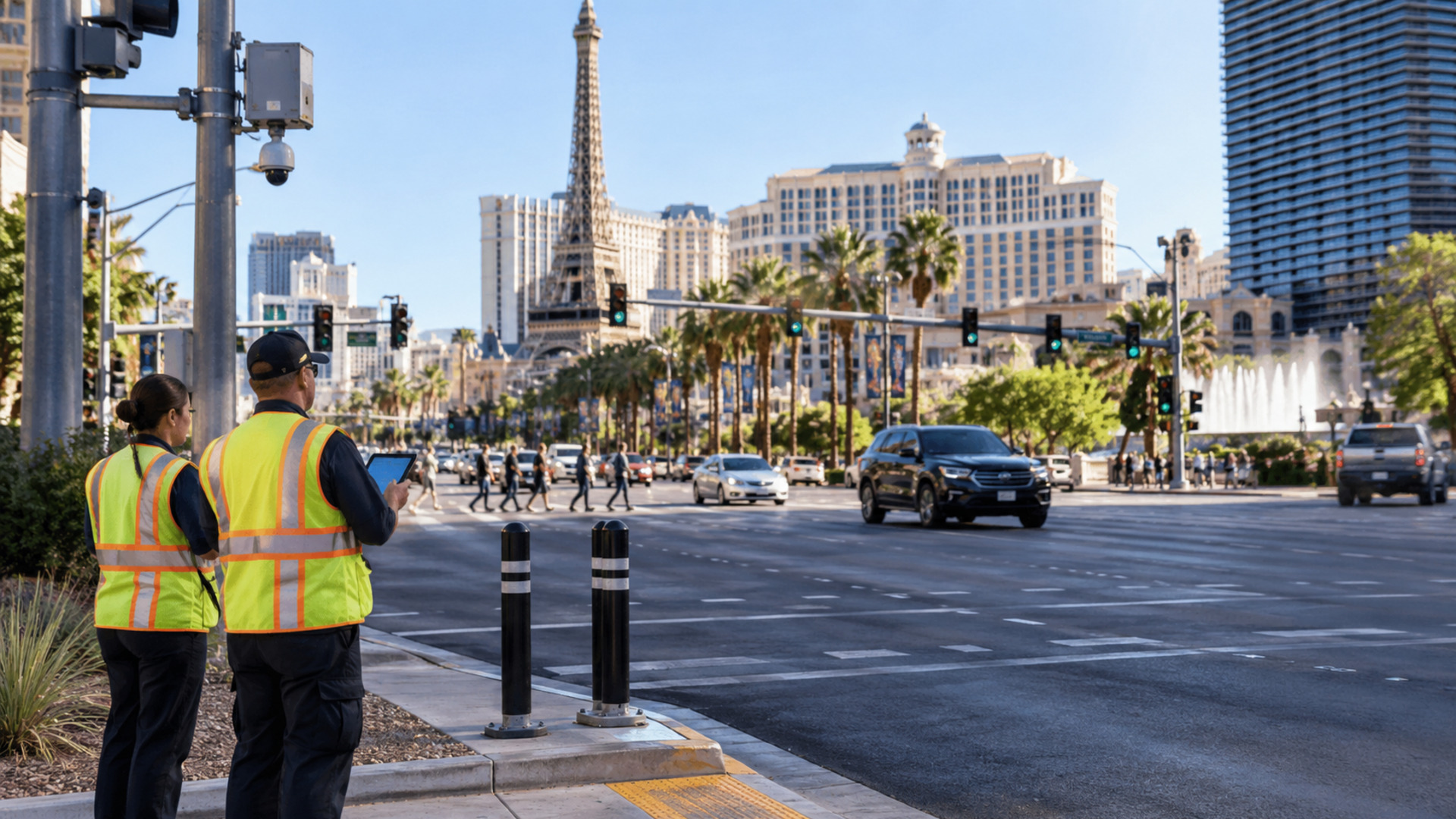
A Las Vegas intersection with traffic lights, lane markings and municipal staff, showing how smart city insight supports safer urban mobility
Urban intelligence for safer, more connected city living

Smart city insight that helps municipal teams move from observation to action.

The City of Las Vegas needed a smarter way to serve residents and visitors, moving from limited manual observation and after-the-fact incident reporting toward real-time visibility, predictive insight and more agile planning across roads, parks and connected city services.
目的
The initiative set out to create safer public spaces, enable data-driven planning decisions, expand smart city capabilities into more areas and augment the capacity of city employees. For Las Vegas, the ambition was not simply to deploy technology, but to use insight from city operations to shape a safer, more sustainable and more responsive urban experience.
機会
With its Smart Solution migrated to Microsoft Azure and new connectivity models being explored, Las Vegas has a foundation to scale more cameras, sensors and use cases across the city. The source case points to future potential in cloud-native services, wider Private 5G coverage, additional smart parks, and the integration of edge systems such as air-quality monitoring with public data sources such as weather information.
Turning urban activity into actionable city intelligence

Las Vegas faced the practical challenge of making smart city capabilities useful at city scale. The initiative needed to connect real-time observation, sensitive data management, public safety use cases and network reach without losing sight of the people and places the city serves.
主な課題
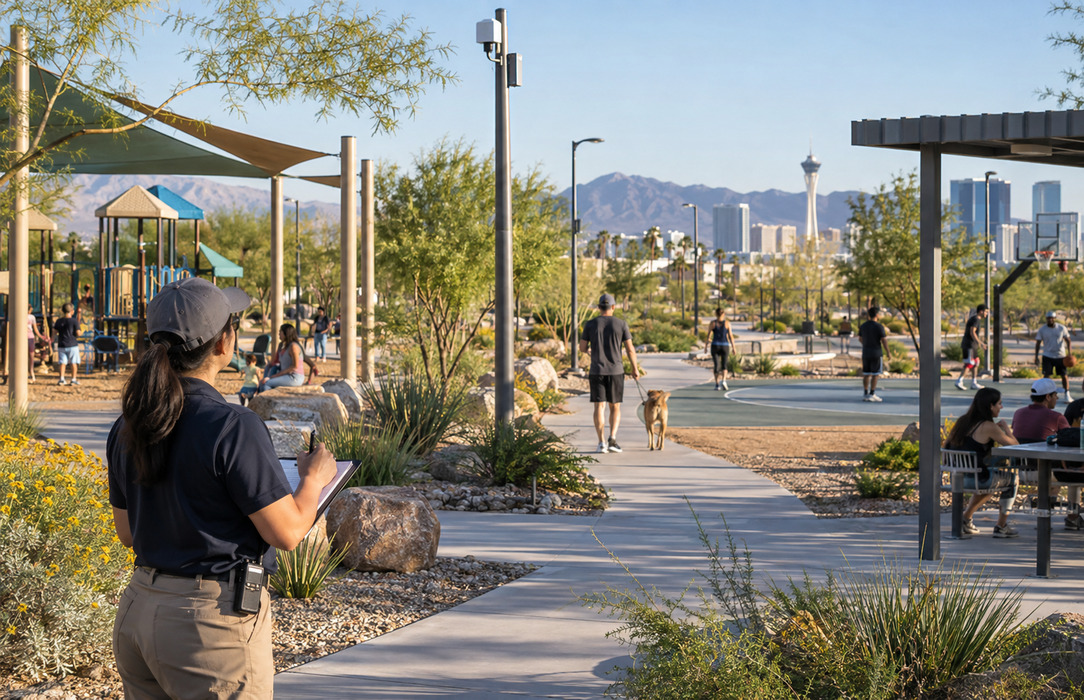
A Las Vegas public park with discreet sensors and a municipal employee observing space usage, representing continuous visibility across public spaces
Continuous visibility across public spaces:
Incident reports and short periods of manual observation could not provide the always-on view needed to understand park occupancy, usage patterns and potential incidents.
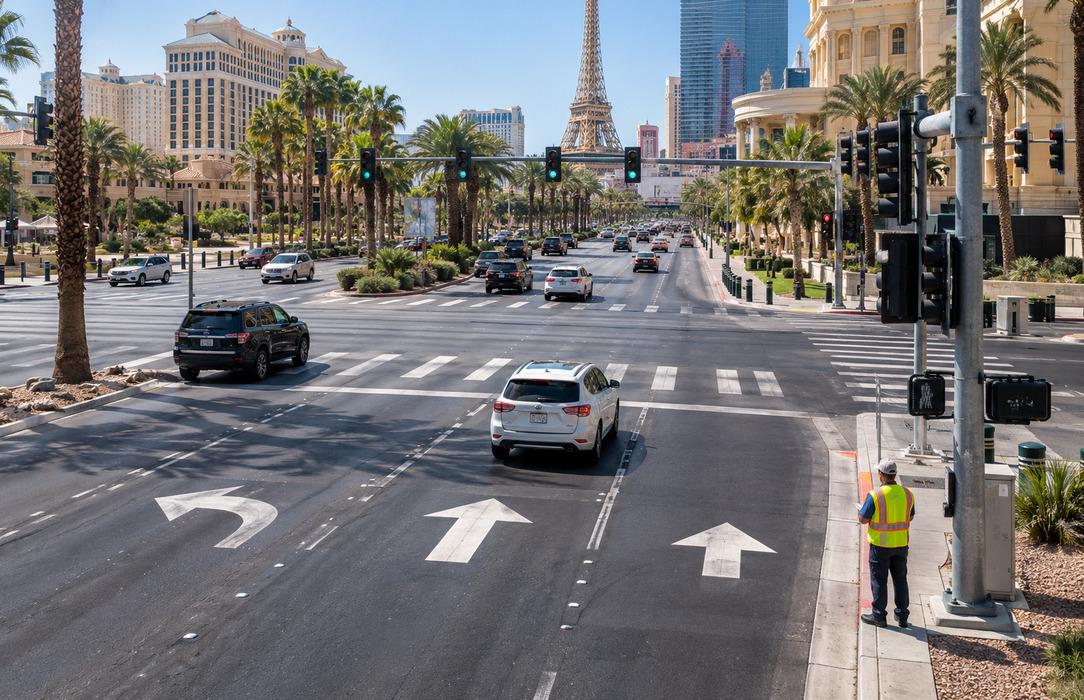
A Las Vegas street intersection with directional road markings and roadside infrastructure, representing the challenge of detecting wrong-way driving risks
Faster detection of road safety risks:
Wrong-way driving was a priority area where the city needed better insight into traffic patterns, deviations and conditions that could shape a faster response.
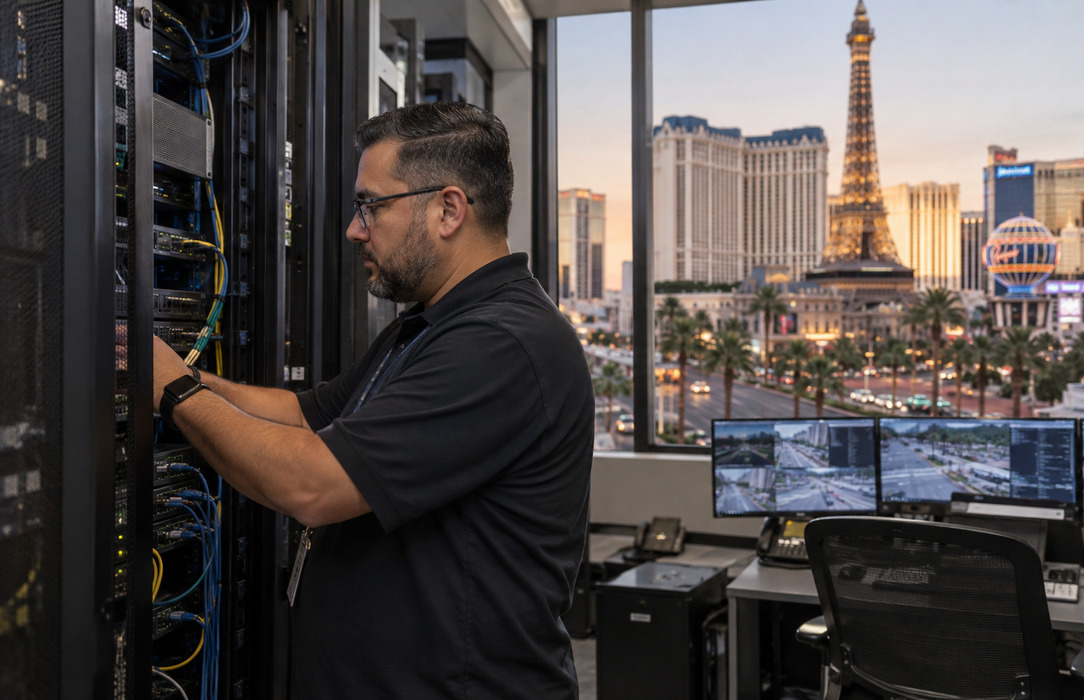
A municipal technology infrastructure setting with network equipment, representing secure processing and storage for smart city data
Scalable handling of sensitive city data:
As more of the city became connected, on-premises storage was no longer flexible enough for the volume and sensitivity of smart city data.
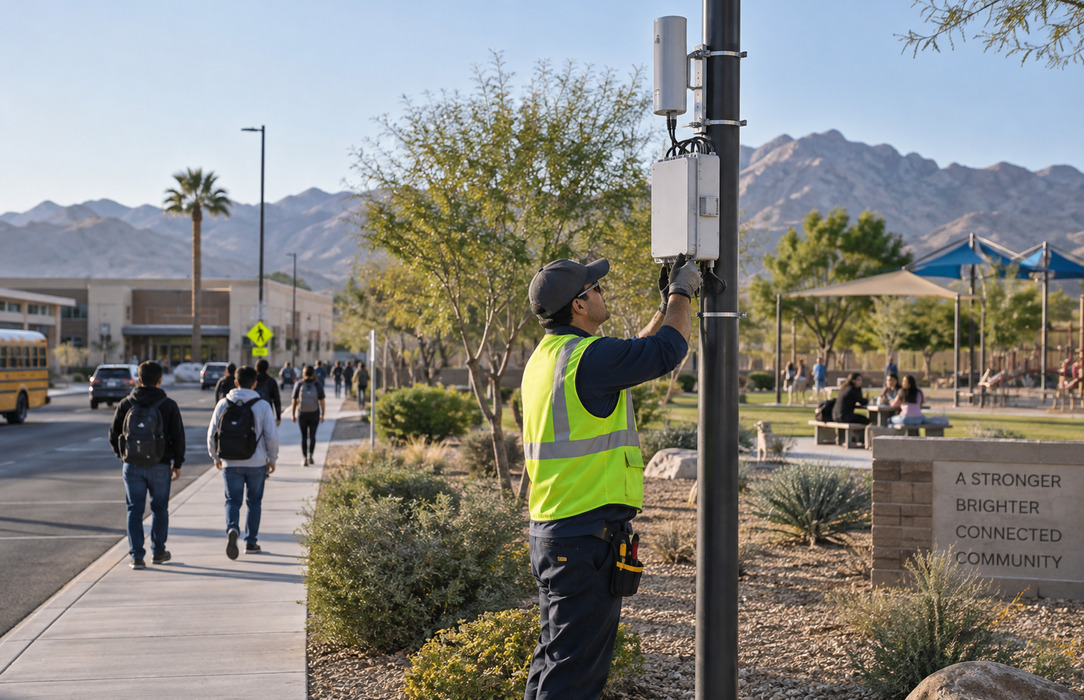
A Las Vegas community park and neighborhood street with outdoor network infrastructure, representing wireless expansion for connected city services
Model outputs needed to be understandable, traceable and usable by marketing, sales and customer-care teams within existing decision and campaign processes.
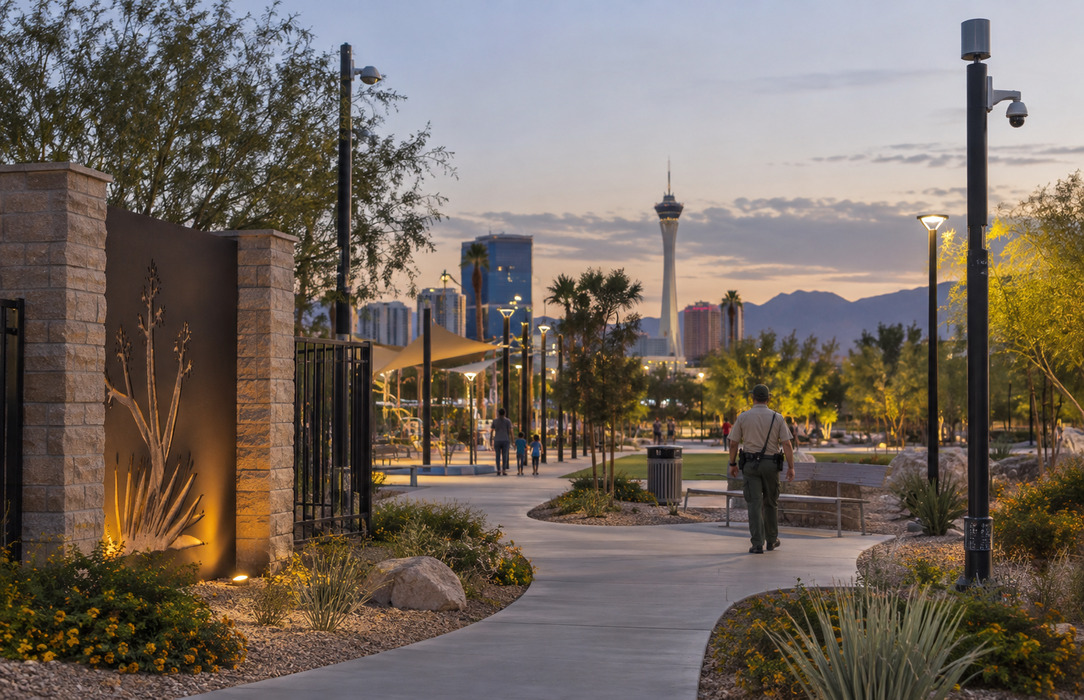
A Las Vegas smart park with residents using public amenities and a parks employee observing, representing data-informed planning for public spaces
Connectivity beyond the fiber backbone:
The city’s downtown fiber backbone supported early smart city activity, but expansion into more parks and communities required reliable wireless connectivity.
解決策
A connected smart city platform built around data, networks and operational action

NTT DATA helped bring together data analytics, network services, cloud management and partner ecosystem capabilities so Las Vegas could gather real-time signals, interpret patterns and turn insight into better city decisions.

チェックアイコン
Smart sensing for parks and public spaces

NTT Smart Solutions gathered and processed predictive and real-time data from IoT devices, secure networks and edge analytics, supporting 24/7 visibility into park activity, occupancy and incident signals.

チェックアイコン
AI-enabled traffic insight

Camera and imaging technology, machine learning and AI helped turn traffic data into actionable insight, allowing the city to identify usage patterns and detect deviations linked to wrong-way driving.

チェックアイコン
Cloud migration for greater agility

The Smart Solution was migrated from on-premises infrastructure to Microsoft Azure, managed by NTT DATA, giving Las Vegas a more flexible environment for sensitive data and future smart city growth.

チェックアイコン
Private 5G and network expansion

Working with NTT DATA partners, the city piloted Private 5G and began building a wireless backbone to support connected parks, community access and smart city use cases beyond fiber-reached areas.

影響
Safer spaces, smarter planning and a platform for future growth

The initiative gives Las Vegas real-time visibility into potential incidents and a stronger evidence base for planning decisions. The source case reports more than USD1 million in annual savings, a greater than 90% reduction in wrong-way driving, and more than 14,000 weekly predictions generated by AI and machine-learning models. It also supports safer park experiences, improved use of city assets and a scalable path for additional sensors, cameras and city services.

ドラッグ