- All Foundries

- 商品管理と取引

- 顧客とマーケティング戦略

- デジタルエンジニアリング

- ステーション・スタジオ

- サプライチェーン&インダストリー5.0
- サステナビリティ

- Physical AI

- Next-Gen Infrastructure










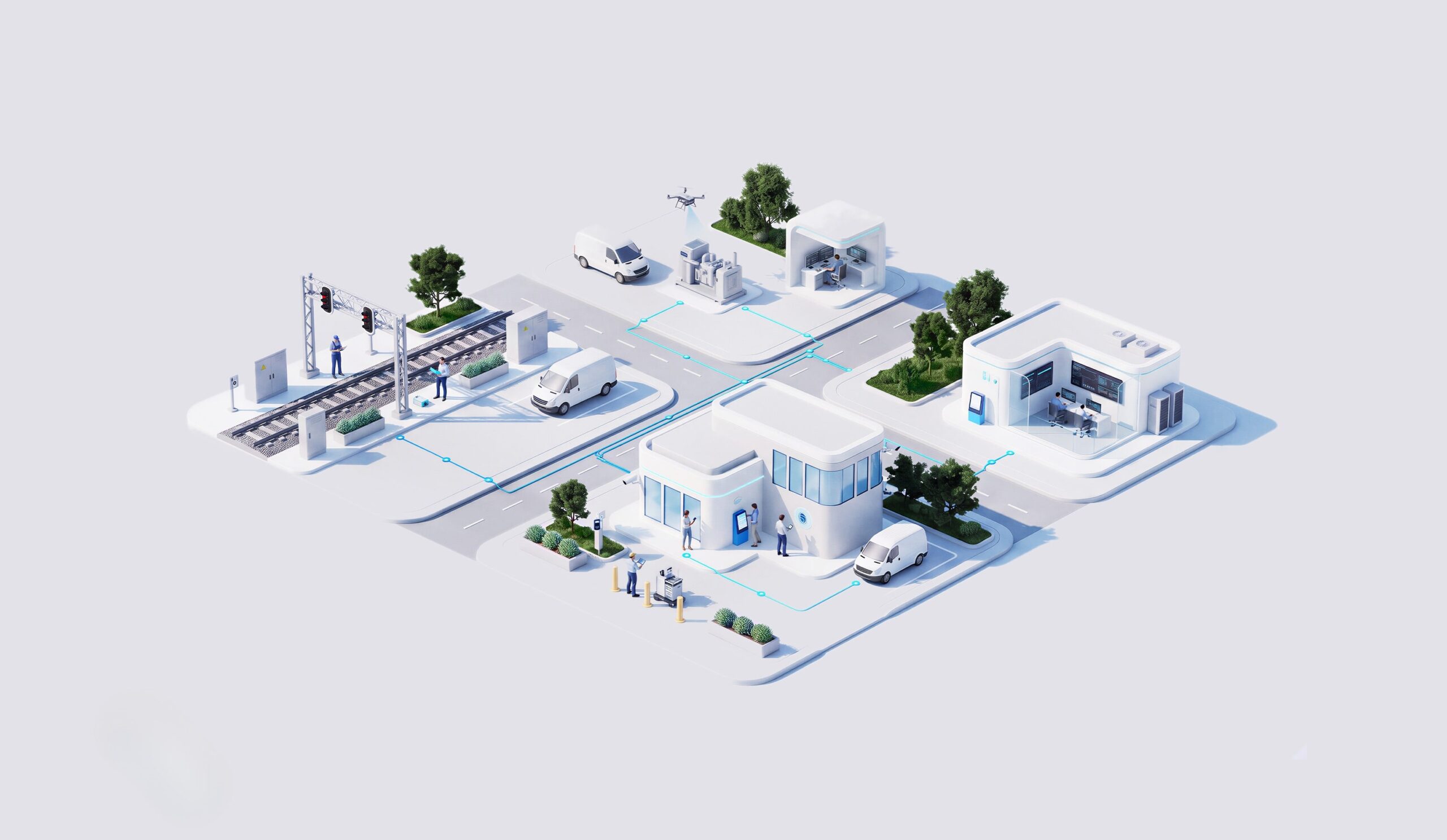



Private Optical Networks for Utilities
Protection, sensing, automation and analytics are making utility communications more data-intensive, while critical sites require predictable availability, latency, routing and security over long asset lifecycles. Public carrier services remain suitable for many corporate and non-critical needs, but operational environments can demand tighter control. A private optical backbone addresses that requirement by converging multiple traffic types on dedicated infrastructure while preserving the segmentation needed for critical operations.
Dedicated optical infrastructure can give utilities greater command of critical communications while creating headroom for future grid and asset digitalisation.

Resilient fiber paths and dedicated capacity can support higher availability for protection, SCADA, teleprotection and other operational traffic at critical sites.
Lower latency, greater bandwidth and traffic engineering help utilities manage demanding applications with more consistent communications performance.
Direct control of capacity, upgrades and routing can reduce dependence on third party carrier infrastructure and align network planning with grid investment cycles.
Scalable optical capacity supports video, sensing, digital substations, advanced automation and other high-bandwidth services as operational requirements expand.
NTTデータのサポート体制は?
NTT DATA evaluates operational sites, traffic classes, latency constraints, resilience requirements, existing fiber assets and expected future digital demand.

Owned or long-term controlled fiber routes, wavelength services and redundant architectures are shaped around utility risk, geography and service requirements.

DWDM and OTN provide optical capacity, while IP/MPLS or segment routing can add service separation and traffic engineering where required.

End-to-end performance visibility, fault monitoring, encryption, cybersecurity and access controls are incorporated to protect and operate critical communications.

Existing services can be migrated in stages while interoperability is maintained throughout the move from legacy circuits to the target architecture.


Indicative objectives vary with network architecture, operating model, asset criticality, integration scope and deployment maturity, and are not commitments for every implementation.
Toward 99.99%+ where architecture supports it. Redundant fiber paths and resilient design can strengthen service continuity for operational traffic at critical utility locations.
20% to 50% reduction. Dedicated infrastructure can decrease reliance on external carrier services for core operational communications where private deployment is economically justified.
5x to 20x increase. Scalable optical transport can provide substantially more capacity for video, sensing, digital substations, automation and other data-intensive utility applications.
20% to 40% reduction. End-to-end network visibility can help operations teams identify optical faults and affected capacity more quickly across distributed infrastructure.