Physical AI Orchestrator for Robotics at Scale
Moving intelligent robots from demonstration to dependable operations takes more than a capable machine. An industrial organization created a Physical AI framework that connects virtual training, mission orchestration and reusable robotic functions, establishing a structured path from simulation to real-world deployment.
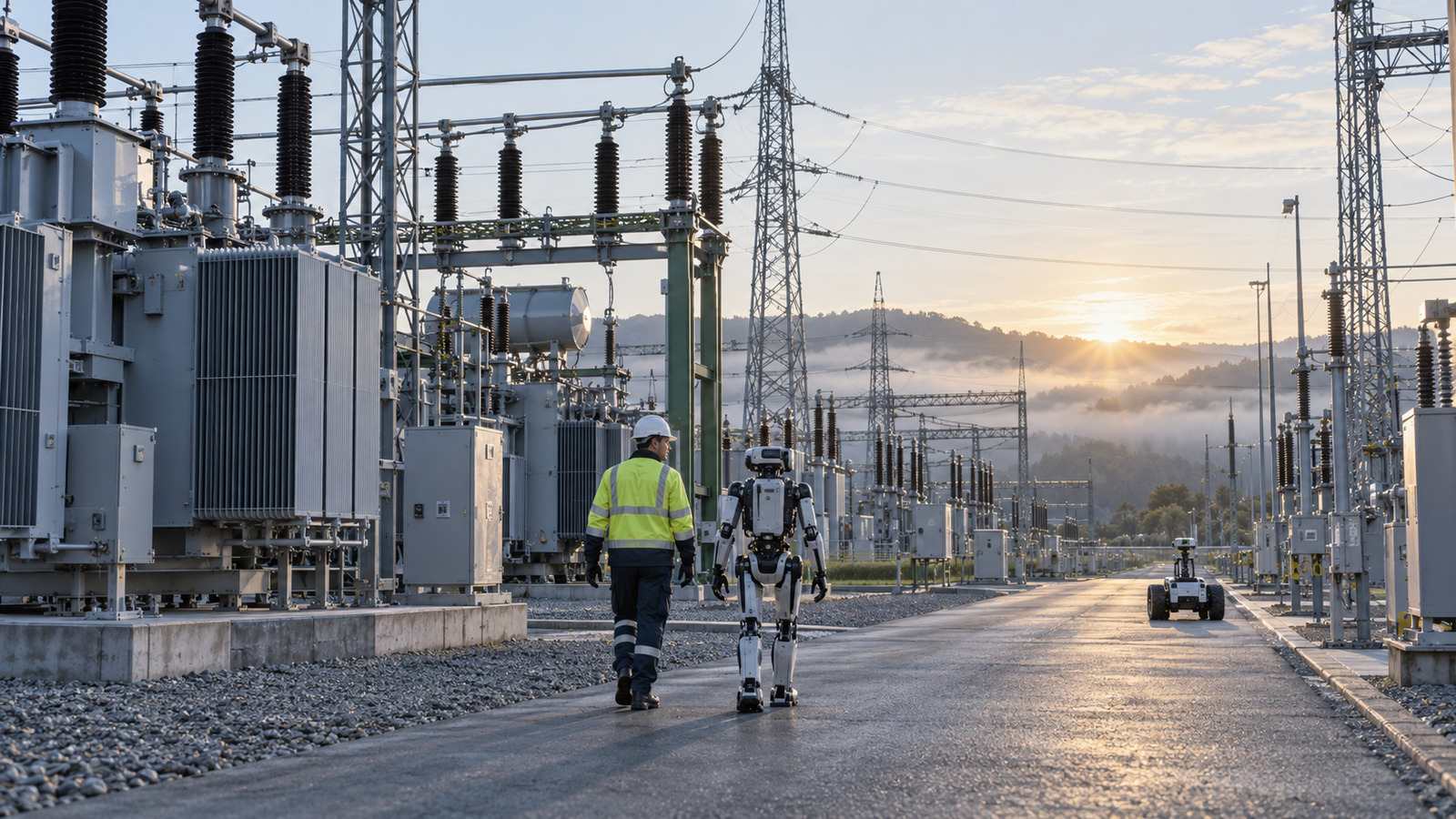
A utility field engineer walks beside a humanoid inspection robot through an electrical substation, with a wheeled robot operating farther along the service lane.
Mission orchestration
Centralized planning, execution and monitoring
Physics-based validation
Simulation supports deployment-risk reduction
Modular functions
Navigation, perception and manipulation reusable
Scale foundation
Long-term robotics roadmap enabled
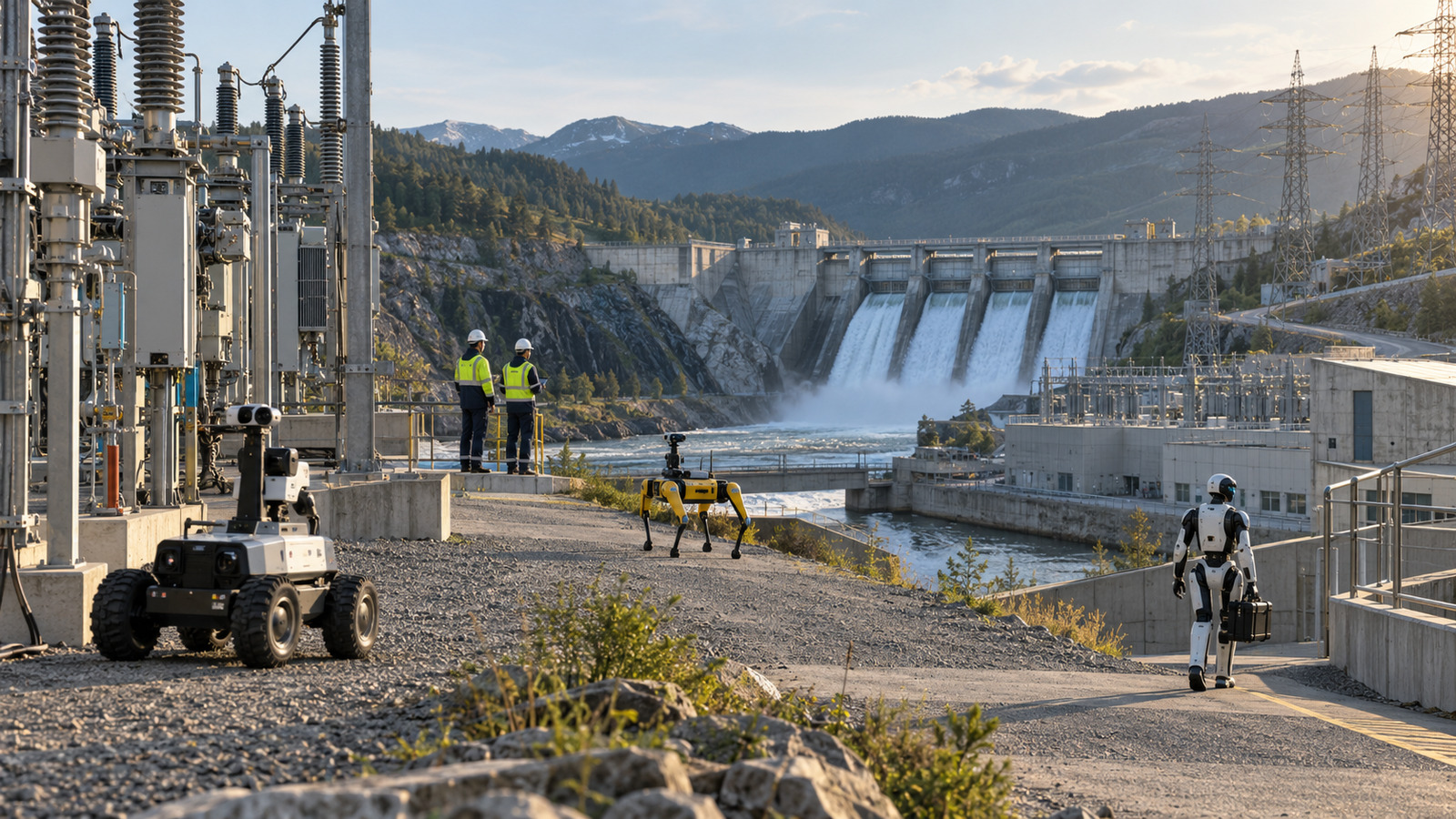
Wheeled, quadruped and humanoid robots work across a hydroelectric power station while utility technicians observe operations from a safe area.
From robotics pilots to a scalable Physical AI operating model

One framework connects virtual training, mission control and reusable robotic capabilities for safer, repeatable deployment.

Robotics could not scale while simulation, mission management and field execution remained separate.
Objectives
The initiative set out to industrialize robotics deployment across plant environments. Its ambition was to bring orchestration, simulation, reusable functions and continuous learning into one methodology, so teams could design, test and deploy robotic applications with a more consistent approach to operational risk.
Opportunity
The deployment-factory model creates a path to multi-site robotics programmes that are not tied to one robot form factor. In utilities and other asset-intensive settings, the same approach could support repeatable inspection, maintenance and remote-execution workflows, provided each use case is validated against its operating environment, safety requirements and success measures.
Turning promising robotics into repeatable operations

The client needed a coherent operating model that could connect development, validation and field execution while producing evidence that operational teams could review, trace and reuse.
Key Challenges
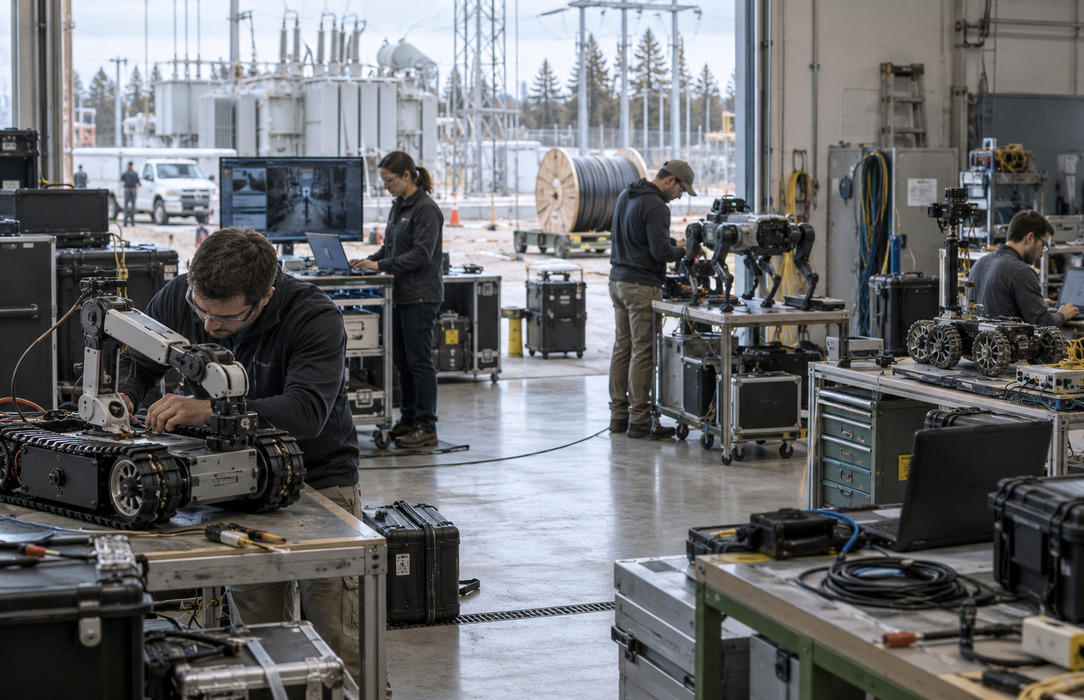
Engineers work on separate robot prototypes at isolated stations inside a utility maintenance workshop beside electrical infrastructure.
1: Disconnected development environments
Robotic applications were developed across separate tools and environments, limiting consistency between simulation, mission design and physical execution.
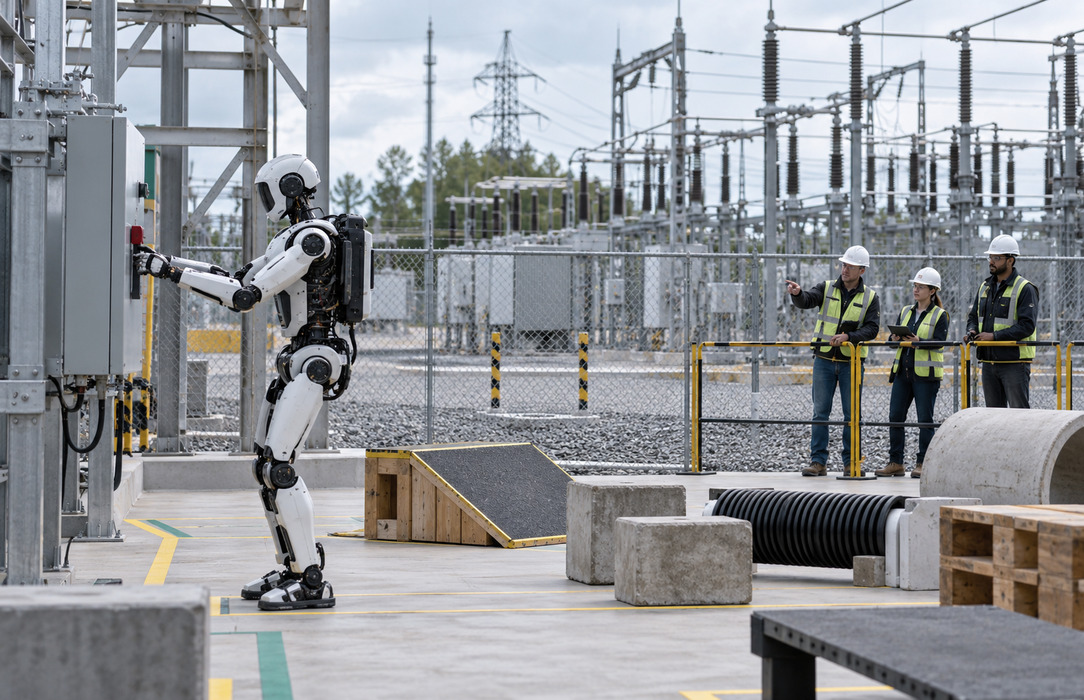
A humanoid robot is tested in a controlled training area beside a live electrical substation as engineers observe from behind a safety barrier.
2: A difficult simulation-to-field transition
The initiative required physics-based validation and digital-twin synchronization to reduce deployment risk before robots entered real operations.
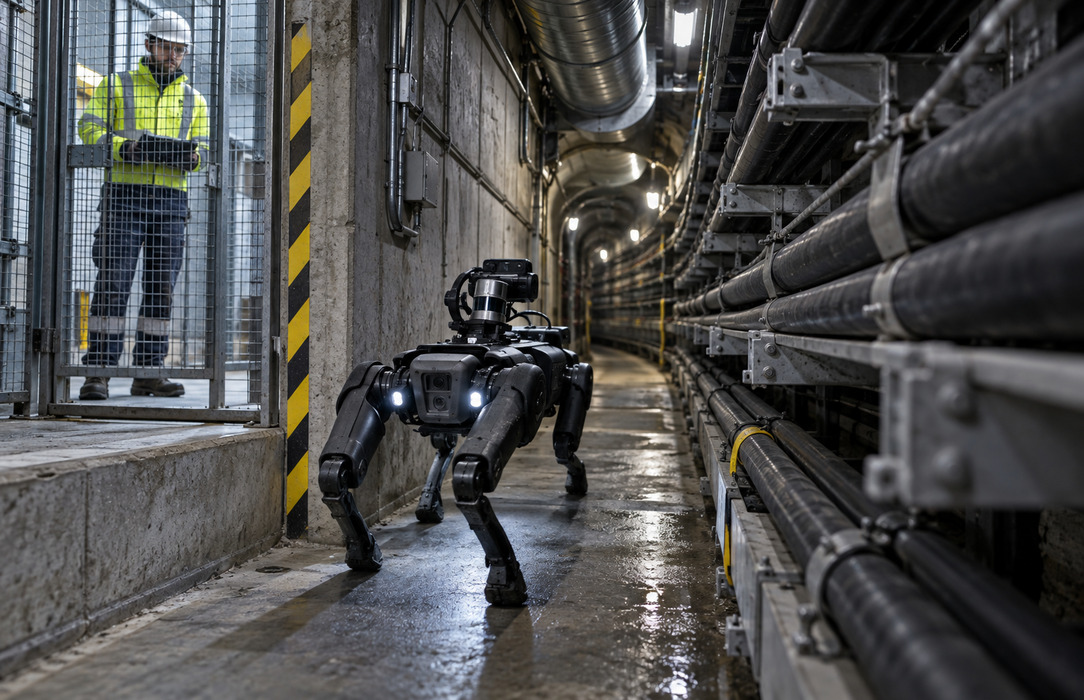
A quadruped inspection robot enters a narrow underground power cable tunnel while a utility technician remains behind a protective gate.
3: Field evidence that must become actionable
Robotics, machine vision and other physical technologies can generate large volumes of evidence. Engineering, operations and maintenance teams needed a workflow to review, trace and act on it.
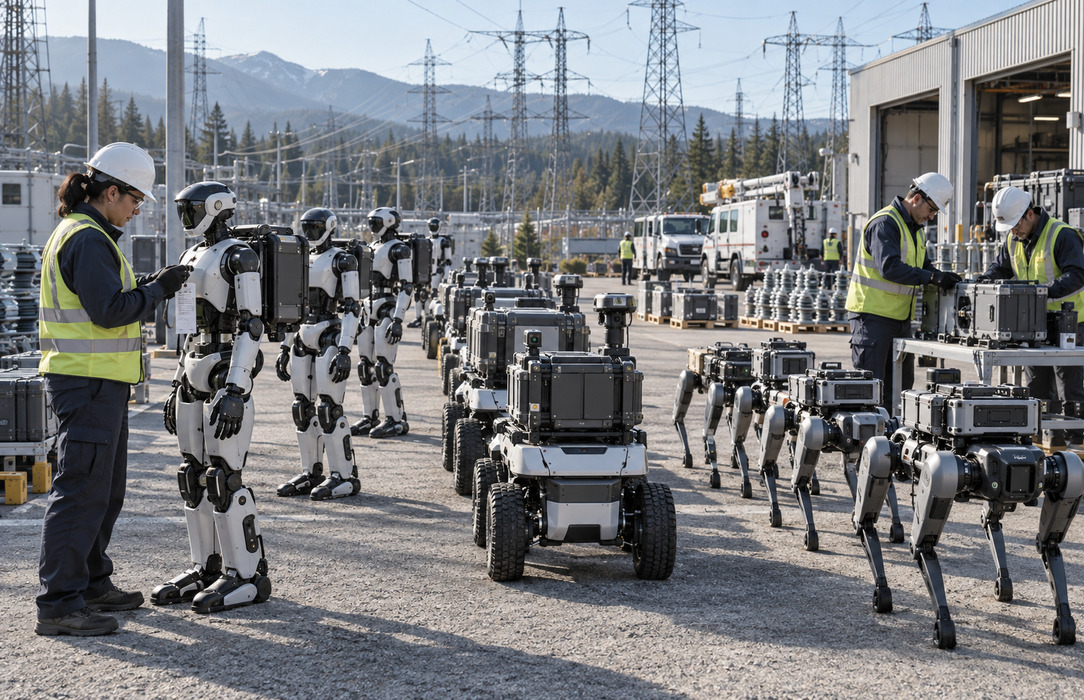
Utility technicians prepare a mixed fleet of humanoid, wheeled and quadruped robots in a transmission maintenance staging area.
4: Scaling beyond isolated pilots
Moving into broader operational use required reusable robotic functions, repeatable missions and centralized coordination across different robot types.
Solution
A deployment factory for Physical AI

The delivery model linked robot development, virtual and physical validation, mission orchestration and operational follow-up in an end-to-end framework designed for reuse.

check icon
Unified Physical AI framework

A common framework bridged simulation and real-world robotics, creating a consistent foundation for application development and deployment.

check icon
Virtual and physical training

Physics-based simulation and synchronized training environments allowed robotic behaviors to be tested before transition into operating settings.

check icon
Operational evidence workflow

Field capture, processing, review and follow-up were connected so physical-world evidence could move into engineering and operational decisions.

check icon
Central orchestration and reusable functions

Mission planning, execution and monitoring were centralized, while modular capabilities for navigation, perception and manipulation supported repeatable use across missions.

Impact
A stronger foundation for robotics at scale

The initiative established a scalable robotics deployment-factory methodology, using physics-based simulation and digital-twin synchronization to support deployment-risk reduction. Reusable functions for navigation, perception and manipulation provide a foundation for long-term Physical AI and humanoid robotics deployment.

Drag