- All Foundries

- Commodity Management & Trading

- Customer & Marketing Strategy

- Digital Engineering

- Station Studio

- Supply Chain & Industry 5.0
- Sustainability

- Physical AI

- Next-Gen Infrastructure














Shift-Resilient Mining Decisions That Preserve Context and Intent
The incoming team sees the new operating state. It may not inherit why the decision was made, which alternatives were rejected and what would justify reversing the response.
A repeatable decision does not require every shift to behave identically. It gives each team enough operational context.

Each team understands what has already been committed, what assumptions still matter and what conditions should reopen the decision.
It reduces the risk of reversing a useful intervention too early, or extending it after its purpose has disappeared from the operation.
The incoming shift no longer has to reconstruct the reasoning from alarms, trends and conversations while ore and equipment keep moving.
A decision cannot become reliably assisted or automated if its logic disappears every time the roster changes from one shift to the next.
How NTT DATA helps
Focus on commitments whose consequences continue moving through ore, equipment or process after the people who made them leave.

Connect the relevant material, process, asset and planning context so the incoming team sees not only what changed, but why.

Record the alternatives considered, the objective being protected, the authority that committed the response and the conditions that would trigger a review.

Use workflow, event integration and decision history to propagate the active decision with its current status, not only verbal reconstruction.

Link the commitment to the operating signals that show whether the expected effect is occurring and whether the decision should remain or change

When similar situations recur, analytics and AI can surface prior decisions, compare outcomes and support the next shift without replacing judgment.
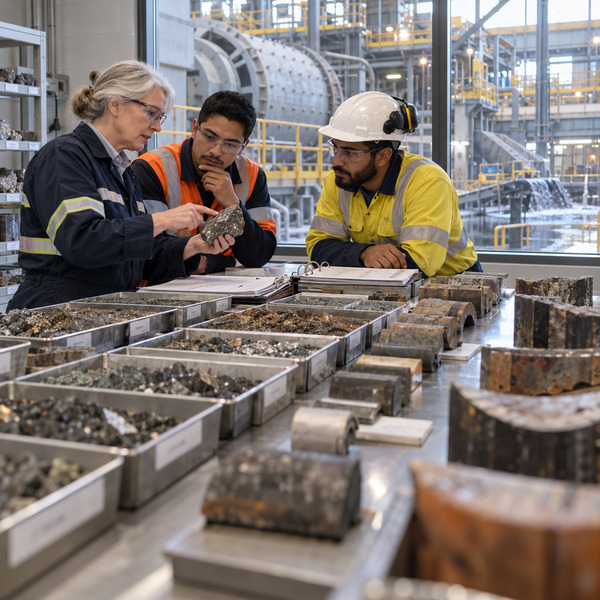

Preserving the decision context, not only the final action, allows the next team to continue operating from the same logic rather than starting again from the symptoms.
The objective is not to make every shift identical. It is to depend less on who happens to be present.
It leaves a decision the next shift can understand, challenge, continue and verify, with the condition and logic that justified it.
The alternatives considered, the objective being protected and the authority that committed the response are recorded with the action.
The incoming team knows which conditions would justify reversing or reopening the response, instead of guessing from the symptoms.
The operation becomes less dependent on who happens to be present when a familiar situation returns on another shift or crew.
Explore how decision-centered handovers can preserve context and intent across shifts in integrated mining operations.