- All Foundries

- Commodity Management & Trading

- Customer & Marketing Strategy

- Digital Engineering

- Station Studio

- Supply Chain & Industry 5.0
- Sustainability

- Physical AI

- Next-Generation Infrastructure











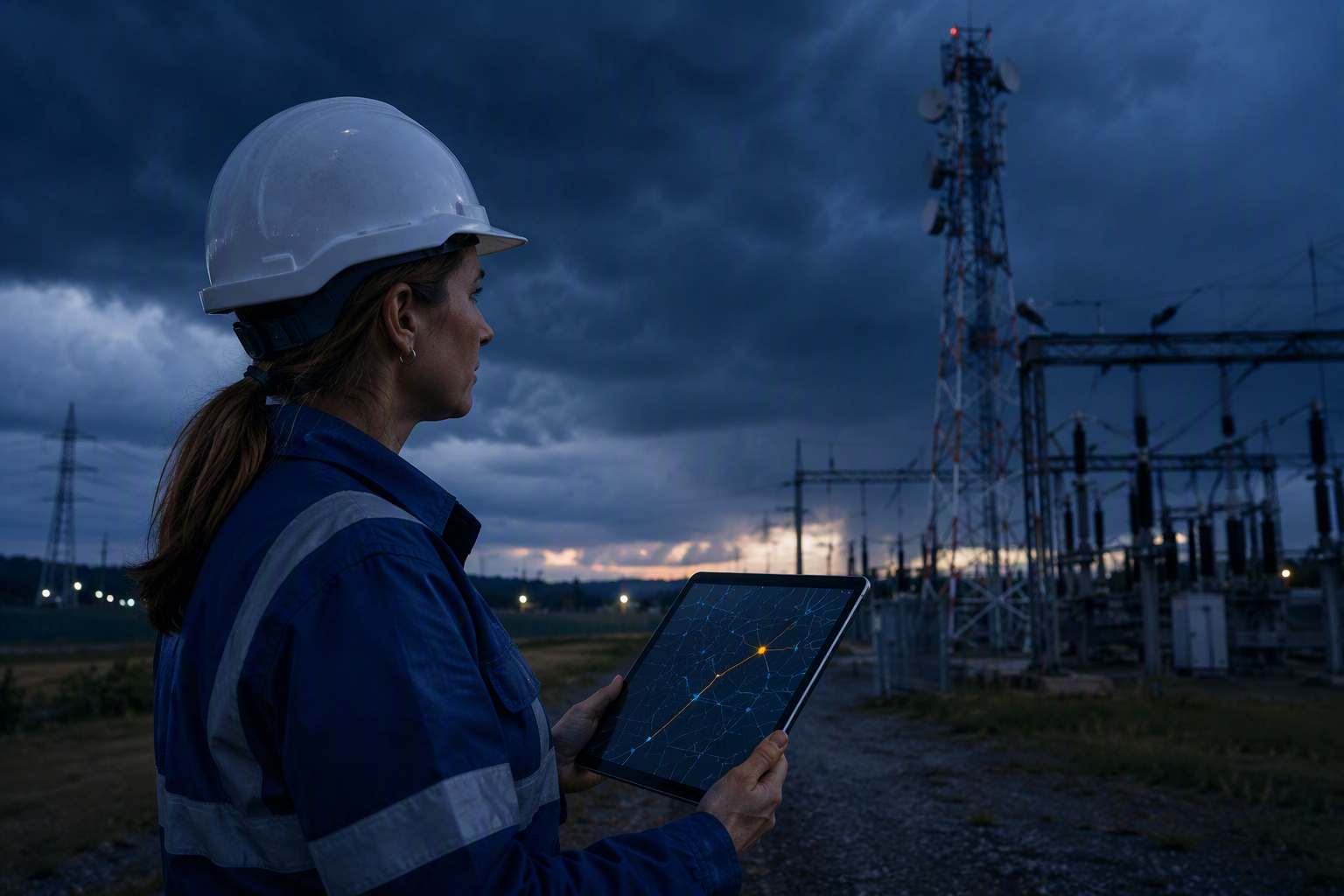
Storm impact prediction & network preparedness
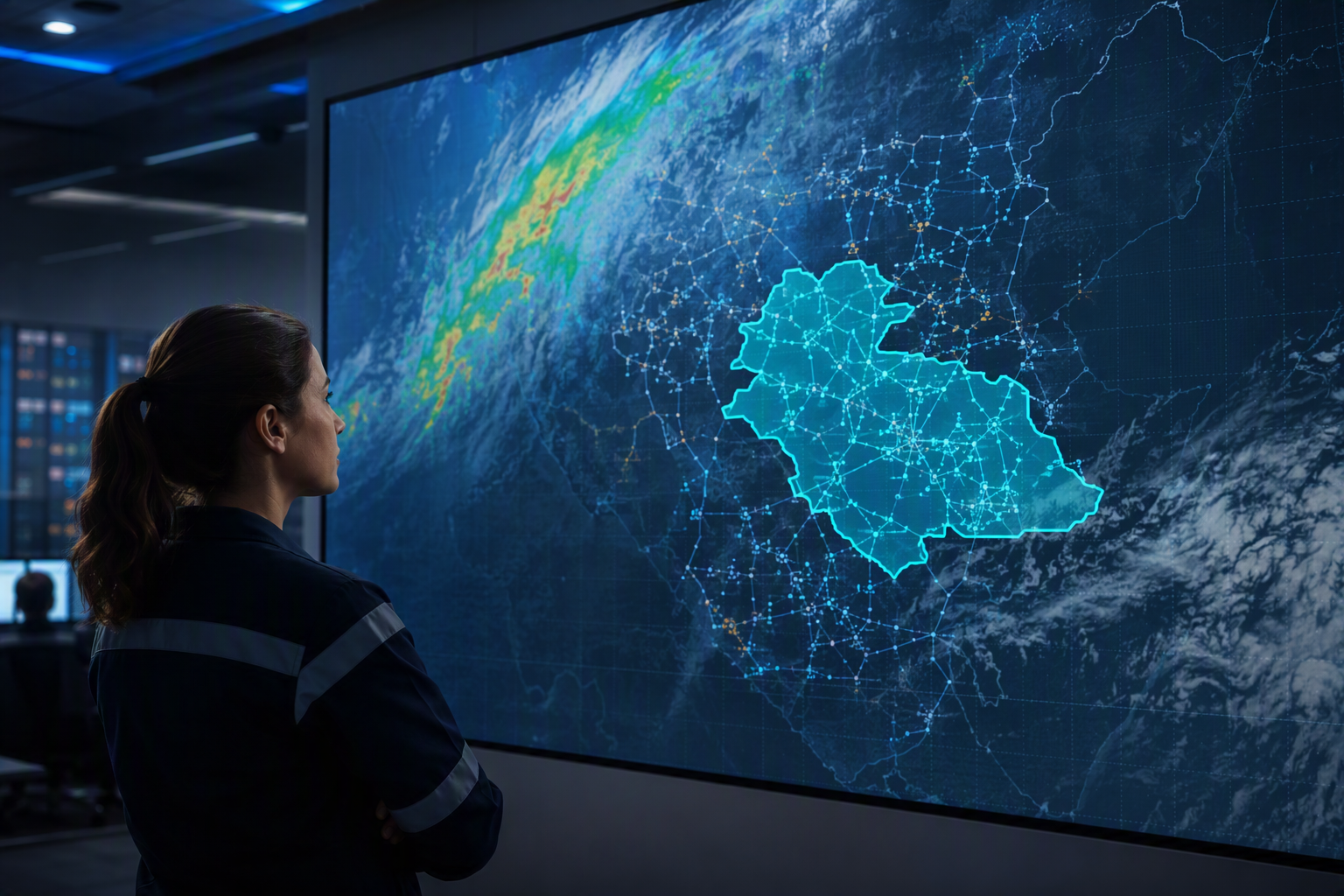
Wind and rain knock out communications and data links at the exact moment field teams need them most. Storm impact prediction flags the most exposed network segments, so preparedness starts before the storm arrives.
Storm impact prediction and network preparedness keeps critical workflows connected when conditions turn severe.

Higher communications availability and resilience keep field and control room teams connected during severe weather.
Lower latency for critical workflows means dispatch and safety decisions do not wait on a slow data path.
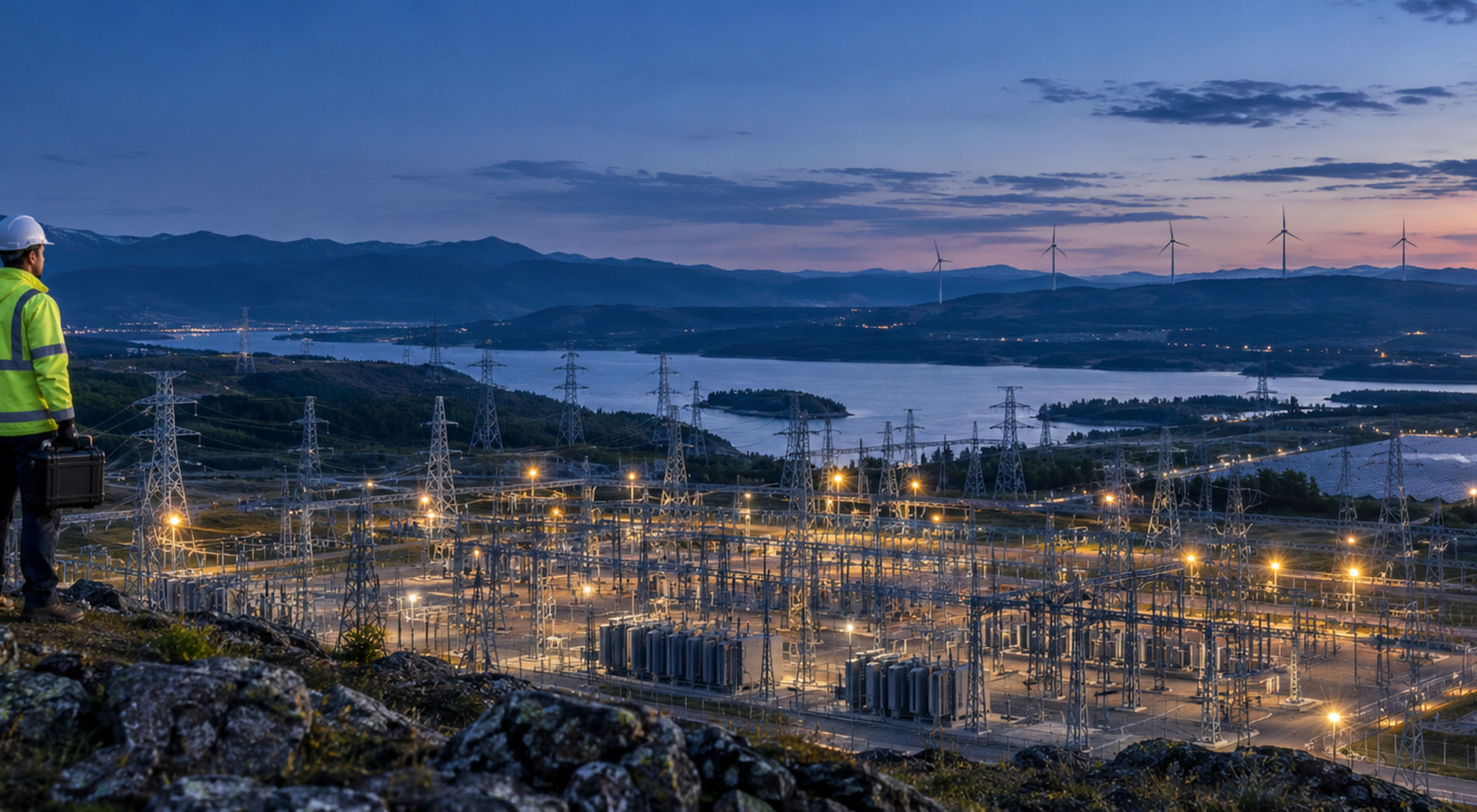
Improved visibility of distributed assets shows exposure across the network before the storm reaches it.
Reduced dependence on manual data movement keeps information flowing automatically when teams are stretched thin.
How NTT DATA helps
NTT DATA brings together weather intelligence, geospatial analytics, earth observation and IoT network telemetry your storm plan depends on.

AI/ML sits where a network resilience or crew staging decision happens, not buried in a post-event report.

Storm impact outputs connect into your existing operational technology (OT) and enterprise systems, not another isolated layer.

Permissions, cybersecurity controls, validation and fallback mechanisms get defined to match the safety bar your network requires.

Each new storm preparedness use case grows from a controlled deployment measured against clear operational KPIs, so scale-up follows evidence, not guesswork.


Storm impact prediction connects weather, network and asset data so workflows keep running when conditions turn severe.
Objectives depend on baseline performance, infrastructure and deployment scope across climate-risk operations.
20% to 40% reduction in risk assessment time, reflecting quicker movement from weather data to a preparedness decision.
15% to 30% improvement in warning lead time, giving teams more time to prepare before impact.
30% to 50% reduction in manual geospatial review, freeing analysts to focus on the most exposed segments.
20% to 40% reduction in response preparation time, reflecting quicker movement from prediction to readiness.
Shape the conversation that keeps your network running through every storm.