- All Foundries

- Commodity Management & Trading

- Customer & Marketing Strategy

- Digital Engineering

- Station Studio

- Supply Chain & Industry 5.0
- Sustainability

- Physical AI

- Next-Gen Infrastructure












Mining decision window: act before operational options disappear
Then time passes. A queue grows. A stockpile approaches a limit. One by one, options disappear until the operation is no longer deciding how to avoid the consequence. It is deciding how to absorb it.
Seeing the operation through opportunity window changes where value is protected. It also separates urgency from usefulness.

It moves attention from the consequence to the earlier decision that can still alter material movement, continuity, throughput or recovery.
A decision made in seconds can still be late if the physical alternatives are already gone. Speed alone does not protect the outcome.
A decision made earlier, with enough context to preserve options, can be far more valuable than a fast response after the window closes.
The important clock starts when the condition first becomes knowable – and stops when the last meaningful alternative disappears.
How NTT DATA helps
Trace the physical condition from first detectable signal to the point where alternatives begin to disappear.

For the interrupted ore route, expose rerouting, waiting, stockpiling or feed changes together with the constraints each option consumes.

Event integration and contextual data models can connect route availability, equipment status, stockpiles, plan commitments and plant requirements into the decision.

Simulation, optimization or predictive models can test the consequences of the remaining alternatives while they are still physically available.

Workflow and orchestration can carry the selected action to Dispatch, plant planning or other affected domains, with clear authority and escalation.

Observability and event histories can reconstruct the result and improve the next decision boundary.


The decisive issue is not merely recognizing the event, but comparing and committing one of those alternatives before changing conditions remove them.
A modern integrated mine does not only react faster. It learns to recognize when the future is still negotiable.
Return to the interrupted ore route. The most important moment may not be when the conveyor stops or the plant finally feels the shortage.
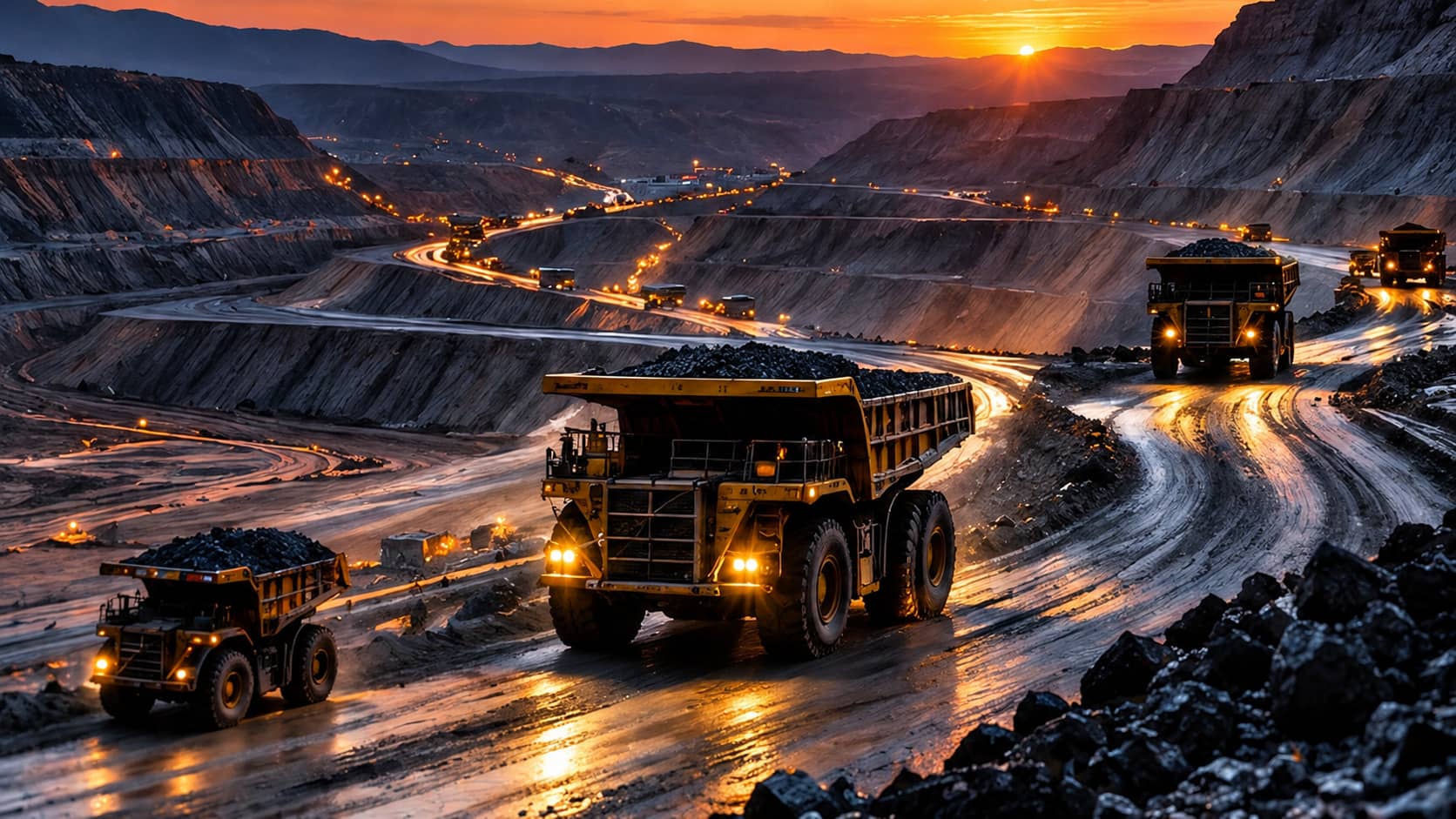
It may be several decisions earlier, while trucks can still move, stockpiles can still absorb the change and another path remains open.
Decisions taken inside the window can still alter material movement, continuity, throughput, recovery, water use or logistics in the mine.
The same logic applies wherever material movement, process behavior or asset constraints make options perishable across the mining chain.
Explore how acting inside the opportunity window can protect continuity, throughput and recovery across integrated mining operations.