- All Foundries

- 商品管理と取引

- 顧客とマーケティング戦略

- デジタルエンジニアリング

- ステーション・スタジオ

- サプライチェーン&インダストリー5.0
- サステナビリティ

- Physical AI

- Next-Gen Infrastructure












One basin, two trajectories
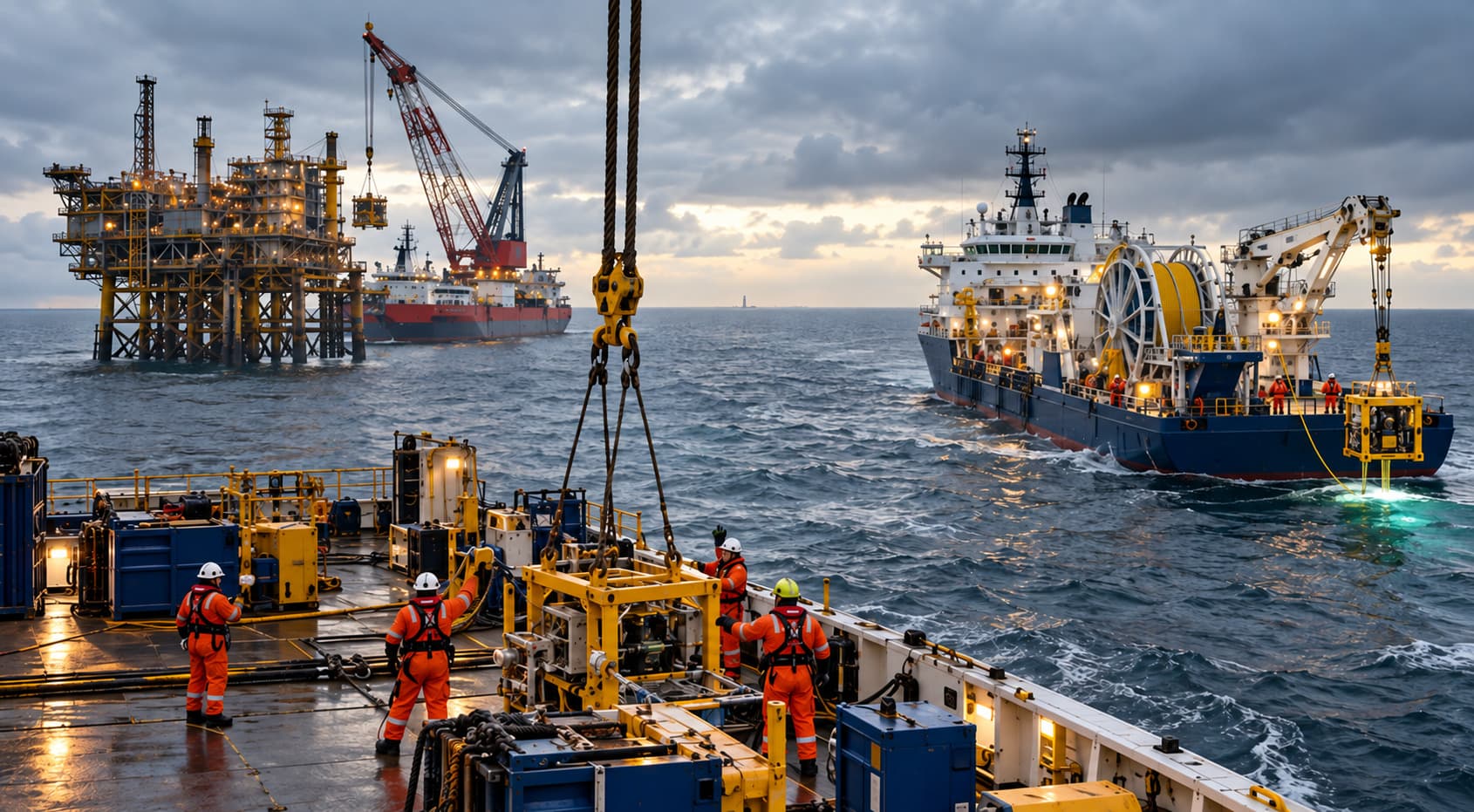
UK operators must integrate production, integrity and decommissioning. Norwegian operators must coordinate recovery, tie-backs and host capacity. Both need one constraint-aware plan, backed by clear cross-functional decision rights.
The priorities differ across the basin, but the evidence points to the same need: cross-functional sequencing that reflects real asset constraints.

UKCS production averaged approximately 1.1 million boe per day in 2025, with production efficiency reaching 76%.
Operators spent a record £2.6 billion on UKCS decommissioning in 2025, while the estimated remaining cost fell only marginally to £43.4 billion in 2025 prices.
At the end of 2025, 97 fields were producing across the Norwegian Continental Shelf, including 69 in the North Sea. Total production reached 239.2 million Sm³ o.e.
More than 90 discoveries await development decisions, alongside approximately 145 improved-recovery projects representing an estimated 280 million Sm³ o.e.
Test the model where plans genuinely collide. Choose one asset or hub where at least three functions compete for the same constrained capacity. Define the value flow, encode non-negotiable obligations and give one accountable arbiter authority to re-sequence work.
Download “One Basin, Two Trajectories” to explore why late-life integration in the UK and concurrent value capture in Norway require different priorities, but the same discipline: one constraint-valid plan with clear decision rights.
NTT DATA Insights