- All Foundries

- 商品管理と取引

- 顧客とマーケティング戦略

- デジタルエンジニアリング

- ステーション・スタジオ

- サプライチェーン&インダストリー5.0
- サステナビリティ

- Physical AI

- Next-Gen Infrastructure



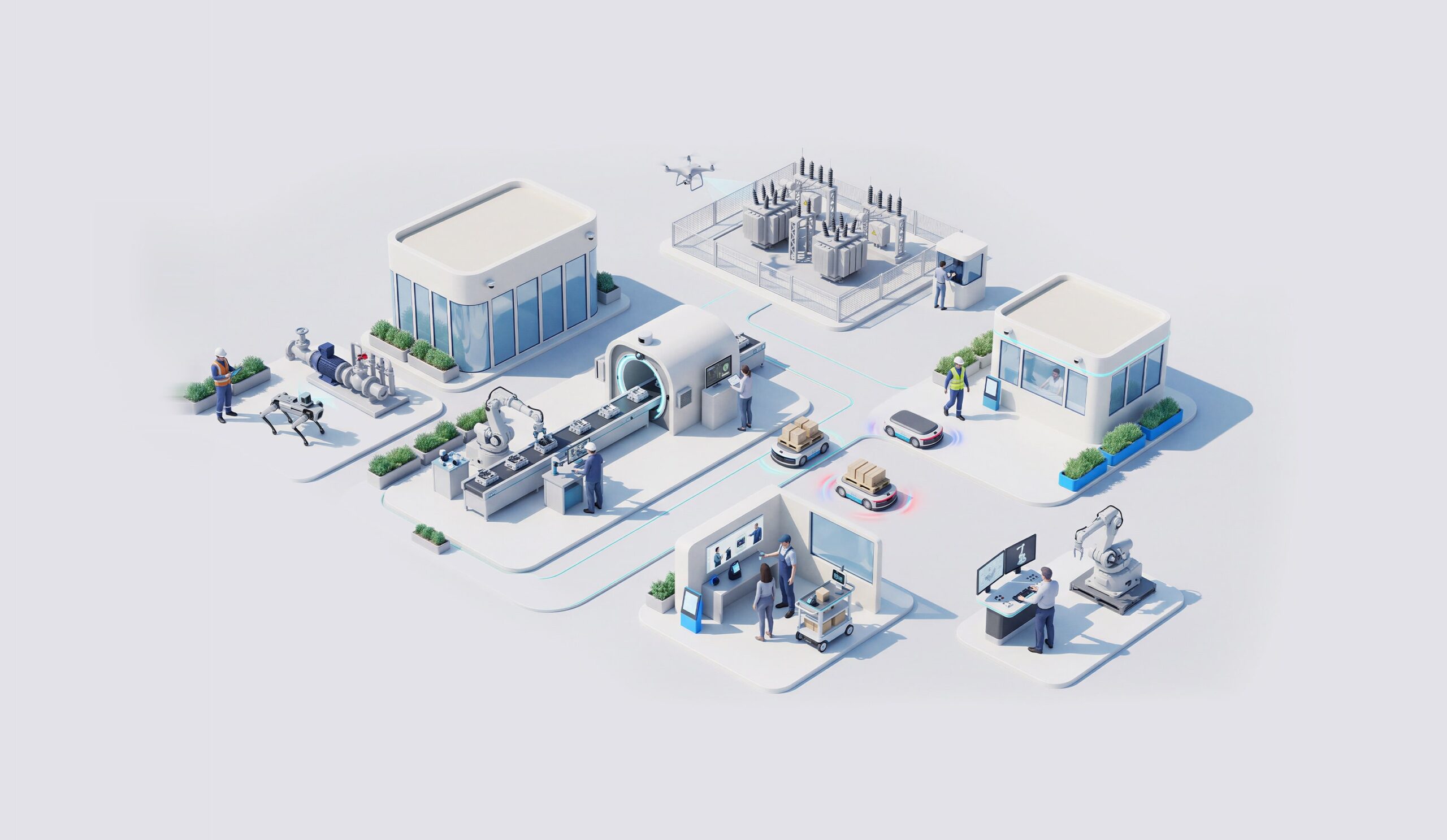
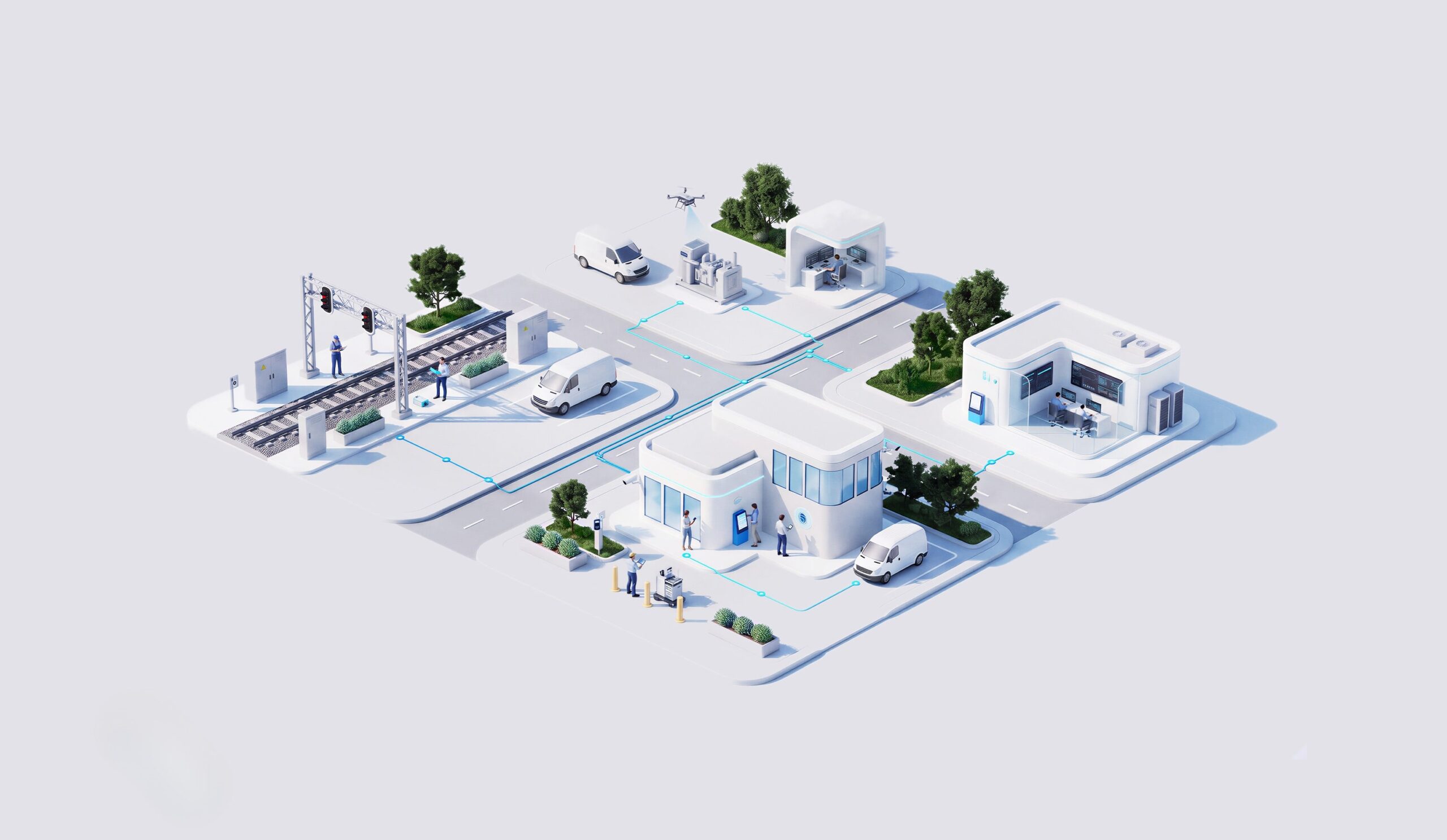


Autonomous Robotic Inspection for Industrial & Chemical Plants
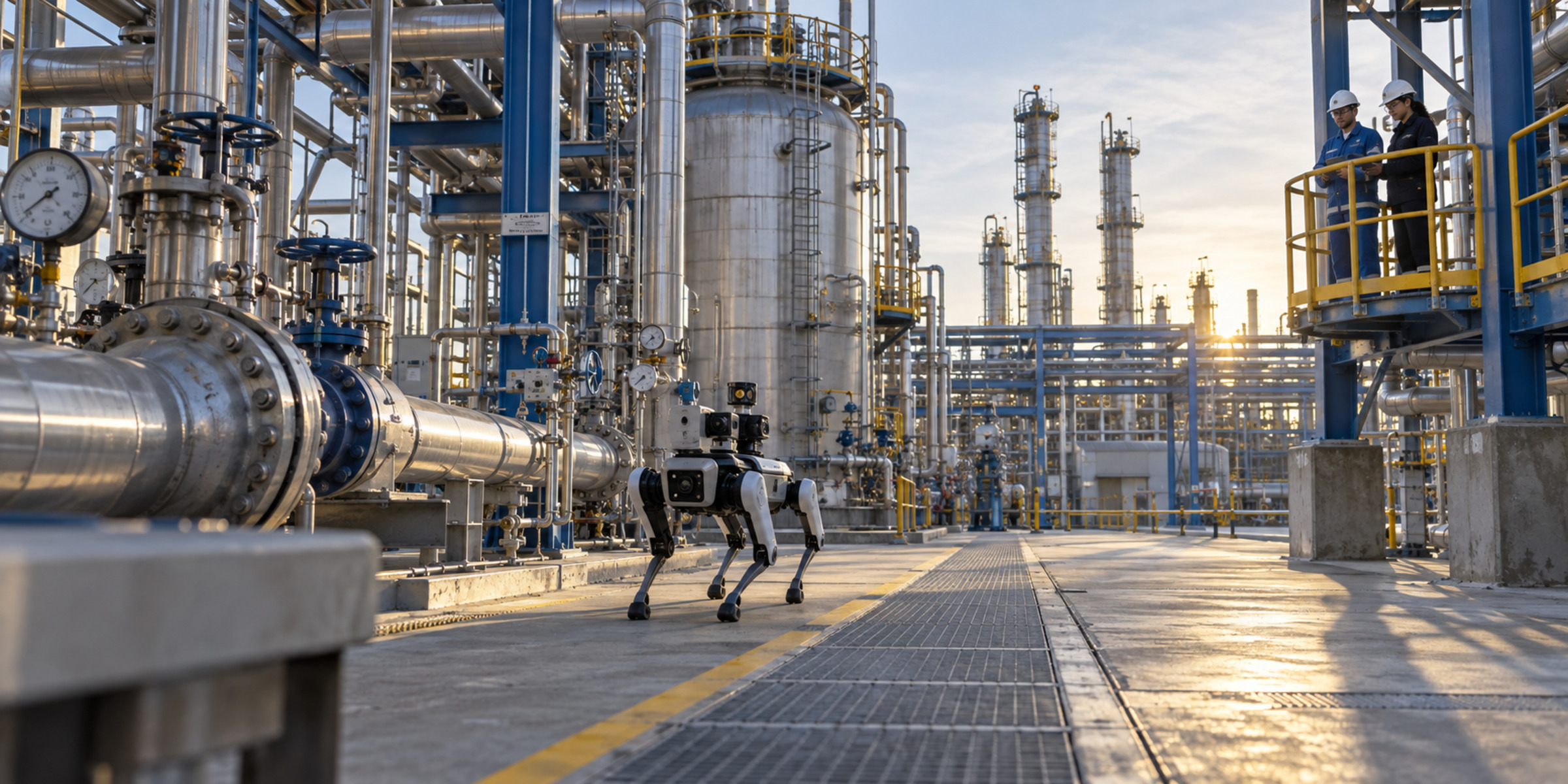
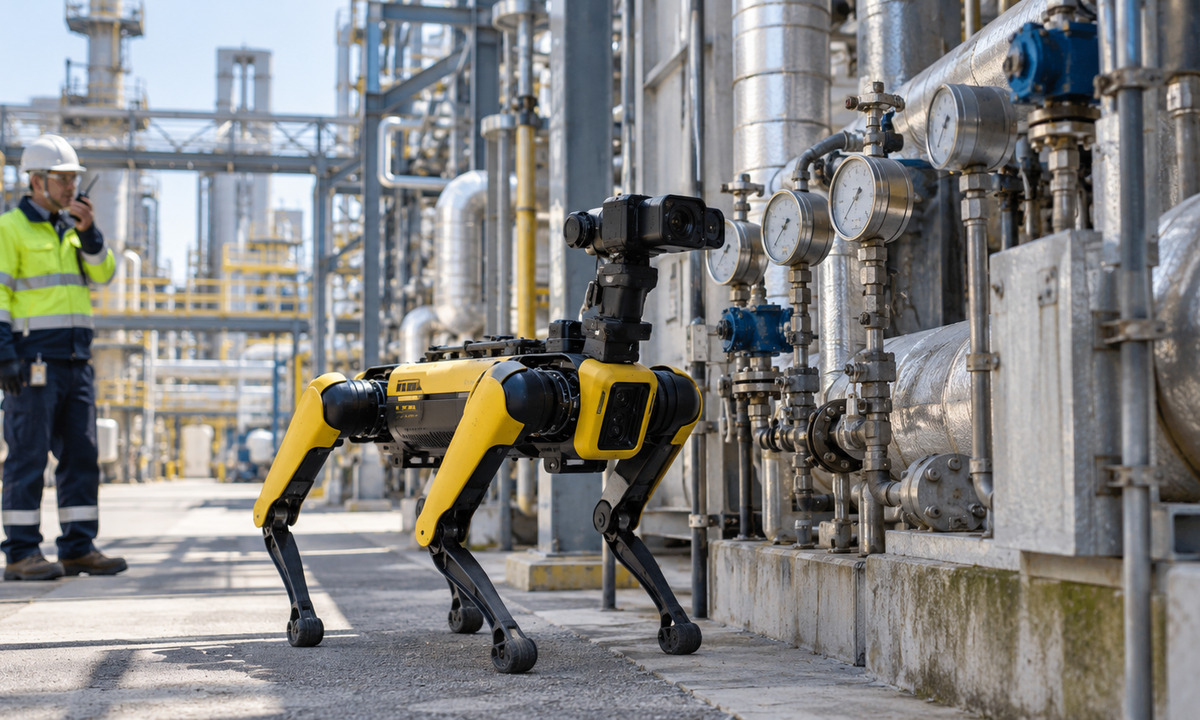
A mobile robotic platform combines autonomous navigation, RGB cameras, 3D LiDAR, thermal imaging and additional sensors to inspect known waypoints, capture equipment evidence and alert the control room when anomalies require attention.
The initiative had to do more than prove a robot could move through a plant. It needed to reduce repetitive manual effort, operate around real industrial constraints and turn sensor evidence into reliable operational follow-up.
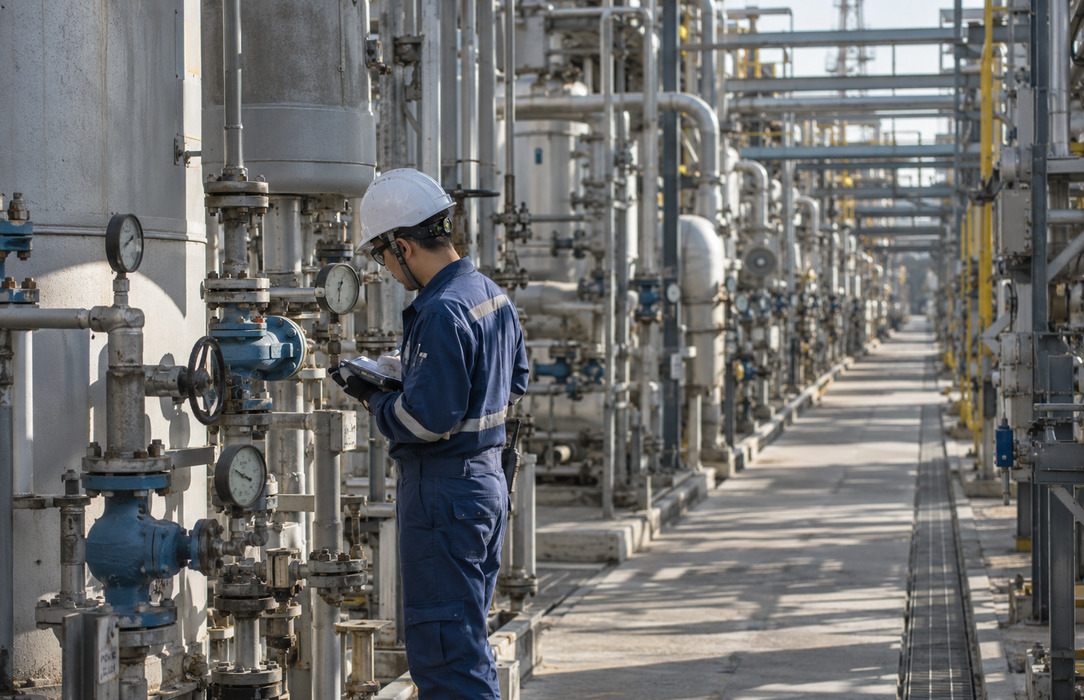
Human operators had to visit individual inspection points and record readings from analog instruments, making routine rounds a significant use of operational time.
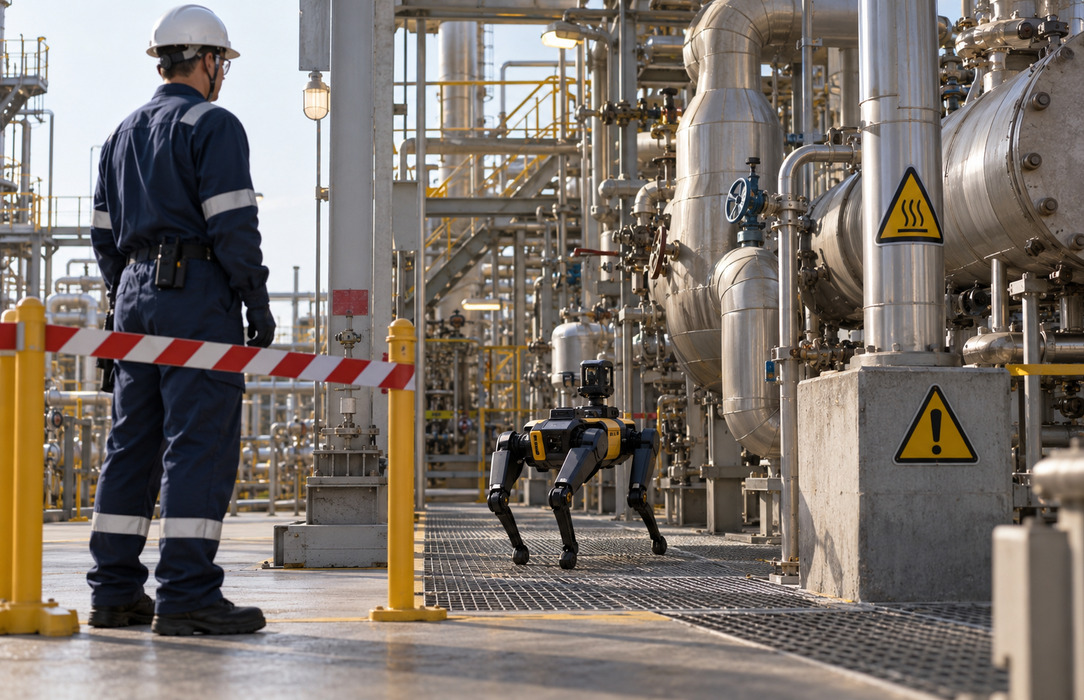
Some plant areas could place workers in dangerous situations. The initiative needed to limit direct human intervention without losing visibility of equipment condition.
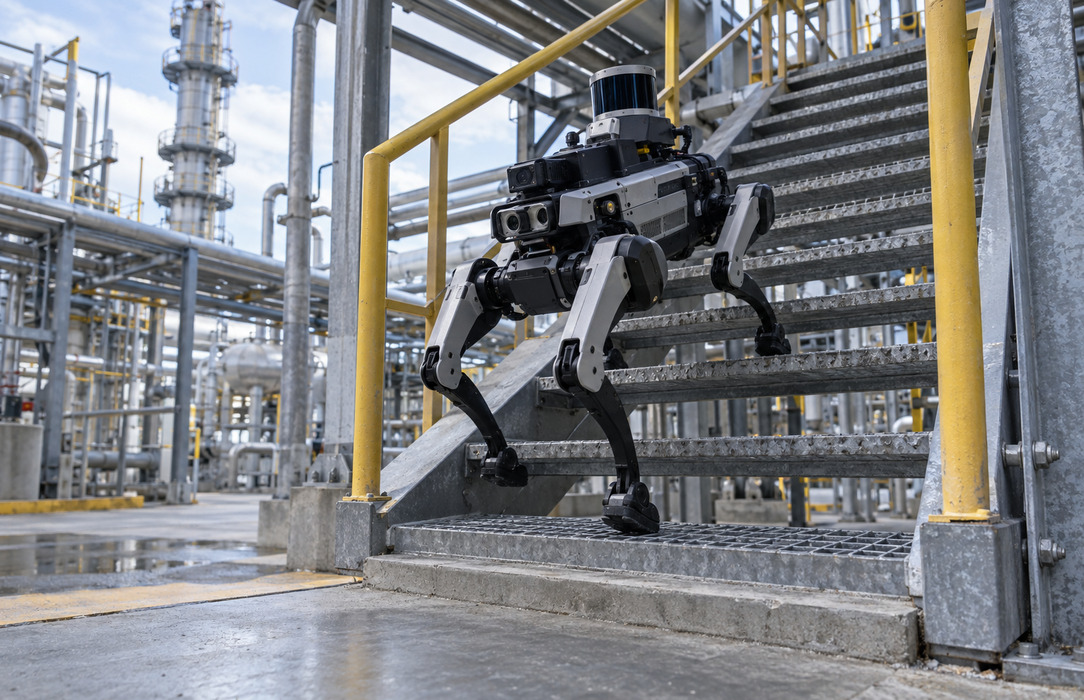
Inspection routes included uneven terrain, obstacles, stairs and mixed surfaces, requiring autonomous movement that could reach known points reliably.
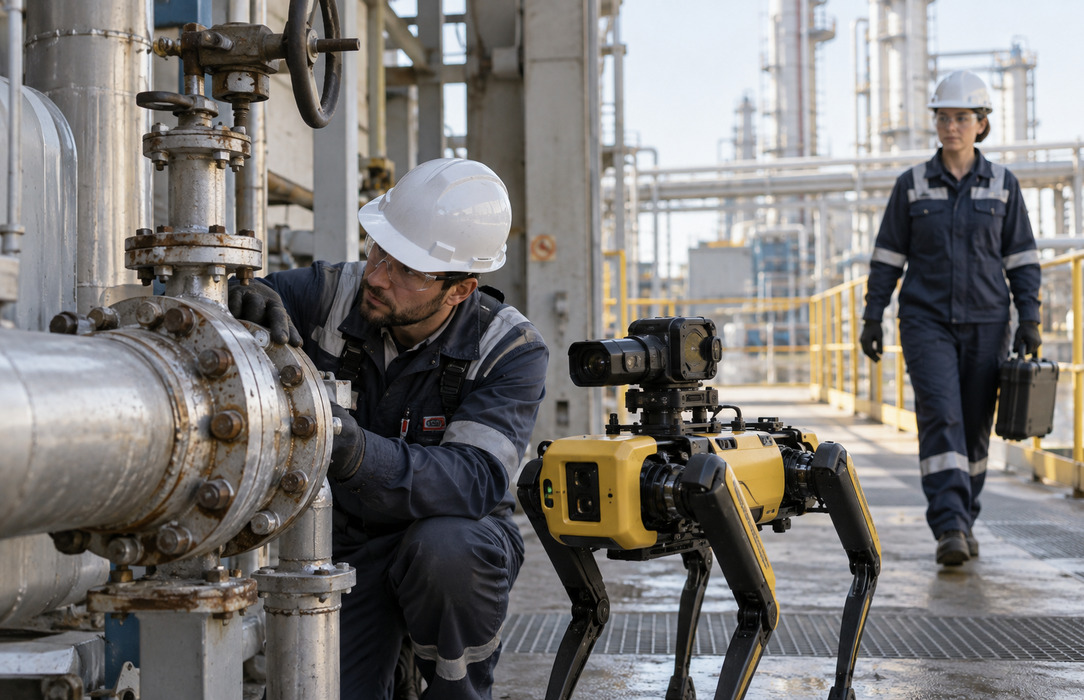
Physical-world observations had to become information that engineering, operations and maintenance teams could review, trace and use in the next decision.
NTT DATA combined a mobile robotic platform, multimodal sensing and an operational workflow so each mission could capture evidence, identify anomalies and support the next decision.

The robot visited sequential known waypoints and performed defined inspection tasks, creating a repeatable alternative for routine manual rounds.
When an anomaly was identified, the robot could alert the control room and support teleoperation, allowing teams to verify conditions remotely and travel only when necessary.
The robotic platform was deployed to navigate uneven terrain, obstacles, stairs and mixed surfaces while reaching the plant locations required for inspection.
RGB cameras, 3D LiDAR, thermal imaging and additional sensors captured equipment evidence, which was connected to processing, review and operational follow-up.
The deployment increased scheduled inspections and the amount of information collected and checks performed. It also reported reductions in failures, the workforce required for inspection activity and operational-team travel. Together, these outcomes show how autonomous field inspection can strengthen condition visibility while limiting unnecessary human exposure.