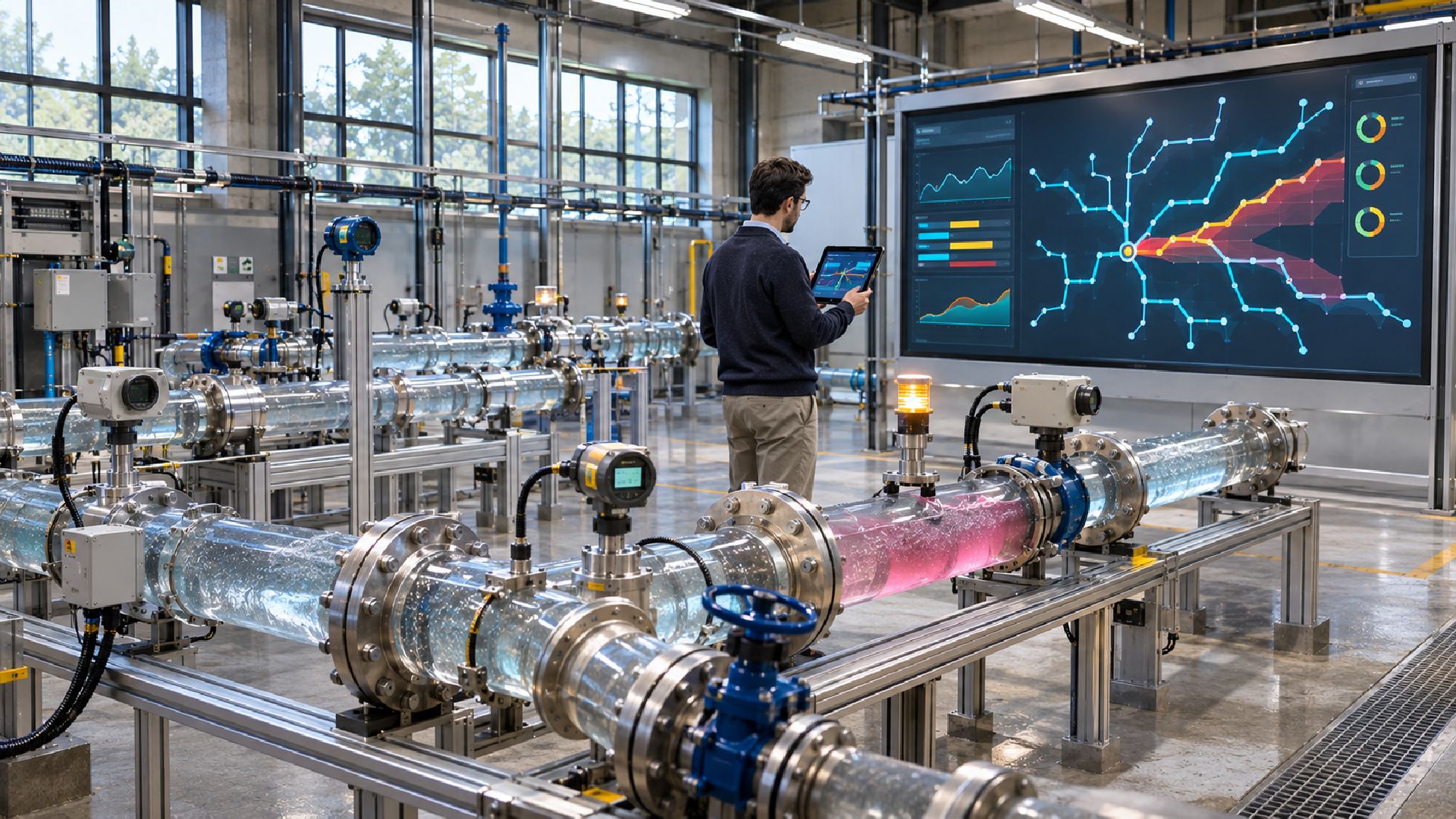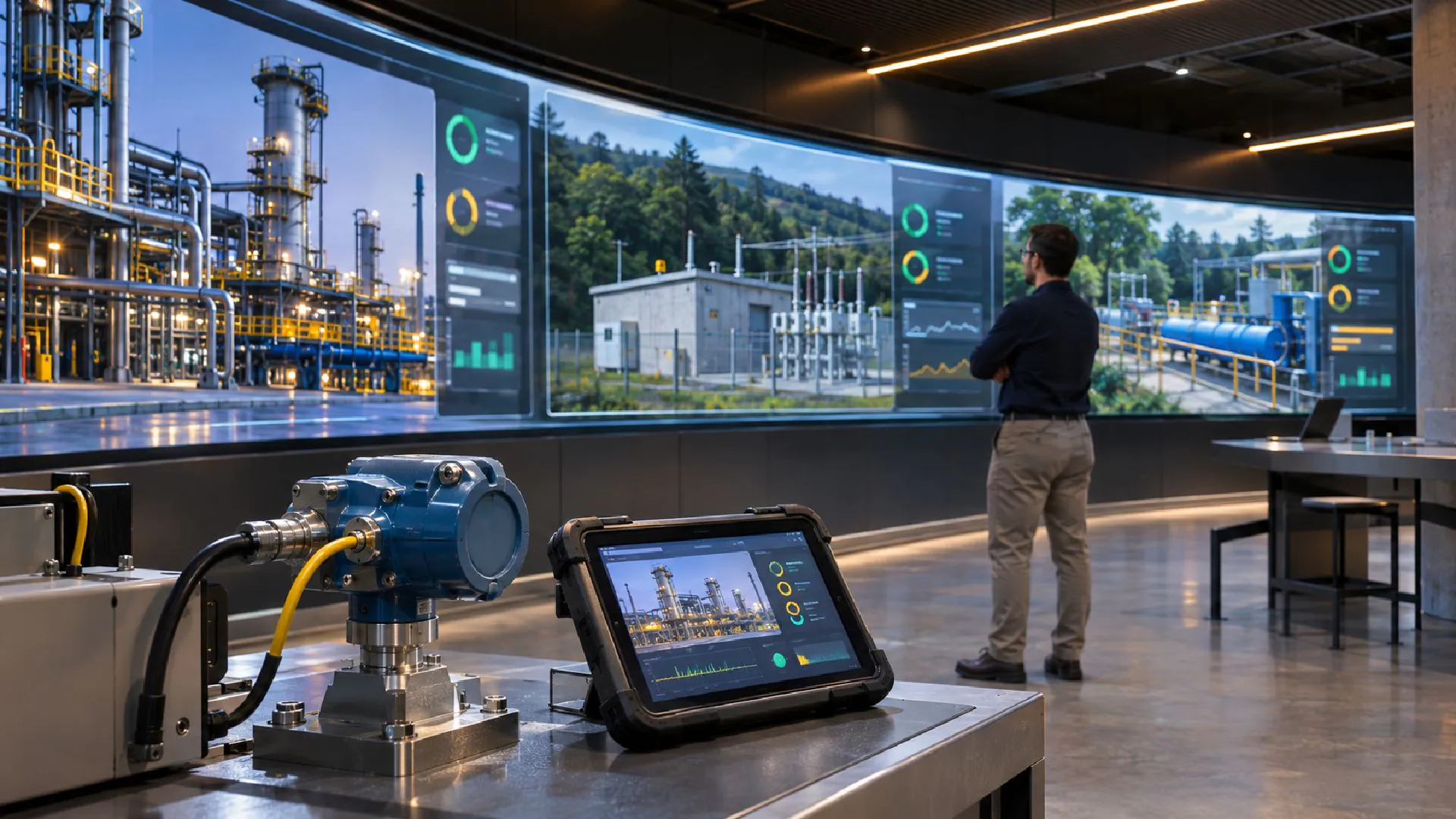
Water Distribution Network Monitoring and Decision Support
An IoT-enabled water-network monitoring and decision-support capability integrating real-time field data with automated event detection and hydraulic simulation to improve visibility of water-quality conditions.
Real-time water distribution monitoring combining field sensors, automated water-quality event detection and hydraulic network simulation to support network-level operational decisions.
Data timeliness
real-time information integrated from distributed sources across the water network.
Event detection
automated identification of contamination-level events supported by the monitoring solution.
Network-simulation coverage
automated simulation of the complete distribution network.
Operational decision support
strengthened by combining live sensing with network-level simulation.
Real-time water-quality sensing combined with hydraulic network analysis to interpret abnormal conditions across the wider water distribution system.
Real-time sensing and hydraulic analysis combined to give operators network-level context for water-quality events.

Water-distribution operators need to understand both local sensor conditions and how they may propagate through the wider network. The solution brought distributed real-time data, automated event detection and hydraulic and water-quality simulation into one monitoring environment, giving teams network-level context for interpreting abnormal conditions.

Connecting field sensing with network-level decision support
目的
The objective is to detect and interpret abnormal water-quality conditions faster by combining distributed sensor data with hydraulic context. Bringing sensing and simulation into a common monitoring capability also reduces the need to treat operational monitoring and engineering analysis as separate activities.
機会
Water networks are geographically distributed and increasingly instrumented, creating an opportunity to connect field sensing with network models in day-to-day operations. A shared architecture can move monitoring from isolated points toward network-level decision support and later absorb additional water-quality, pressure, flow or resilience use cases as new data sources become available.
Managing distributed sensing and network-level interpretation

Operational teams must combine distributed water-quality data, reliable field communications, timely event detection and automated simulation without separating monitoring from engineering analysis.
主な課題
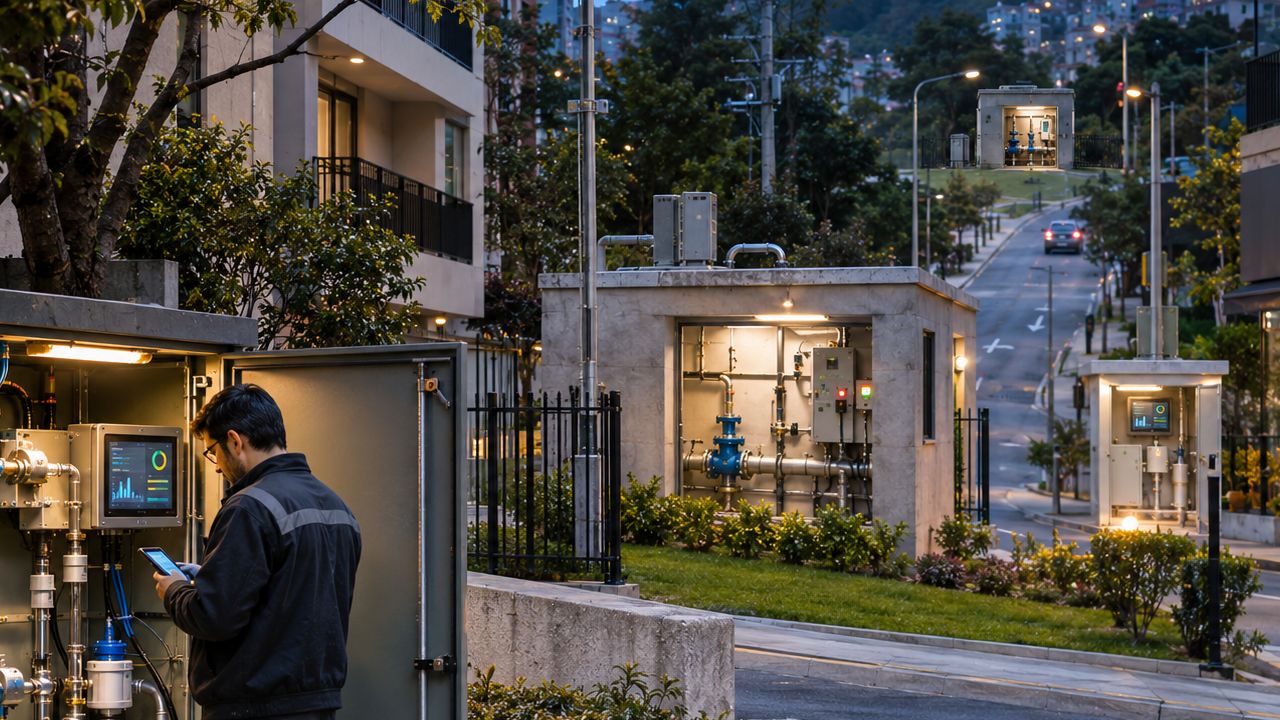
Water-quality monitoring data collected from multiple distributed points across an urban water network, illustrating the challenge of maintaining a consistent network-wide operational view.
1. Distributed water-quality information
Monitoring data comes from multiple points across the network, making a single operational view harder to maintain.
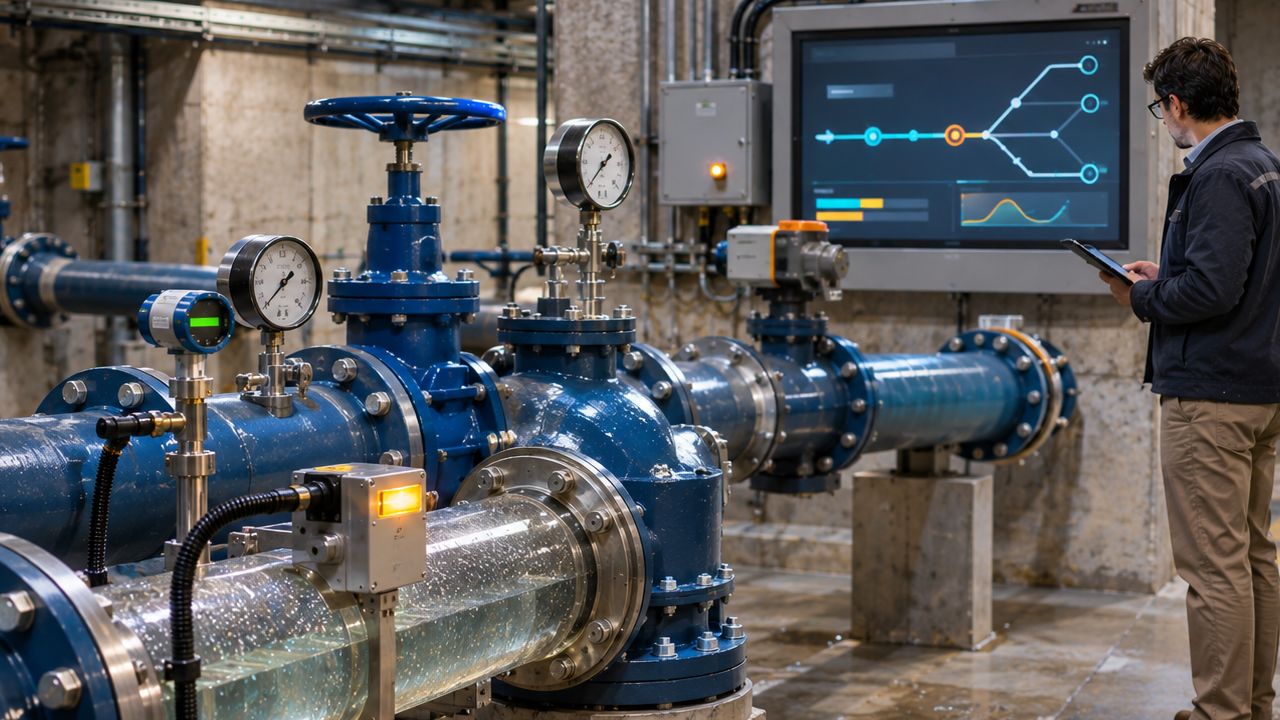
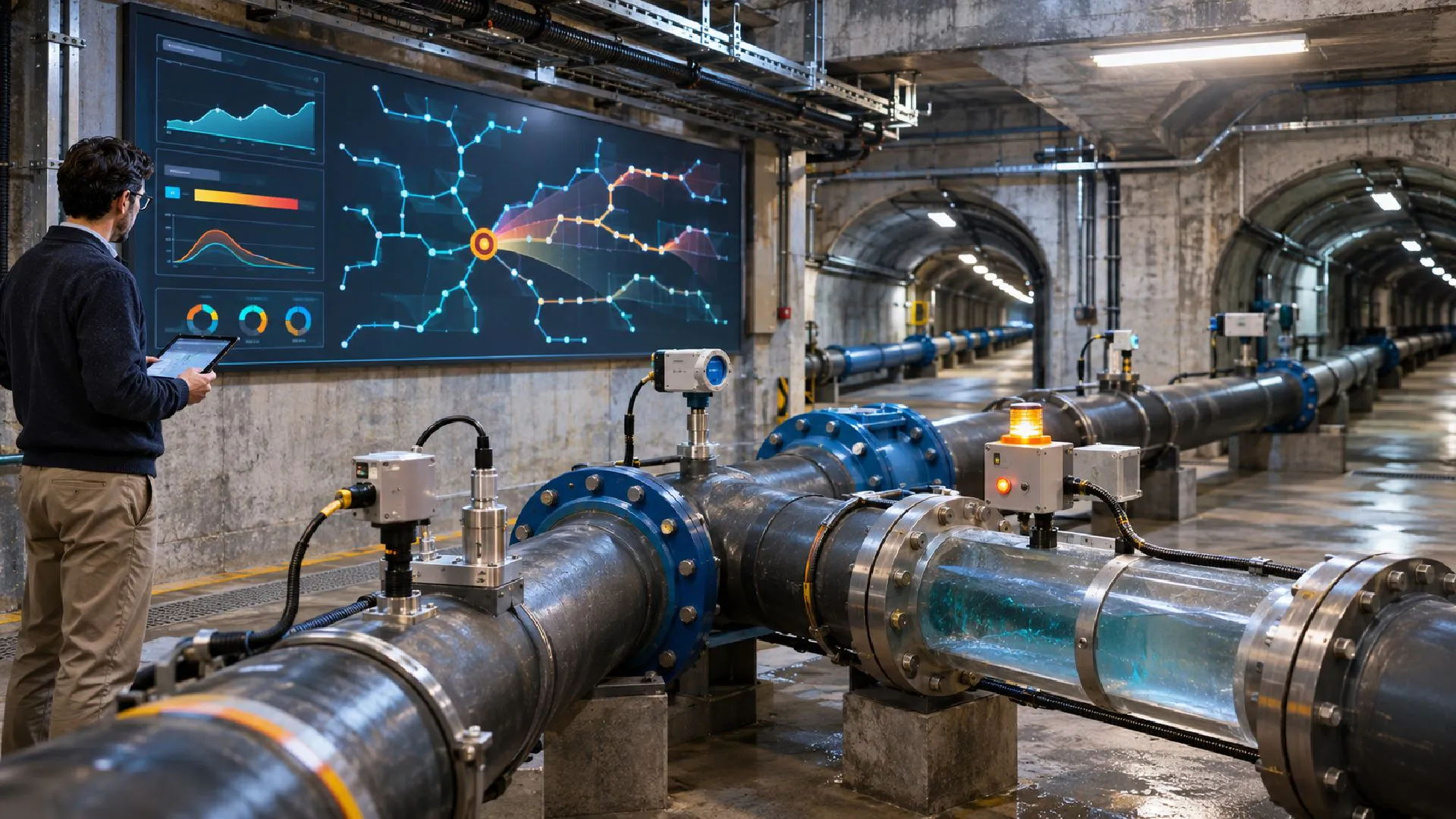
Water-quality event interpreted using hydraulic pressure, flow direction and valve conditions across the surrounding distribution network instead of as an isolated sensor alert.
2. Event detection with network context
Alerts must be interpreted in relation to wider network behavior, not as isolated sensor values.
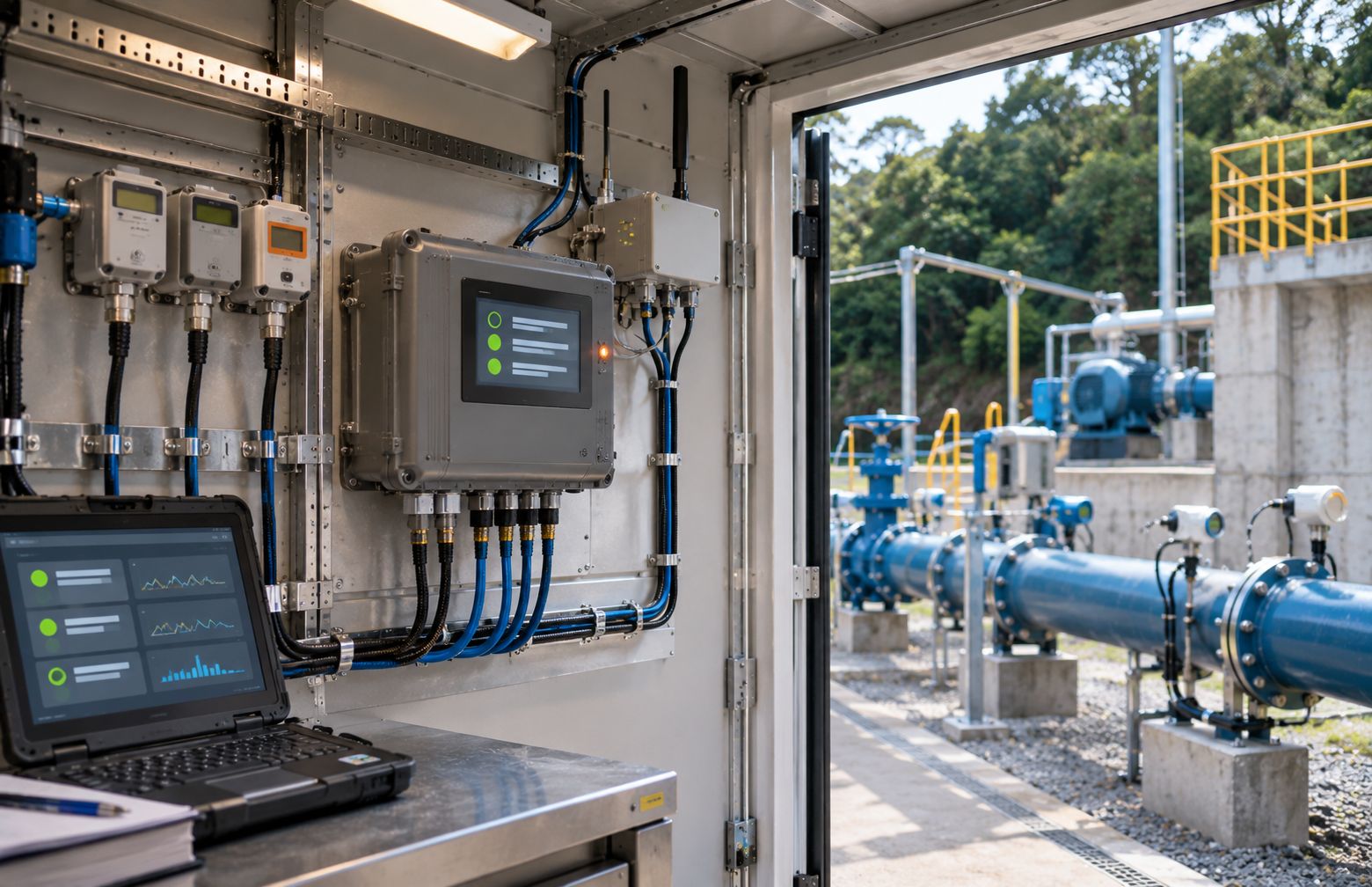
Water-network sensor data from quality, pressure and flow instrumentation integrated through industrial field communications into a common monitoring environment.
3. Reliable field-data integration
Sensor information and field communications must reach the monitoring environment consistently.
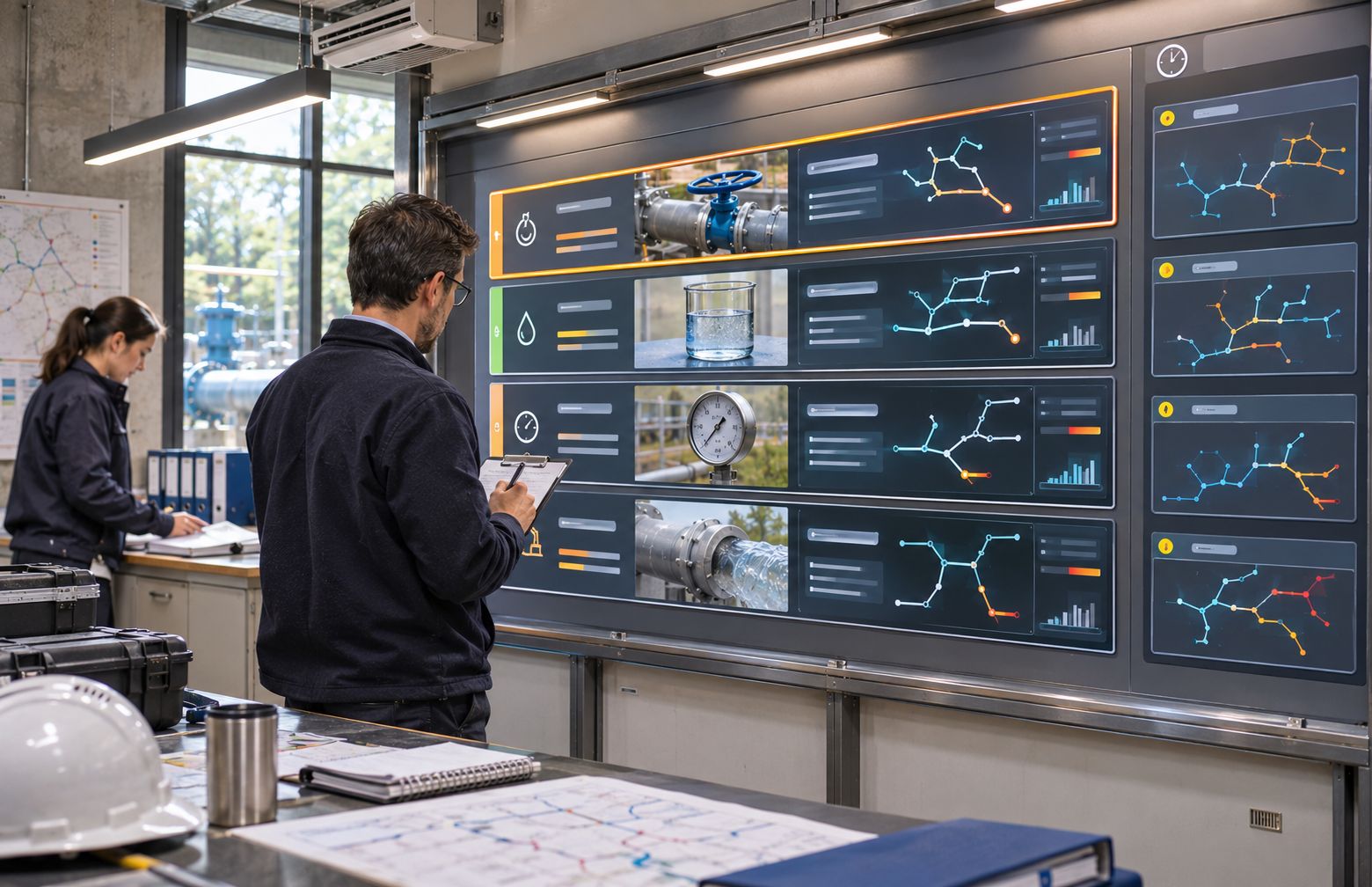
Automated hydraulic and water-quality simulation integrated into daily water-network operations to provide network context for routine operational decisions.
4. Operationalizing simulation
Hydraulic and water-quality models need enough automation to support day-to-day decision making.
解決策
スケーラブルな実行を実現するために設計された統合ソリューション

The solution combined real-time data from distributed sources with automated processing for contamination-related events. Industrial communications brought field information into the monitoring environment, while an automated hydraulic and water-quality simulation capability modeled the complete network. This connected observed conditions with network behavior in a single decision-support flow.

チェックアイコン
Integrated real-time monitoring

Distributed field data is consolidated and processed to identify contamination-related conditions.

チェックアイコン
Connected field communications

Industrial communications bring sensor information into the common digital monitoring environment.

チェックアイコン
Automated network simulation

A hydraulic and water-quality simulation capability models the complete distribution network automatically.

チェックアイコン
Contextual event interpretation

Observed conditions can be assessed against network behavior instead of being treated as isolated sensor readings.

影響
The solution improves visibility of abnormal water-quality conditions by combining faster event detection with a broader understanding of network behavior.

Operators gain more context for interpreting abnormal conditions by linking live field data with the way water moves through the distribution system. The same architecture can support additional monitoring and decision-support scenarios while keeping operational sensing and engineering analysis connected.
ドラッグ