UAV-Based Wind Turbine Blade Inspection
Blade inspections are only as useful as the evidence they put in engineers' hands. By moving the camera from the ground to the blade, this initiative replaced slow binocular observation with rapid UAV capture, creating a faster and more repeatable way to assess surface damage and connect inspection evidence with technical review and maintenance.
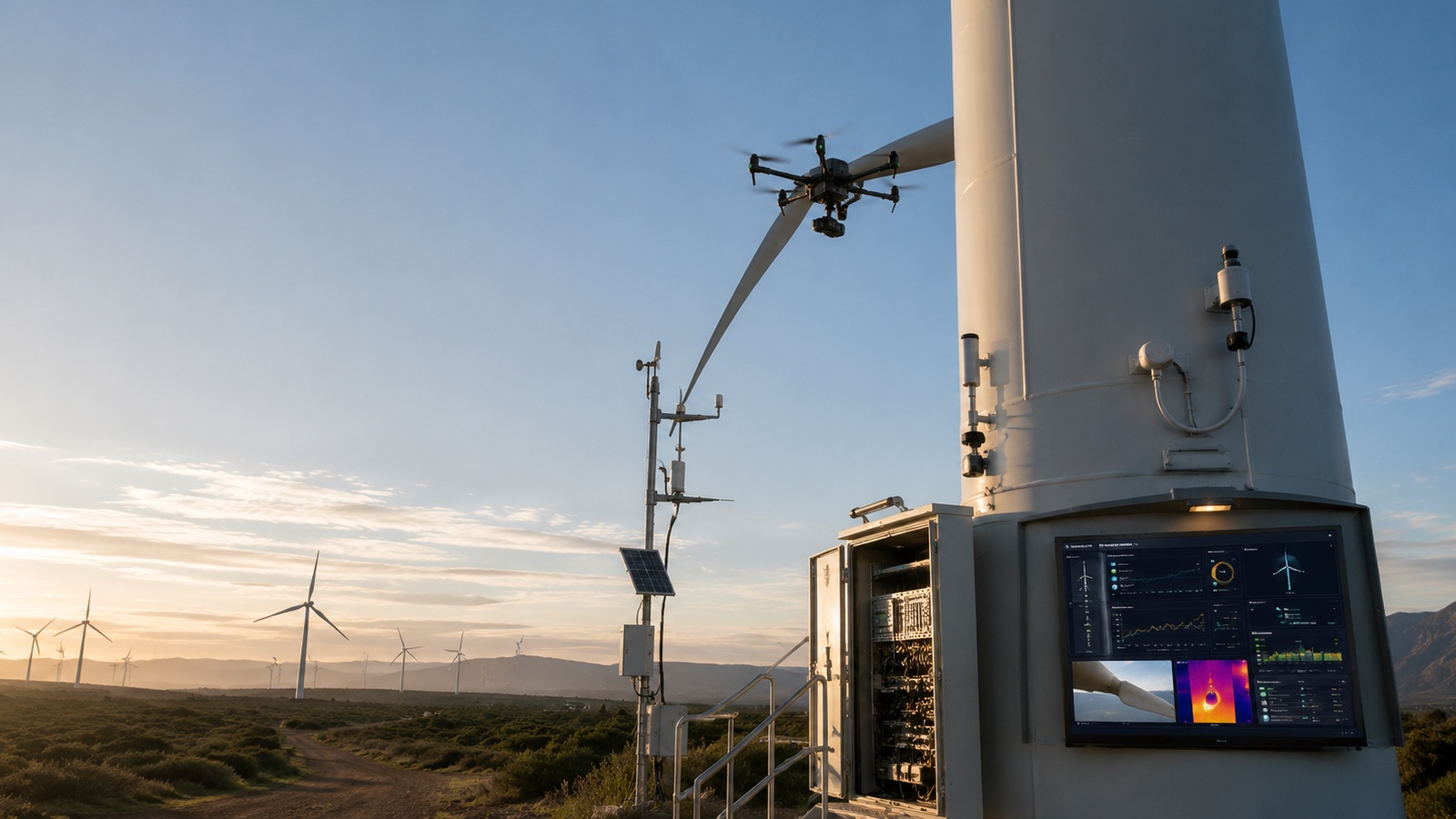
Industrial UAV inspecting a wind turbine at close range in an onshore wind farm, with field monitoring equipment at the turbine base.
検査時間
88% reduction
Close-range capture
UAV evidence collected at blade level
Review quality
Higher-quality blade-condition evidence
Workflow reuse
Reusable digital inspection pattern
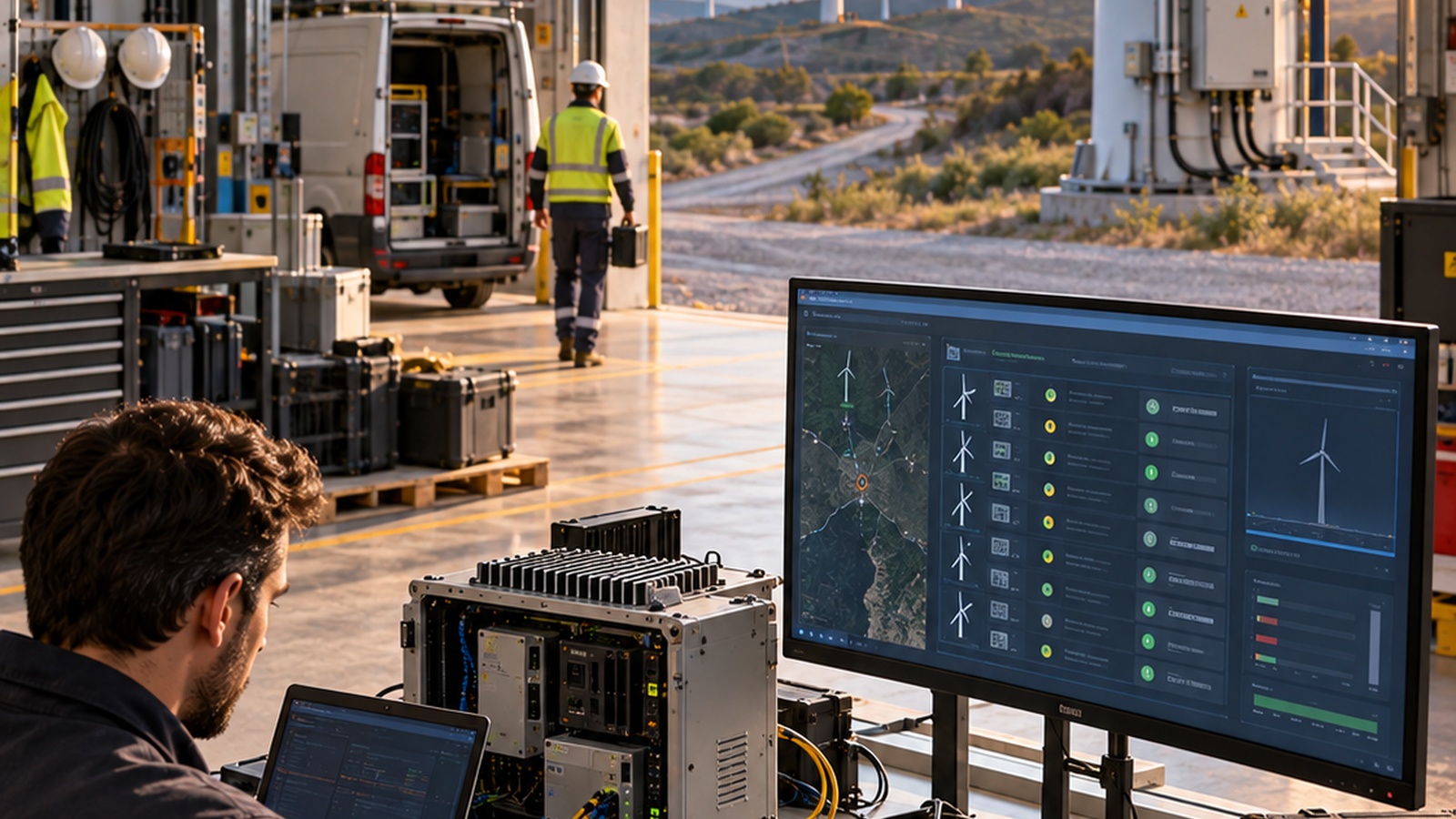
Wind-farm engineering workspace with turbine monitoring equipment, a field technician and operating wind turbines visible beyond the maintenance facility.
Accelerating Wind Turbine Blade Inspection with UAVs

A renewable power generation business introduced UAV-based blade inspection to replace lengthy ground observation with rapid aerial evidence capture, improving access to the visual information needed for engineering review and maintenance decisions.

Ground-based blade inspection can be slow and constrained by limited viewing angles, delaying the evidence teams need to identify surface defects and prioritize what happens next.
目的
Establish a faster blade-inspection capability without separating field capture from engineering review. The initiative used UAVs for close-range inspection, standardized image capture for technical assessment and integrated the outputs into maintenance and inspection workflows.
機会
Extend the documented approach into a reusable digital inspection pattern for broader wind-farm maintenance and rapid post-event blade assessment. Repeatable missions and standardized evidence capture create a basis for applying the same model across additional wind assets while preserving the link between field evidence and operational follow-up.
Closer Evidence, Faster Decisions

The transformation had to improve inspection speed and evidence quality while preserving the discipline needed to turn aerial capture into maintenance decisions.
主な課題
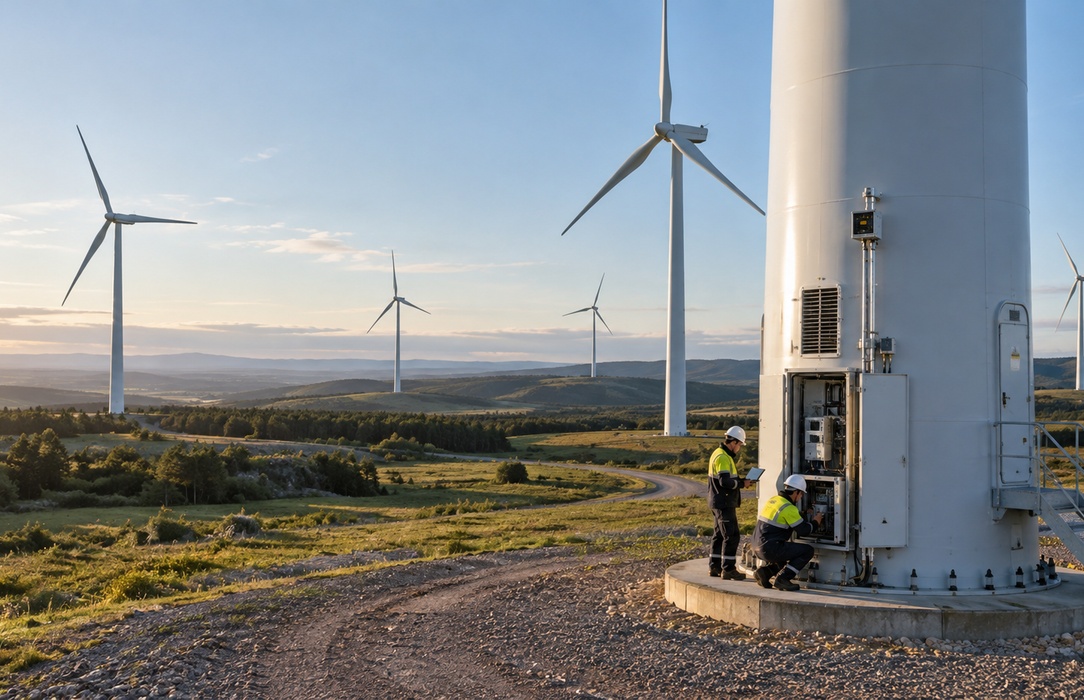
Wind-farm technicians working at the base of a turbine, illustrating the distance and viewing limitations of ground-based blade inspection.
1: Limited Viewing Angles
Binocular inspection from the ground was time-consuming and restricted viewing angles, limiting the detail available for blade-condition review.
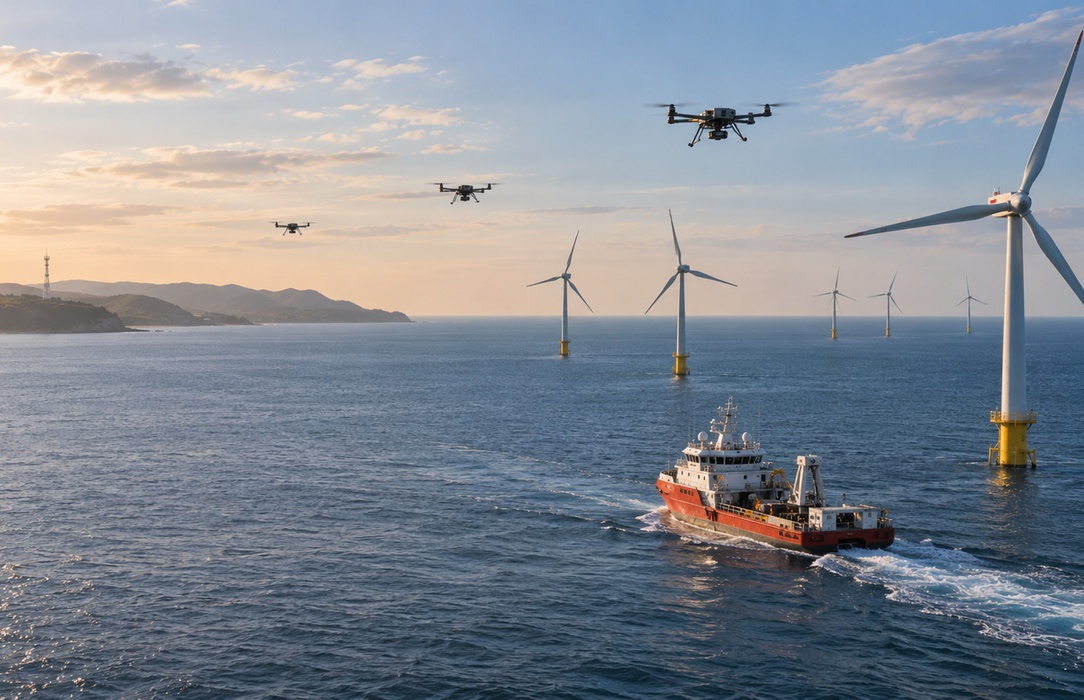
Industrial drones operating around wind turbines to capture aerial inspection evidence more quickly across wind-farm assets.
2: Defect Evidence on Demand
Wind-farm teams needed faster surface-condition evidence so potential damage could move quickly into engineering review or maintenance prioritization.
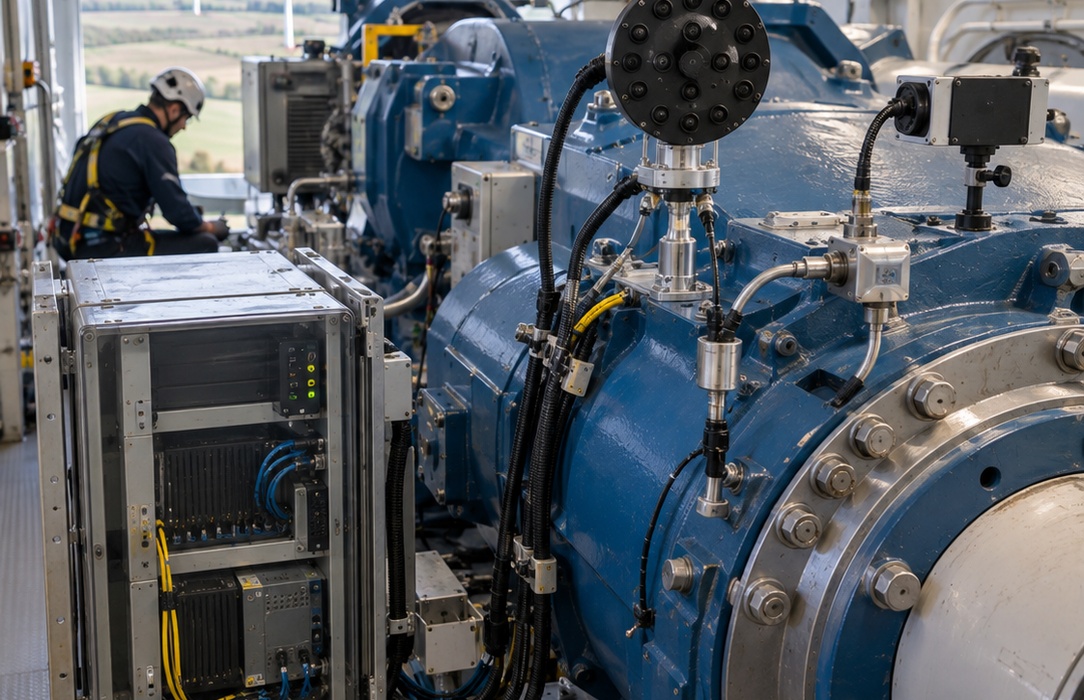
Technician working inside a wind turbine nacelle surrounded by drivetrain equipment and sensors, representing the need for consistent inspection procedures.
3: Consistent Field Execution
Manual inspection practices can be difficult to standardize. The initiative required a repeatable evidence-capture approach for real wind-farm conditions.
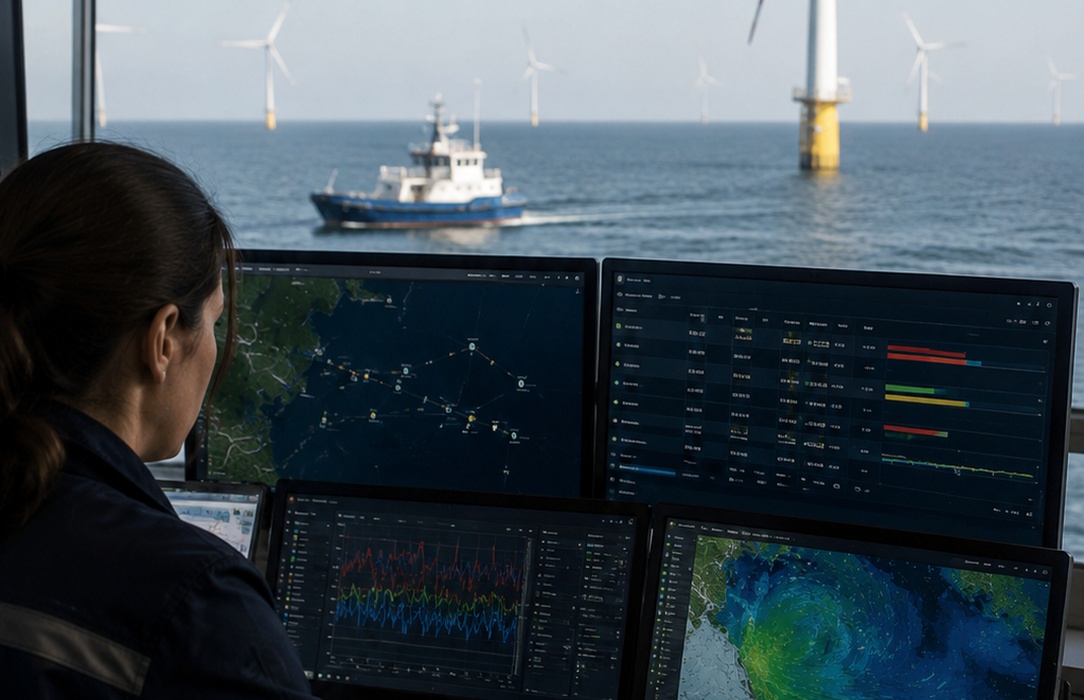
Wind-farm operations specialist reviewing multiple digital monitoring screens with turbines visible outside, representing the need to turn field evidence into maintenance information.
4: Evidence That Travels
Inspection imagery had to be processed, reviewed, traced and acted on by engineering, operations and maintenance teams.
解決策
A Repeatable UAV Inspection Workflow

The delivery model linked close-range aerial capture with structured review and operational follow-up, making UAV inspection part of the maintenance process rather than a standalone flight.

チェックアイコン
Close-Range UAV Capture

UAVs were used to collect blade-condition evidence at close range, overcoming the distance limitations of conventional binocular observation.

チェックアイコン
Damage-Focused Review

Inspection targeted damage associated with braking, lightning and other impacts, giving technical teams clearer material for subsequent review.

チェックアイコン
Standardized Missions

Image capture was standardized around repeatable missions or procedures, supporting more consistent field execution.

チェックアイコン
Integrated Maintenance Flow

Captured evidence was connected to a digital workflow for processing, review and follow-up, with the inspection process integrated into maintenance workflows.

影響
From Two Hours to 15 Minutes Per Turbine

The documented result is an 88% reduction in inspection time, from approximately two hours per turbine with binoculars to 15 minutes with UAVs. The approach also provides higher-quality visual evidence for blade-condition review, reduces time spent on conventional ground observation and establishes a reusable digital inspection pattern for wind-farm assets.

ドラッグ