- All Foundries

- 商品管理と取引

- 顧客とマーケティング戦略

- デジタルエンジニアリング

- ステーション・スタジオ

- サプライチェーン&インダストリー5.0
- サステナビリティ

- Physical AI

- Next-Gen Infrastructure












Technical readiness for mining decisions and autonomous operations
Knowing the conveyor stopped, knowing why, confirming a restart is safe, sending a reliable command and proving material flow was restored are each a different capability.
A decision-level view changes the autonomy roadmap and makes technical investment more precise.

It distinguishes decisions that remain human, those that receive analytical support and those that can be recommended automatically.
It identifies which decisions can safely move toward supervised or bounded autonomous execution, and which are not yet ready.
Instead of closing an abstract technology gap, the operation strengthens the exact function preventing one valuable decision from progressing.
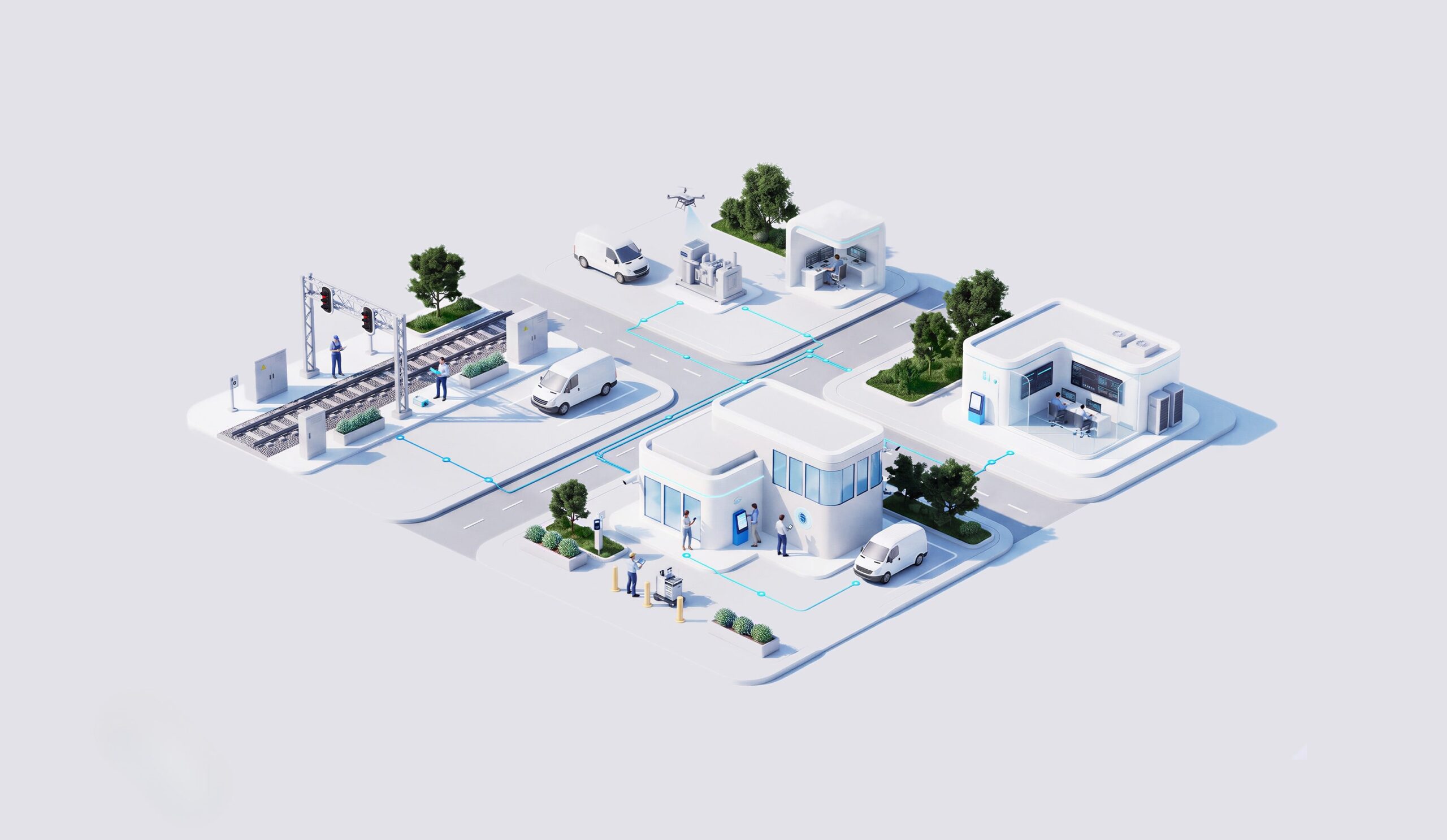
Sensing, connectivity, model, authority, actuation and verification are each assessed for the specific decision they must support.
NTTデータのサポート体制は?
Specify the condition, available responses, physical lever and outcome the operation is trying to control.

Identify the signals, equipment state, material context and confidence required before a recommendation or action is valid.

Assess whether communications, control integration, interlocks, energy and actuators can reliably carry the decision into the operating environment.

Define when the system may recommend or execute, when human authorization is required and what happens when signal quality degrades.

Use operational observability to confirm that the intervention produced the expected equipment and material response.

Event histories, analytics and AI can recognize recurring conditions, improve recommendations and increase the situations resolved within limits.


Communications, signal availability, energy, actuation, redundancy and continuity can each constrain remote or automated response in a particular operating function. That is a stronger basis for autonomy.
Progress becomes tangible. That is not inconsistency. It is how progressive autonomy is actually built.
Where the complete path from condition to physical action is trusted, a decision may already support automated execution today.
Another decision may be ready only for recommendation, while authority and degraded modes are engineered for the next step.
A third may still require direct human control because one critical signal or actuation path cannot yet be trusted in the field.
Learning from recurring conditions gradually increases the situations each decision can resolve within known limits, safely.
Explore how decision-level readiness can turn autonomy from a technology ambition into an engineered operating envelope.