Season 3
Climate Resilient Utilities

How can utilities keep essential services running as climate risks intensify?
This season explores how to build resilience, protect communities and prepare for what comes next.

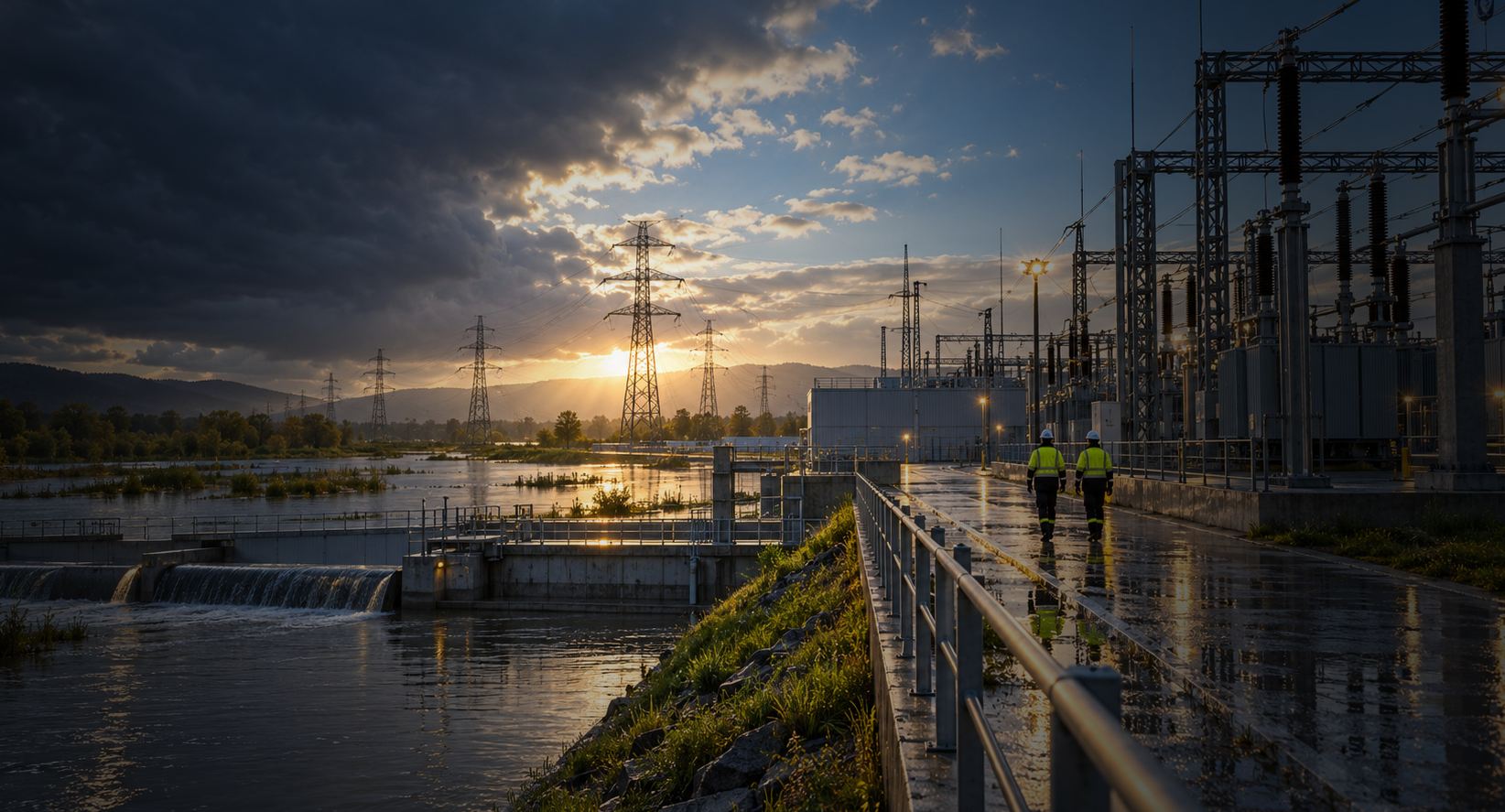
Two utility workers inspect a flood-resilient electrical substation as storm clouds clear over power lines.
Why now?
Climate risk becomes an operational issue long before it becomes an emergency.
A shift in vegetation, soil conditions, water availability or temperature can be the first sign of a much larger threat. Wildfires, floods, droughts, storms, landslides and heat stress directly affect service continuity, workforce safety, asset performance and investment planning.
Utilities already use satellite, geospatial and meteorological information to monitor changing conditions around networks, plants, reservoirs and renewable assets. The next challenge is to connect those observations with operational data and asset criticality, so teams can understand not only what is changing, but what it could mean for infrastructure and the communities it serves
Resilience therefore needs to move beyond periodic risk reporting. It must become a continuous operational capability that helps utilities anticipate exposure, assess potential impact and prepare assets, resources and response plans before disruption occurs

From observing climate risk to preparing for its operational consequences.
About the season
Anticipating climate risk. Strengthening every utility decision.

Every climate event puts a critical decision in front of utility leaders. By connecting climate and territorial data, they can anticipate its impact, decide where to act and turn uncertainty into more resilient operations, infrastructure and investment.

Business outcomes explored
チェックアイコン
See environmental risk before it becomes operational disruption

IConnect meteorological, climate, geospatial and operational information to identify changes around assets, networks, basins and territories earlier.

チェックアイコン
Prepare assets and operations for extreme conditions

Translate wildfire, storm, flood, landslide and heat-stress signals into practical decisions about maintenance, field resources, emergency readiness and network operations.

チェックアイコン
Strengthen water-resource resilience

Improve visibility across basins, reservoirs, groundwater and hydrological infrastructure to support more informed responses to drought, flooding, scarcity and changing water conditions.

チェックアイコン
Direct investment toward the greatest exposure

Compare asset vulnerability, criticality and territorial risk across the portfolio, helping leaders prioritize adaptation measures and build clearer cases for resilience investment.

Conclusion
Resilience is built before the next extreme event tests the system.

A climate-resilient utility learns from a changing environment and adapts before risk materialises.
By connecting climate, geospatial and asset data with human expertise, teams can anticipate consequences and focus resources where they matter most.
Resilience becomes part of everyday operational and investment decisions, not simply a risk-reporting exercise.

何をお探しですか?
産業
メディア
Telecom
天然資源
アグリビジネス
自動車
インフラストラクチャー
物流
製造業
CPG
石油・ガス
製薬・ライフサイエンス
小売
サービス
交通機関
旅行
公益事業
適用する
ドラッグ