- All Foundries

- Commodity Management & Trading

- Customer & Marketing Strategy

- Digital Engineering

- Station Studio

- Supply Chain & Industry 5.0
- Sustainability

- Physical AI

- Next-Gen Infrastructure










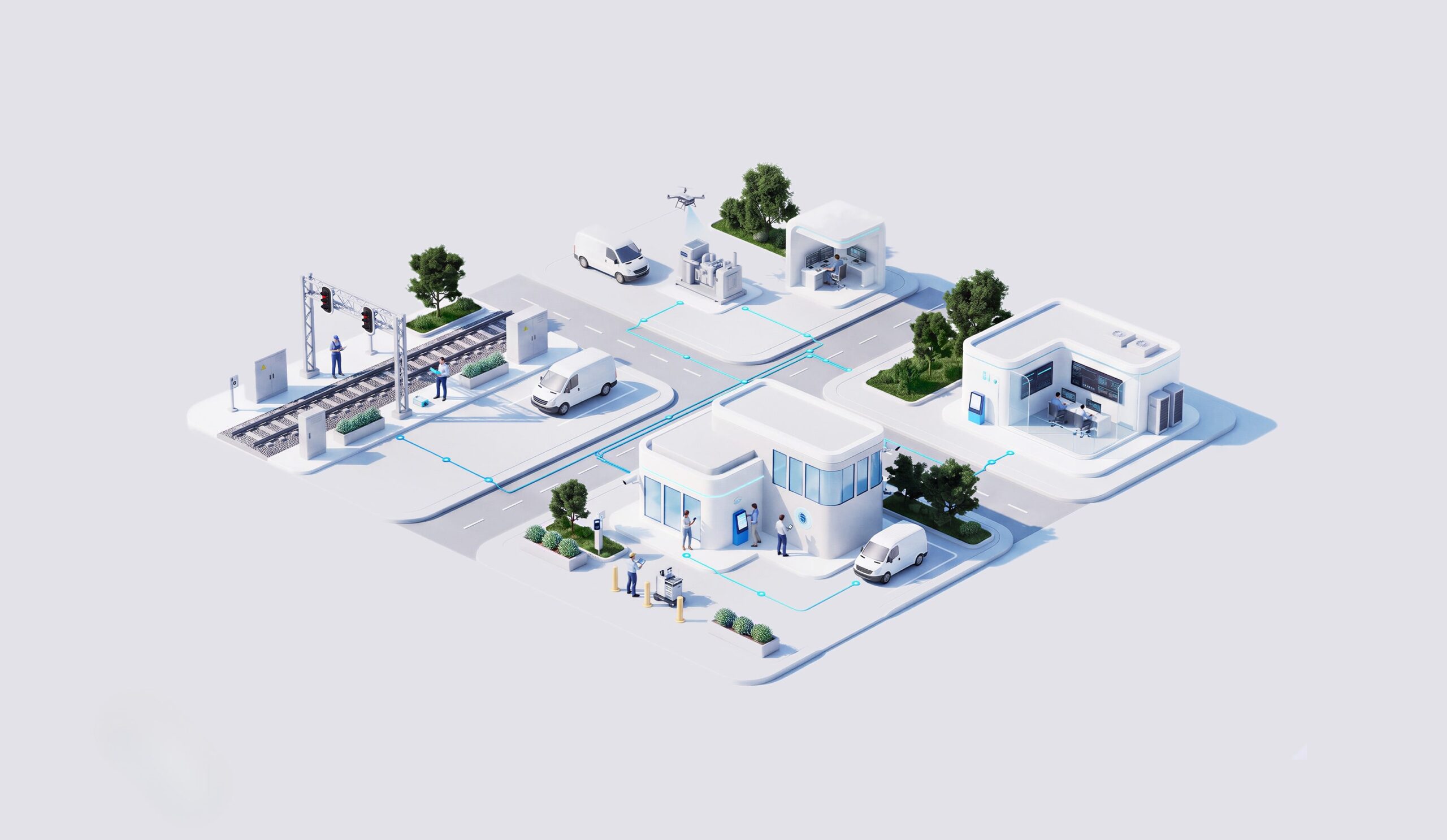



Distributed accountability for integrated mining decisions
In a complex mining chain, those answers do not have to point to the same person or area. Local roles can be clear while the cross-chain decision has no natural home.
Making the loop explicit can reduce delay when a consequence appears far from its lever.

Making the distributed decision loop explicit can reduce delay when a consequence becomes visible downstream and the lever sits upstream.
It can protect quality, recovery, throughput, water, inventory or logistics when one specialty sees the condition and another can change it.
Chain results are protected without centralizing decisions that should remain local to each specialty and its own operational context.
The operation gains clarity about when local accountability is enough and when several accountabilities must be connected.
How NTT DATA helps
Start with the condition and identify where the effect, lever, objective and authority actually sit.

Replace vague “coordination” with explicit inputs, decisions, limits and handoffs for the situation.

Contextual data models and digital representations can connect material quality, process state, inventory, plan and logistics for each role.

Event-driven workflow can trigger the correct owner and escalation path when a local response cannot protect the chain objective alone.

Integration with planning, Dispatch, process control or OT can turn the authorized response into physical action.

Decision histories and observability can show what was committed, what was executed and what result followed.


Local responsibilities can be clear while the inter-area decision requires an additional rule for comparing objectives and committing a response. The pattern is distributed work that must become one decision.
A mature integrated operation does not solve the problem by assigning the whole chain to one owner.
Return to the downstream quality signal: the effect reaches the upstream lever, in the concentrator or an earlier planning decision.
Event-driven workflow triggers the correct owner and escalation path when a local response cannot protect the chain objective alone.
Decision histories and observability show what was committed, what was executed and what result followed, for every role involved.
One specialty sees the future condition, another can change it, a third absorbs the consequence. The loop makes them act as one.
Explore how connecting effect, lever, objective and authority can turn cross-chain decisions into one accountable loop.