- All Foundries

- Commodity Management & Trading

- Customer & Marketing Strategy

- Digital Engineering

- Station Studio

- Supply Chain & Industry 5.0
- Sustainability

- Physical AI

- Next-Generation Infrastructure








Cloud & Edge Resilience for Critical Utility Operations
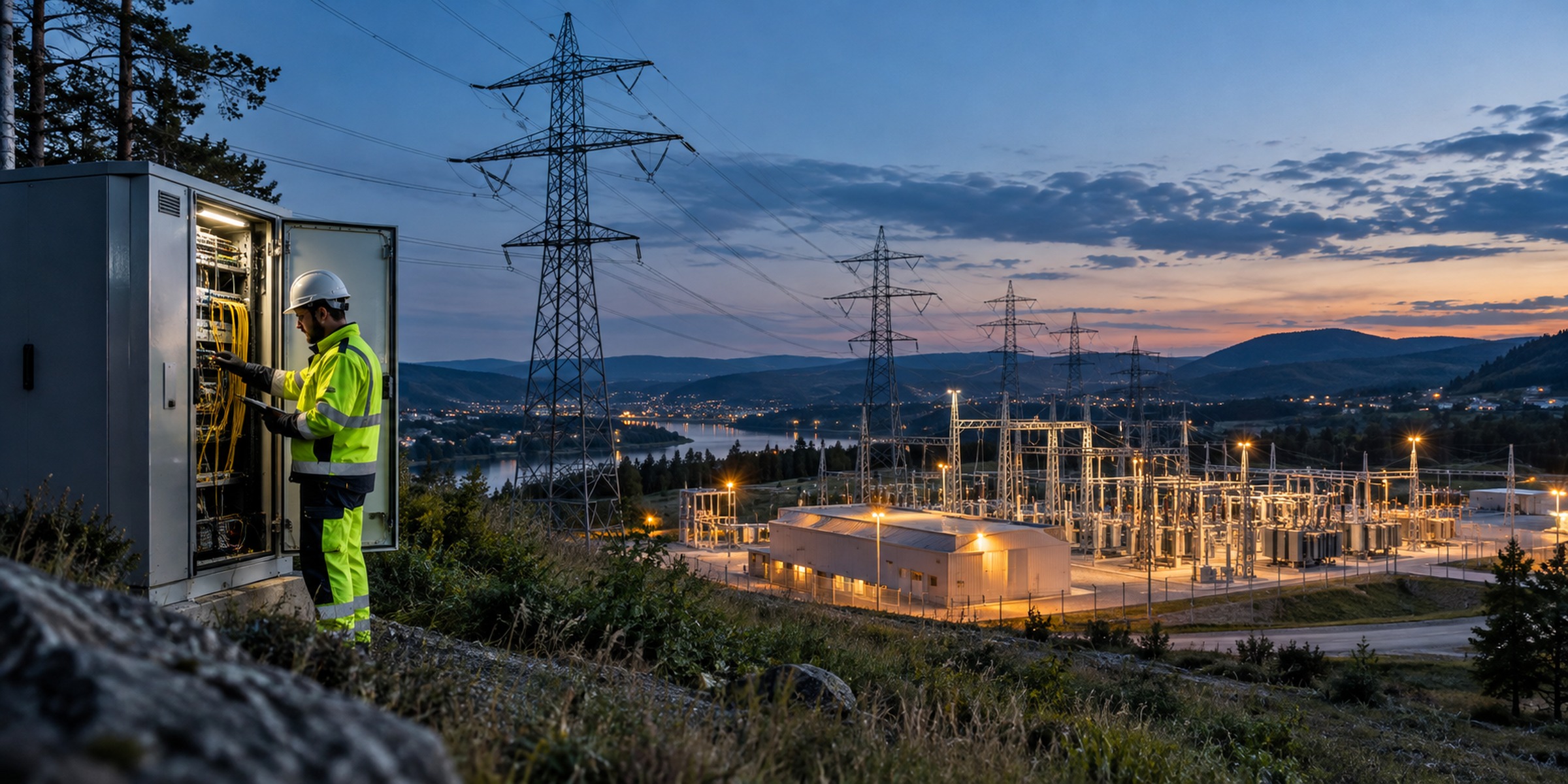
Historical data processing can often wait for connectivity to recover, but protection support, local monitoring, safety workflows and critical operator functions may need to keep working the moment WAN or cloud services degrade. A cloud-first architecture alone is not enough for mission-critical operations, yet keeping every function local limits scalability and advanced analytics, so workloads must be placed according to latency, safety, data and continuity requirements.
A distributed edge-to-cloud architecture keeps essential local functions running while maintaining a clear path back to centralized services.

Essential local functions keep running during connectivity, platform or cloud disruption, without forcing unnecessary shutdowns or manual workarounds.
Reduced dependence on any single layer means a WAN or cloud disruption no longer stops critical operational functions.
Tested failover and defined recovery objectives shorten the time needed to recover from platform, communications or cyber incidents.
Explicit criteria for where each workload runs give architecture teams a clear, governed basis for every placement decision.
How NTT DATA helps
NTT DATA classifies workloads by criticality, latency, data sovereignty and recovery requirements before deciding where each one should run.

Time-sensitive and safety-critical functions stay close to the asset whenever local continuity is required, regardless of connectivity.

Cloud platforms are reserved for scalable analytics, enterprise integration, fleet management and cross-site intelligence rather than every function.

Recovery-time and recovery-point objectives are defined for each operational service so recovery expectations are explicit, not assumed.

Local buffering, store-and-forward and fallback modes are engineered and tested alongside failover and degraded-mode operation, not assumed to work.


For distributed edge-to-cloud architectures, these targets are indicative and vary with workload placement, recovery design and testing maturity.
Workload placement and tested failover increase critical service availability, with baseline and target levels confirmed during assessment.
Tested recovery patterns increase the failover success rate instead of leaving it to be discovered during a real incident.
Defined recovery objectives and engineered fallback modes reduce the time needed to restore normal operations after WAN or cloud disruption.
Local buffering and controlled resynchronization reduce data loss during disruption instead of losing information outright.
Place each workload where its latency, safety and continuity requirements actually belong, with failover engineered and tested, not assumed.