- All Foundries

- Commodity Management & Trading

- Customer & Marketing Strategy

- Digital Engineering

- Station Studio

- Supply Chain & Industry 5.0
- Sustainability

- Physical AI

- Next-Generation Infrastructure












Converged Utility Field Area Networks
Many utility field area networks have grown fiber by fiber and radio by radio, without a common framework to manage them together. Converging fiber, IP/MPLS and private wireless lets utilities scale toward automation, distributed energy integration and future edge use cases. A temporary loss of a non-critical application is not the same as losing communications with a protection, control or emergency-response process, so explicit service priorities must guide the architecture.
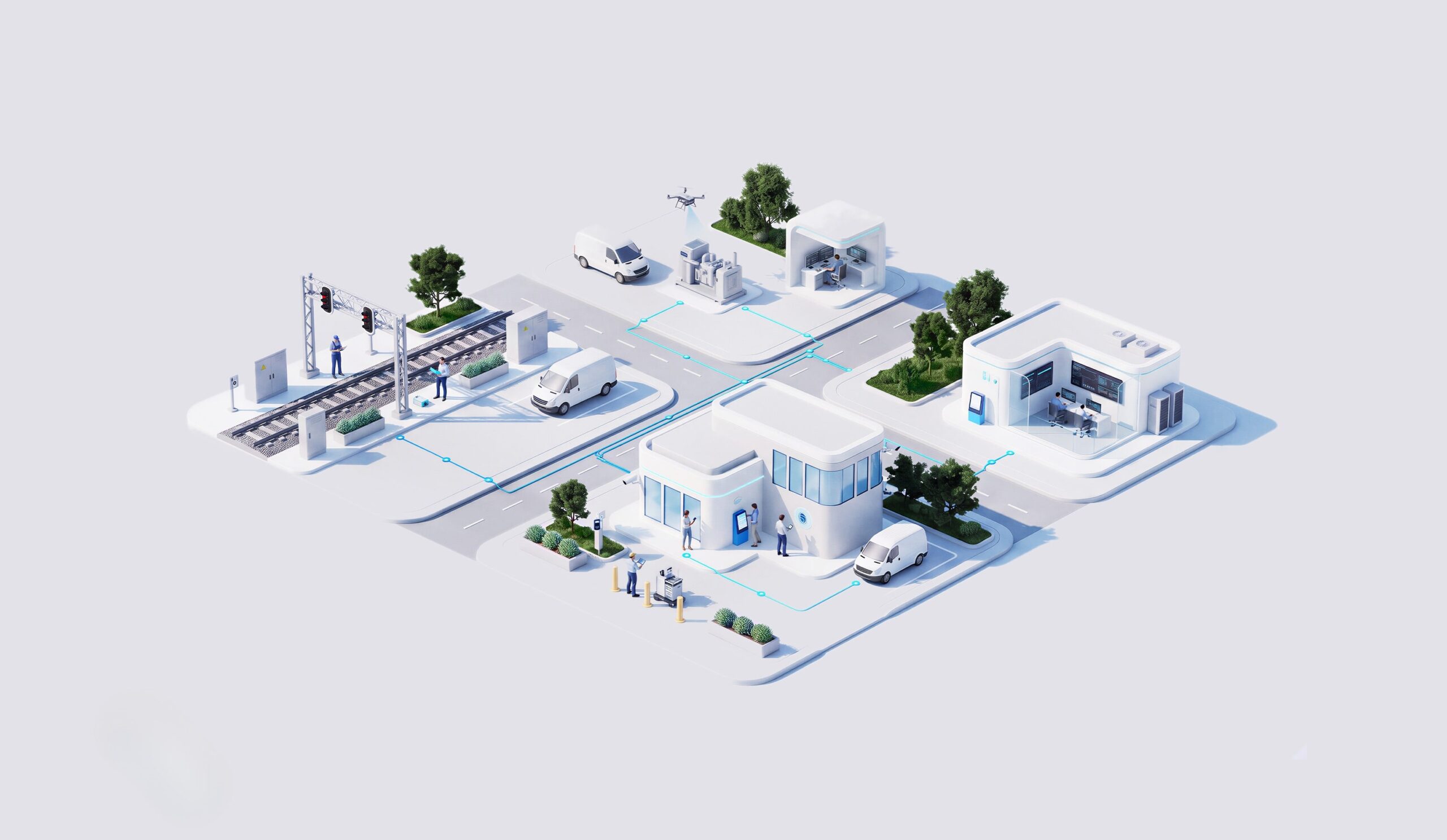
A converged field area network helps utilities replace scattered point technologies with one coordinated architecture built for growth.

Converging fiber, radio and private wireless closes the blind spots that appear when each technology is managed and monitored separately.
Common security and lifecycle practices apply across fiber, cellular and private wireless instead of one policy per technology silo.
A shared field area network foundation supports distribution automation, DER integration and future edge programs instead of a new network each time.
A target architecture and migration roadmap move utilities from a patchwork of technologies to a converged network in planned stages.
How NTT DATA helps
NTT DATA inventories existing fiber, radio, cellular and IP/MPLS assets to understand what the converged architecture needs to accommodate.

A target architecture and migration roadmap are defined so utilities can converge technologies in planned, manageable stages.

Field connectivity is integrated with OT, edge and enterprise platforms so operational and digital teams work from the same foundation.

Common security and lifecycle operating practices replace the separate processes each legacy technology used to require.

Cyber risk, recovery expectations, coverage and the long lifecycle of utility assets all shape how the converged architecture is designed.


For converged FAN migrations, these targets are indicative and vary with legacy technology mix, site density and rollout sequencing.
Policy-based convergence reduces single points of failure, with baseline and target availability levels confirmed during assessment.
Substations, distribution automation and field sites gain a shared communications map instead of scattered point solutions.
A phased migration roadmap shortens the time needed to converge technologies or restore service after disruption.
Common security and lifecycle practices applied across every technology strengthen policy compliance across the converged estate.
Bring fiber, cellular and private wireless together under one roadmap so substations, sensors and field crews scale on the same foundation.