- All Foundries

- Commodity Management & Trading

- Customer & Marketing Strategy

- Digital Engineering

- Station Studio

- Supply Chain & Industry 5.0
- Sustainability

- Physical AI

- Next-Generation Infrastructure










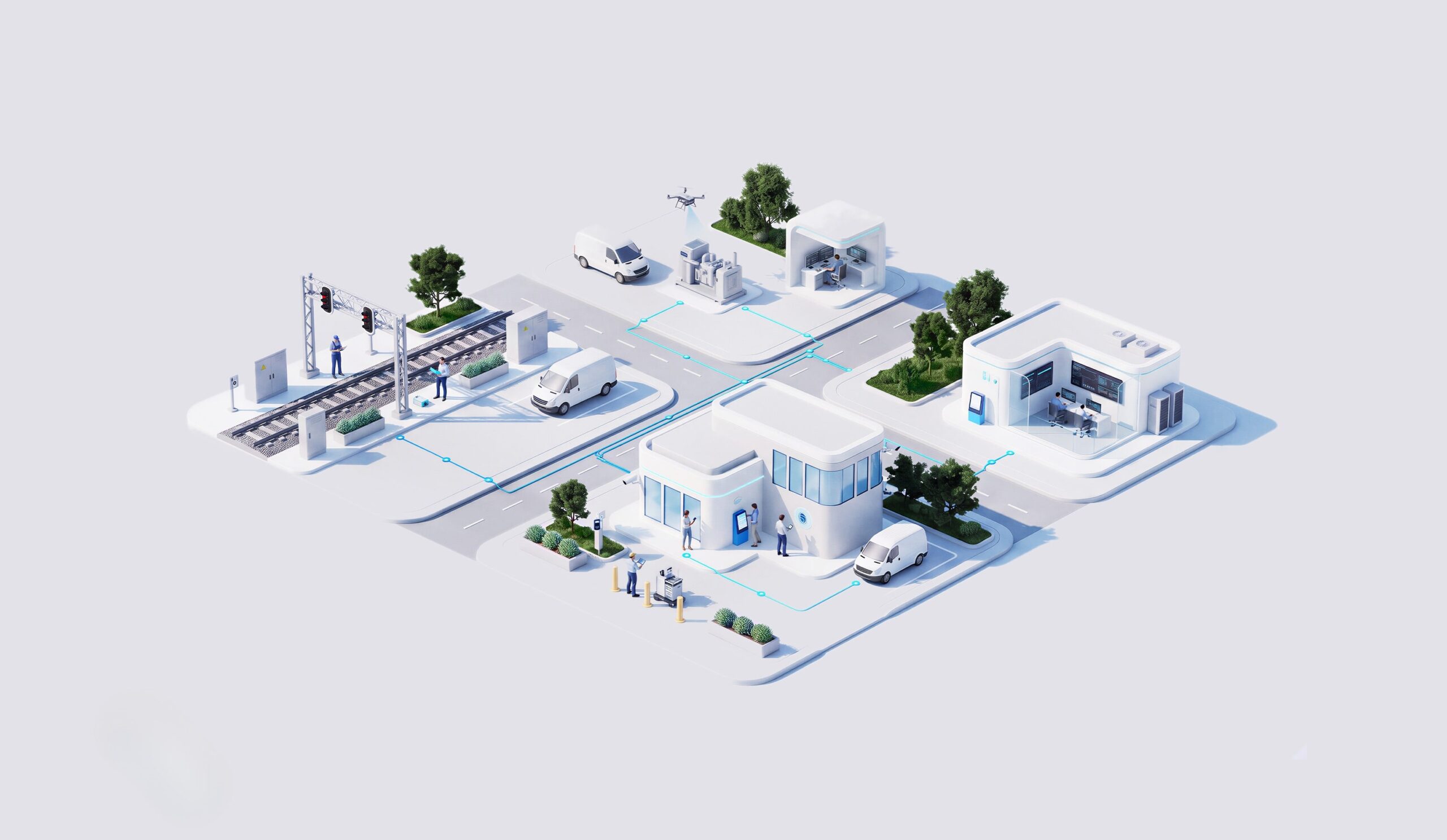



Public-Private Network Fallback for Continuous Utility Operations
A public-private fallback model becomes valuable when no single network can guarantee coverage across the full service territory, combining private coverage in priority areas with public networks elsewhere. A temporary loss of a non-critical application is not the same as losing communications with a protection, control or emergency-response process, so identity and security policies must stay consistent across both domains.
Critical services keep running under one consistent policy, whether traffic moves over private networks, public networks or both.

Policy-based failover keeps critical operational traffic available even when the primary private network path is degraded or unavailable.
Identity, security and traffic prioritization policies are applied consistently whether traffic moves over private or public network paths.
A shared public-private fallback foundation supports multiple digital utility programs instead of a new isolated network for every use case.
Explicit failover policies and monitored path health reduce ad hoc network patches across priority operational areas.
How NTT DATA helps
NTT DATA maps critical services and their access dependencies to determine which paths and networks each service actually needs.

Failover policies between private and public networks are defined so traffic switches paths automatically without losing priority or security.

Path health, performance and security posture are continuously monitored across both private and public network domains.

Continuity and recovery scenarios are tested regularly so teams know how fallback behaves before a real disruption occurs.

Cyber risk, recovery expectations, coverage and the long lifecycle of network assets all factor into every fallback architecture decision.


Alongside stronger continuity across private and public paths, these indicative targets vary by carrier coverage, failover design and handover speed.
Policy-based failover reduces single points of failure, with baseline and target availability levels confirmed during assessment.
Priority operational areas gain assured coverage by combining private networks with public and alternative links where needed.
Consistent identity, security and handover policies across private and public domains strengthen policy compliance across the estate.
Tested failover and recovery scenarios shorten the time needed to restore service when a network path is disrupted.
Switch traffic automatically between private and public paths so critical utility services never go dark, whatever the network conditions.