Mobile commerce experience using a consistent intake model to capture product requests, promotions and portfolio opportunities in a structured way, helping teams evaluate demand, compare options and prioritize what moves forward.
心を動かす会話

Intake Process & Roadmap Planning for Prioritization

Product and development capacity is finite. A structured intake and prioritization model helps teams weigh competing requests and decide what moves forward, what needs more definition and what should wait.
会議のスケジューリング
ポッドキャストを聴く
-15
+15
0:00
/
0:00
When hundreds of requests compete for roadmap space each quarter, teams can spend too much time assessing tactical asks without a clear view of their strategic value. Without consistent intake information and measurable prioritization criteria, quarterly plans can quickly move away from longer-term business priorities.
WHY THIS INTAKE PROCESS & ROADMAP PLANNING FOR PRIORITIZATION CHALLENGE?
Five barriers to better roadmap decisions
1. Too many competing requests
High request volumes make it harder to distinguish urgent asks from work that deserves roadmap investment.
2. Solutions arrive before problems are clear
Requests are often framed as predefined features or solutions before the underlying business problem has been properly defined.
3. Business impact is difficult to compare
When expected outcomes are unclear, teams lack a consistent basis for comparing one request with another.
4. Discovery capacity is limited
Product and development teams cannot investigate every request in depth, making early qualification essential.
5. Priorities can drift from business goals
Without a clear link to agreed themes, objectives and measurable outcomes, tactical requests can pull the roadmap away from longer-term priorities.
主なメリット
Make prioritization easier to explain and act on

A structured intake and outcome-based planning model gives teams a more consistent way to decide what moves forward and why.

チェックアイコン
Stronger intake from the start

Capture the underlying problem, affected area and supporting context early, helping teams clarify or filter requests before deeper evaluation.

チェックアイコン
Clearer strategic fit

Test each candidate against an agreed theme, objective and measurable key result rather than relying only on perceived urgency.

チェックアイコン
Greater team autonomy

Shared themes establish direction while teams define the objectives and key results that reflect their responsibilities.

チェックアイコン
More consistent roadmaps

Stronger qualification before commitment helps quarterly planning remain closer to annual business priorities.

NTTデータのサポート体制は?

01
Design a consistent intake model

Define the information teams need before a request can enter prioritization, including the problem to solve, business context and affected area.

Product planning team designing a consistent intake model for new requests, capturing business needs, required context and supporting information early to improve evaluation, prioritization and roadmap decisions.
02
Connect intake to strategic priorities

Use themes, objectives and measurable key results to assess whether proposed work contributes directly to agreed outcomes.

Product planning team connecting incoming requests to strategic priorities, evaluating business needs against shared objectives and expected outcomes to support clearer prioritization, stronger alignment and more focused roadmap decisions.
03
Structure prioritization and trade-offs

Support ranking across product value streams, capacity assessment and leadership trade-offs before commitments are finalized.

Product planning team structuring prioritization and trade-offs across competing initiatives, comparing value, strategic alignment and constraints to make transparent decisions about what moves forward, what waits and where resources should be focused.
04
Build transparent roadmap governance

Use dashboards to track priorities, roadmap progress and delivery status, while making team capacity visible and supporting the change management needed to keep the process working consistently.

Product planning team building transparent backlog governance by reviewing requests against shared criteria, status and priorities, making it easier to understand why initiatives move forward, remain pending or require further clarification.
05
Select the right software and setup

Support software selection, define the system structure needed to run the process and establish a consistent business case format for evaluating proposed initiatives.
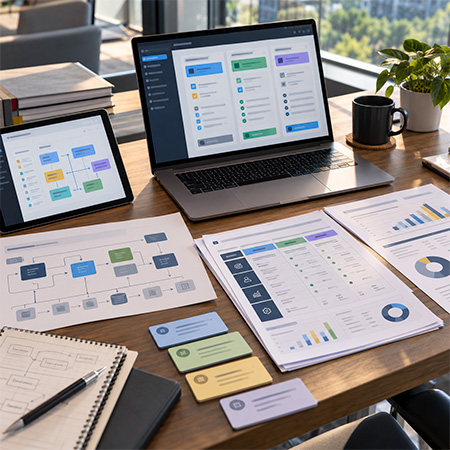

Product planning workspace comparing software options, workflow structures and business case formats to define the right setup for a consistent intake, prioritization and roadmap planning process.
Retail operator using a mobile commerce application to review product options and roadmap priorities during store replenishment, connecting real-world demand, assortment decisions and delivery activity to support more responsive commercial planning.
実証済みの効果
Shared priorities, scalable solutions

Quarterly alignment helps product teams prioritize shared business needs and scale the right solutions across markets.

重要な結果
A planning model built for scale

The model created a common way to prioritize across markets, align teams around shared OKRs and turn country needs into clearer product decisions.

チェックアイコン
Expansion across market

The digital ecosystem expanded to 15+ countries in two years

チェックアイコン
Shared backlog alignment

90% of the global backlog was aligned across teams and with company OKRs.

チェックアイコン
Scalable solutions over isolated requests

Prioritization shifted toward global solutions tied to business problems instead of addressing requests one by one.

チェックアイコン
Clearer quarterly decisions

Quarterly alignment across stakeholders gave Product teams a clearer view of country opportunities, priorities and their business impact.

Bring stronger intake and outcome-based prioritization into your next planning cycle

Work with NTT DATA to connect structured intake, OKRs, backlog governance and roadmap trade-offs through a clearer planning mode.


ドラッグ