


- All Foundries

- 商品管理と取引

- 顧客とマーケティング戦略

- デジタルエンジニアリング

- ステーション・スタジオ

- サプライチェーン&インダストリー5.0
- サステナビリティ

- Physical AI

- Next-Generation Infrastructure







AGV Simulation and Path Optimization
Manual scheduling and limited visibility slow rerouting, right when speed matters most.

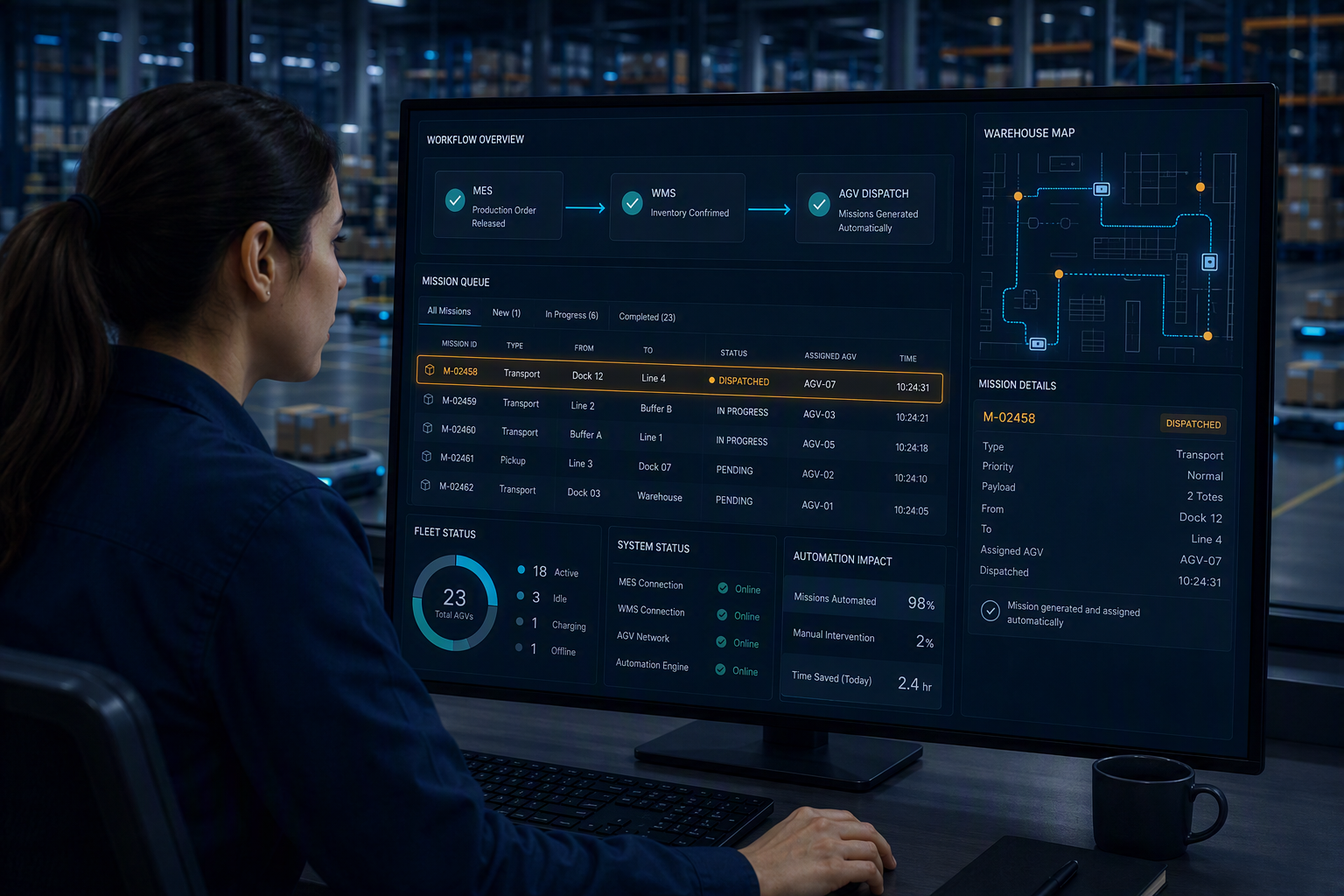
Dynamic routing and automated dispatching reduce the manual planning behind each AGV movement and mission.
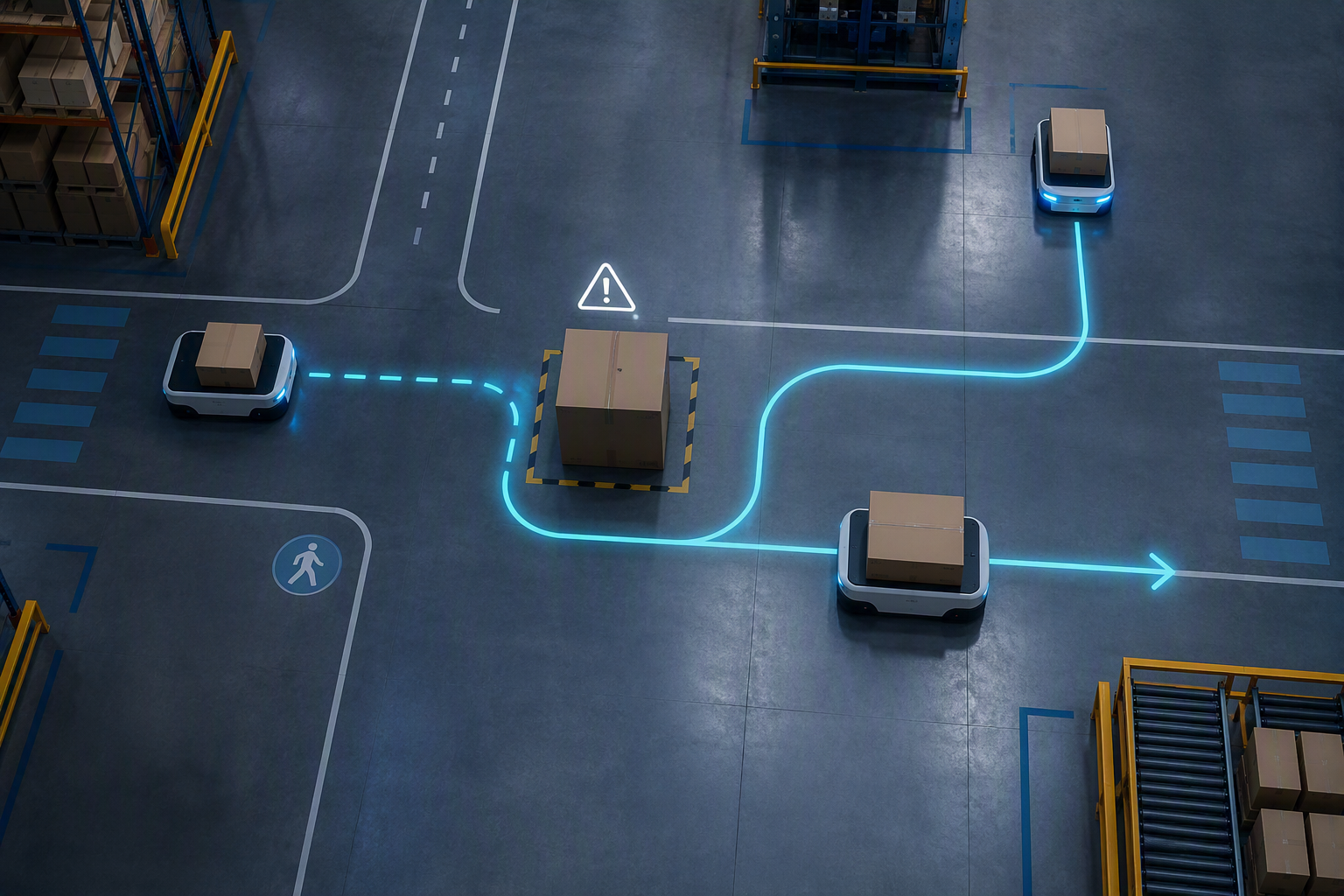
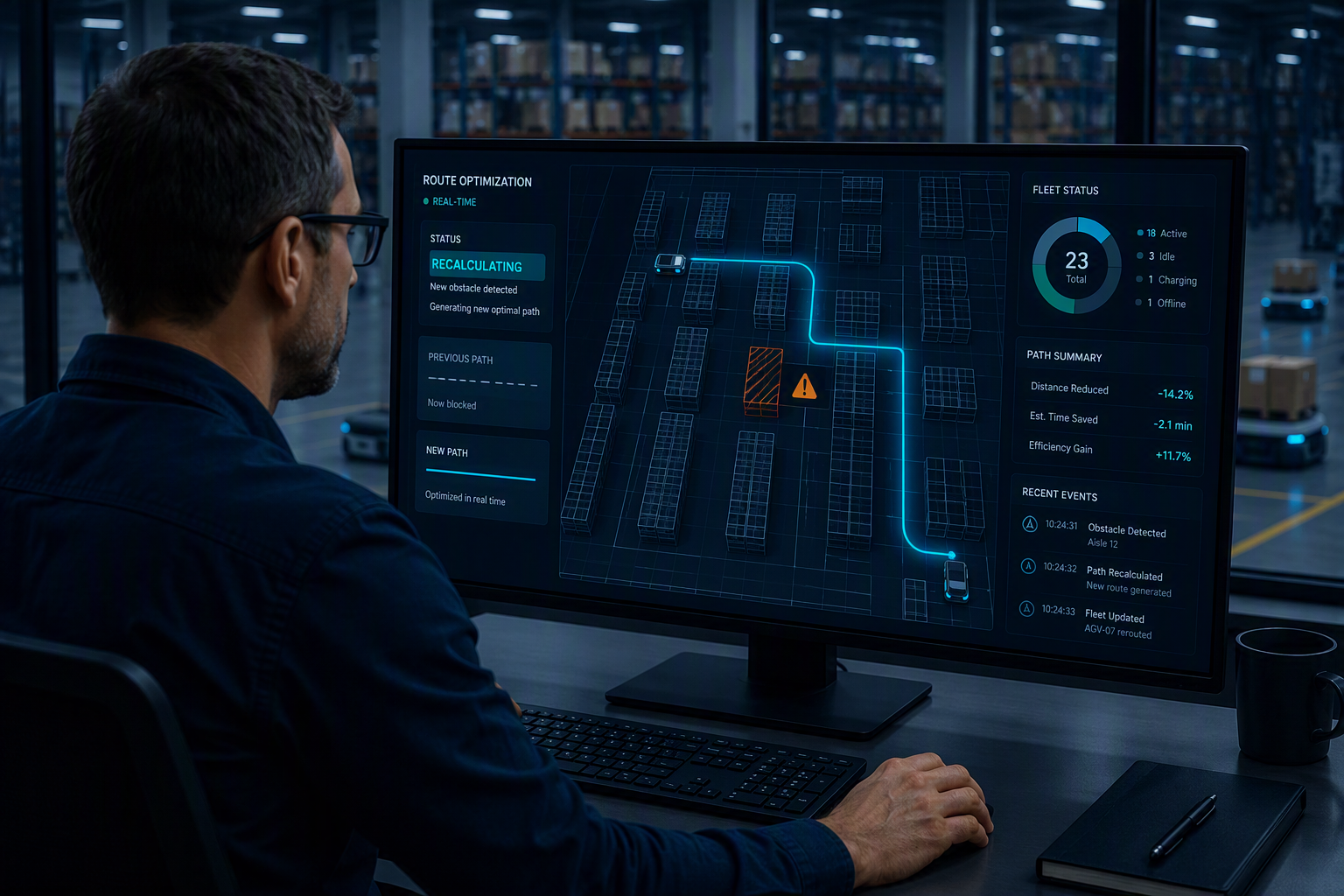
Updated paths let AGVs adapt as soon as obstacles or disruptions affect a previously available route.
Sensor-driven decisions support coordinated execution with less manual intervention during changing conditions.
Optimized routes limit unnecessary travel, helping cut energy use and cost across the operation.
NTTデータのサポート体制は?
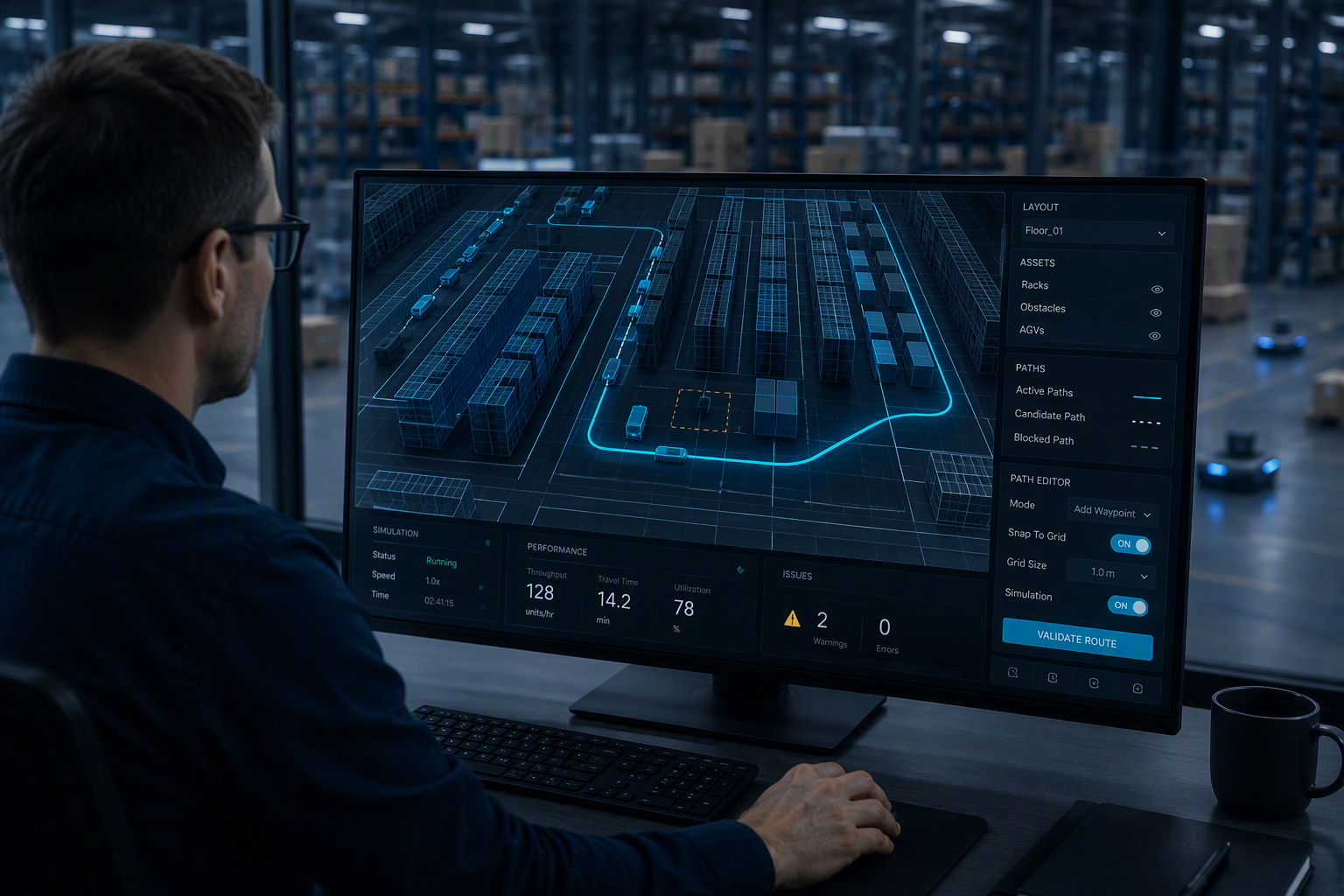
Industrial layouts, AGV movement, obstacles and candidate routes get represented inside a simulation environment.
LiDAR and camera sensing identify obstacles and update route availability while operations keep running.
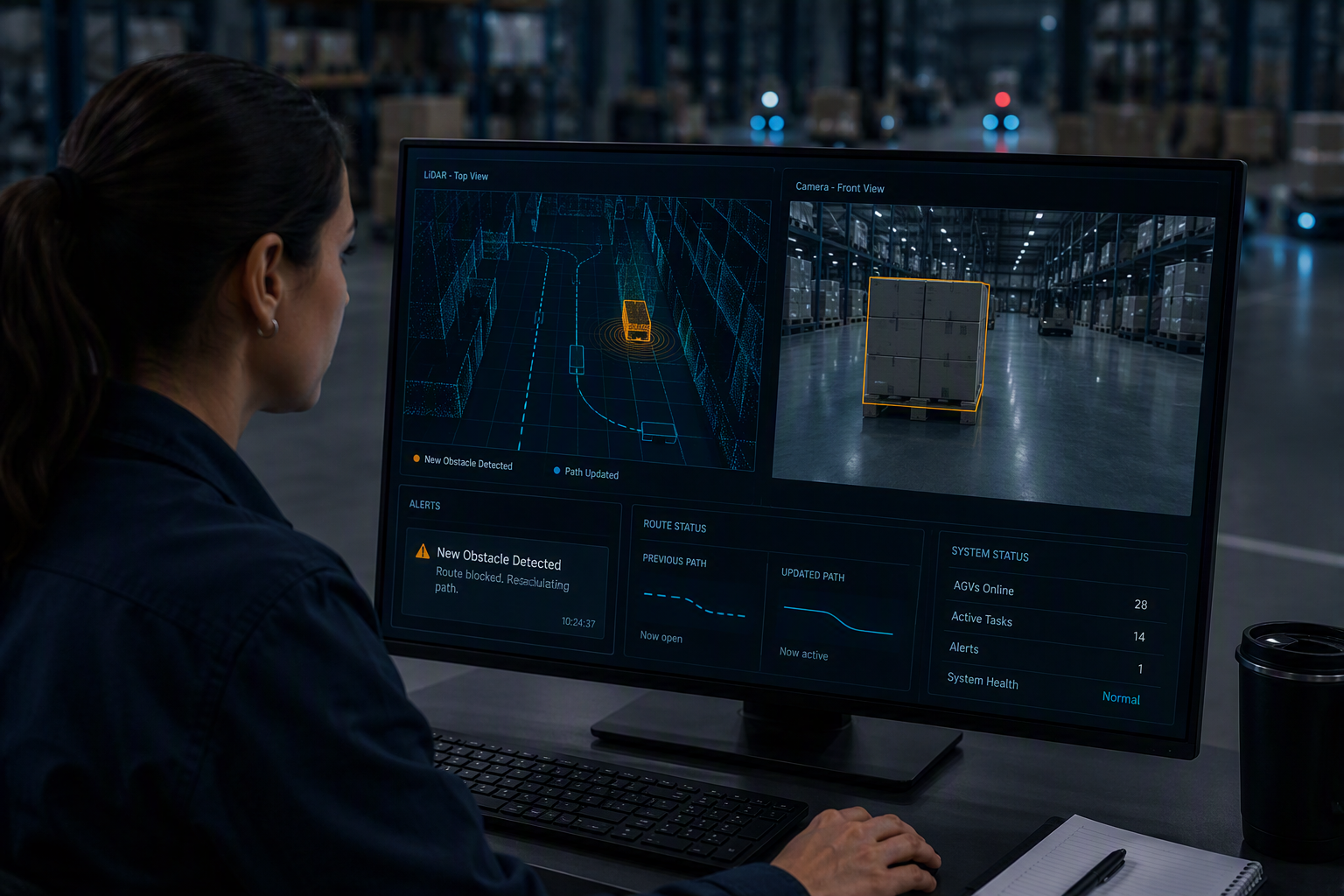
A route optimization engine excludes blocked segments and generates revised routes as conditions change.
AGV missions get generated and assigned through a simulated MES and WMS workflow, without manual scheduling.
Planned and optimized routes display in real time, backed by a KPI dashboard tracking execution.
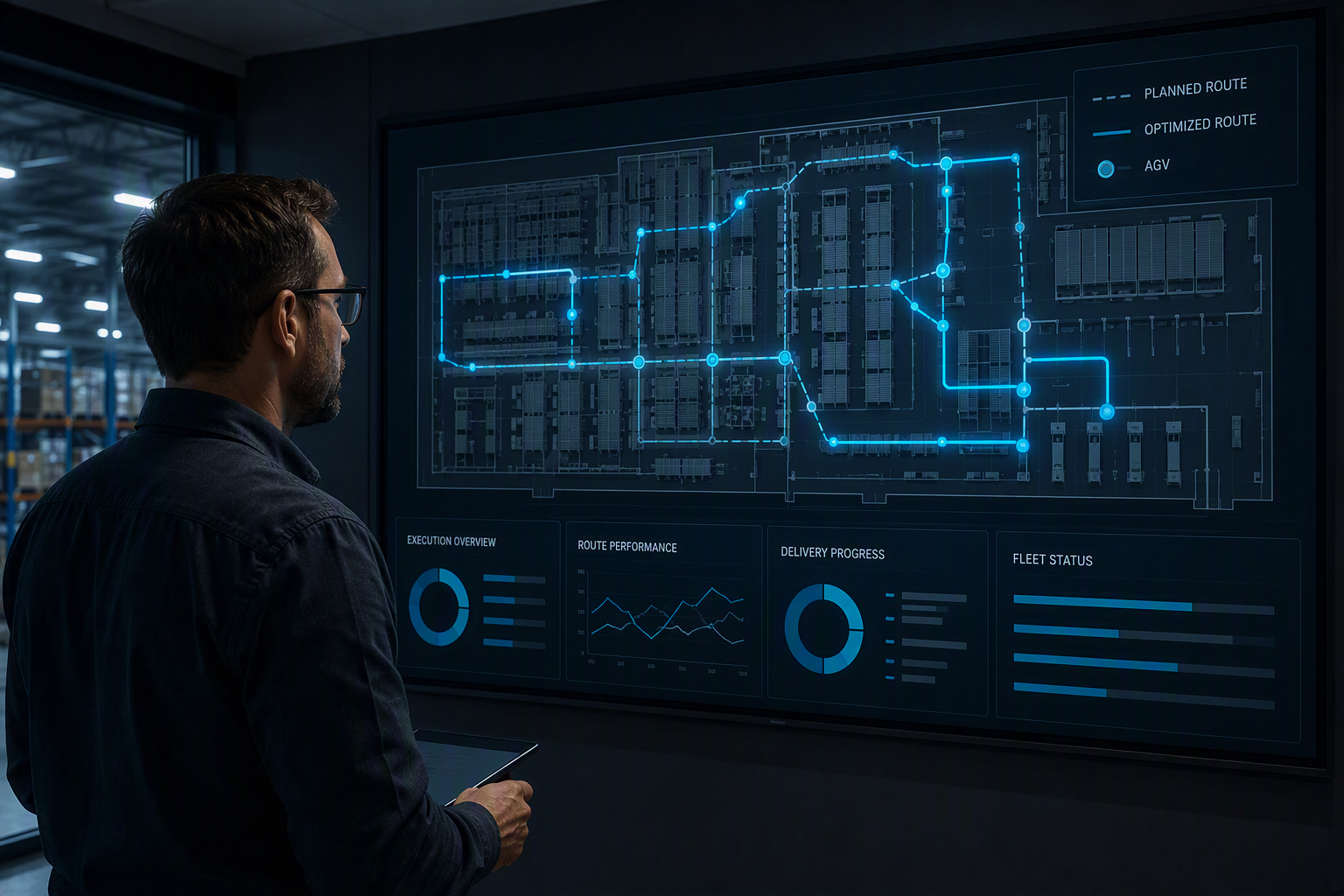
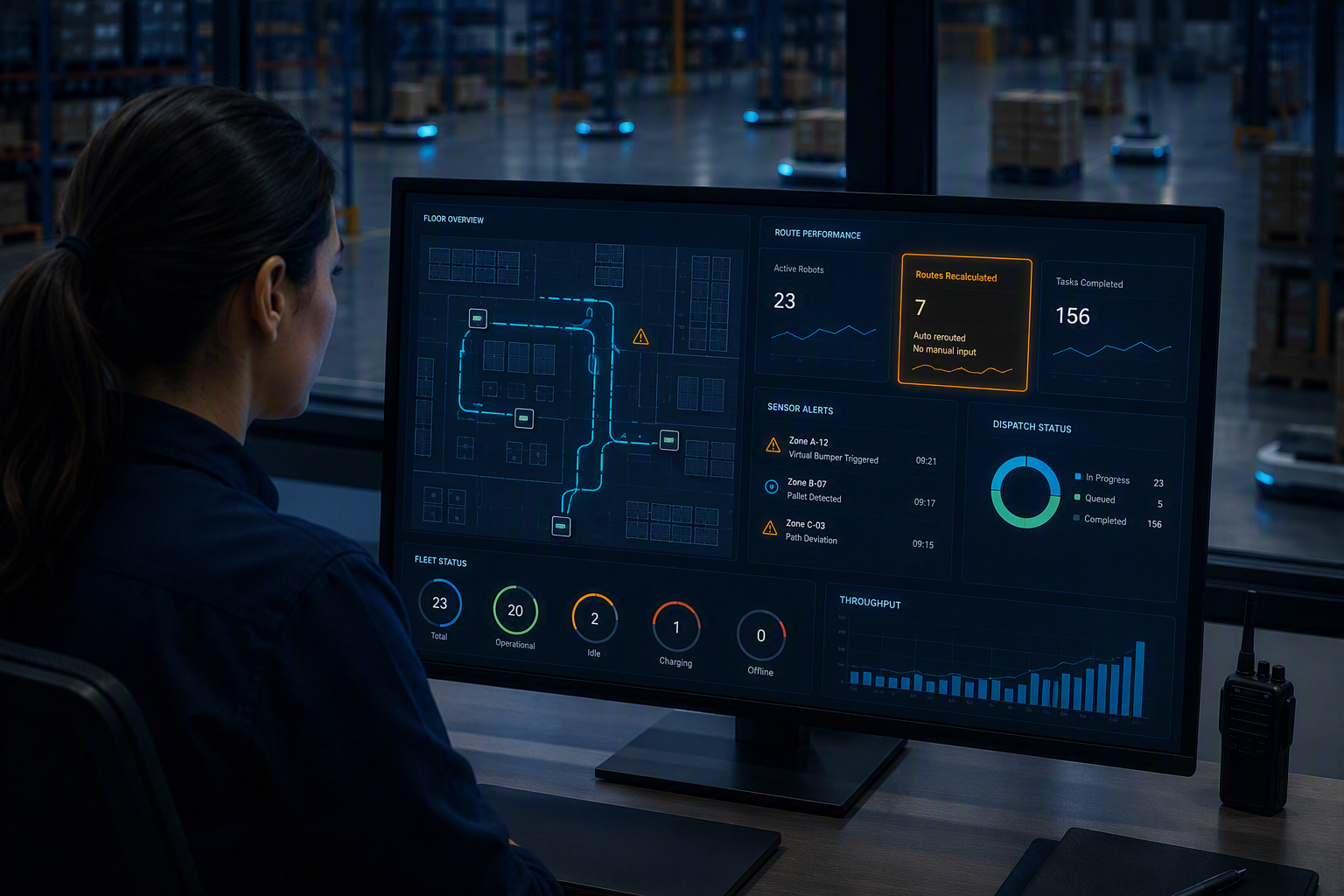
A digital twin foundation supports growing complexity as more vehicles and routes join the operation.
Dynamic optimization and automated dispatch cut the manual planning tied to obstacles and disruptions.
AGVs react to detected obstacles without waiting on manual route adjustments for every disruption.
Continuously recalculated paths reduce unnecessary travel and energy use across the whole fleet.
Start the conversation that keeps your AGV fleet moving through every disruption.
